Quick answer
Most smoke-damaged clothing, bedding and hard furniture can be saved if they were not burned, melted or soaked, and if they are cleaned with methods made for smoke residue. Washables need smoke-specific detergents, delicate fabrics need dry or specialty cleaning, and upholstery is cleaned by fiber type. Charred, melted or heavily soaked items and anything that touched food are usually replaced.
First: photograph everything before you clean it
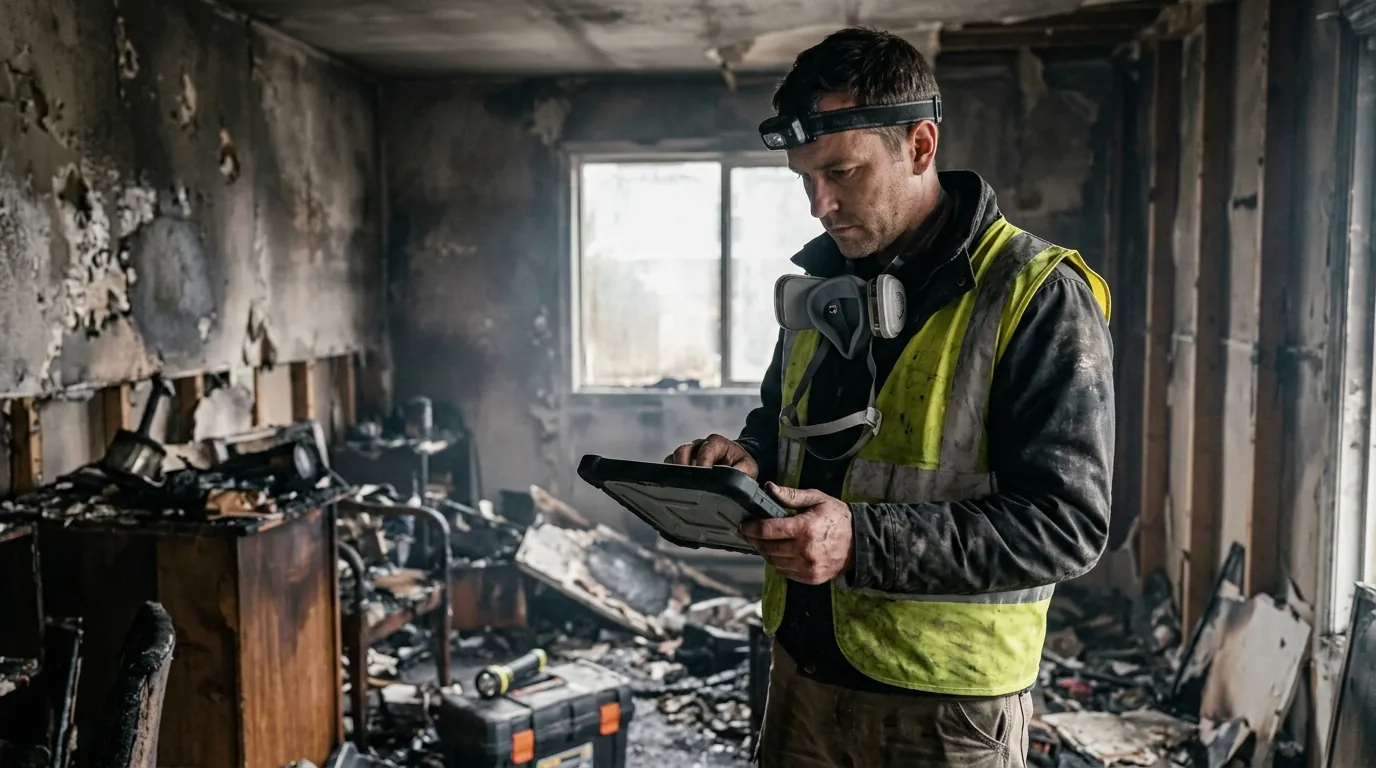
Before anything is washed, cleaned or thrown away, photograph it where it is, room by room. Your contents claim depends on a record of what was damaged, and items that disappear before they are documented are hard to claim later.
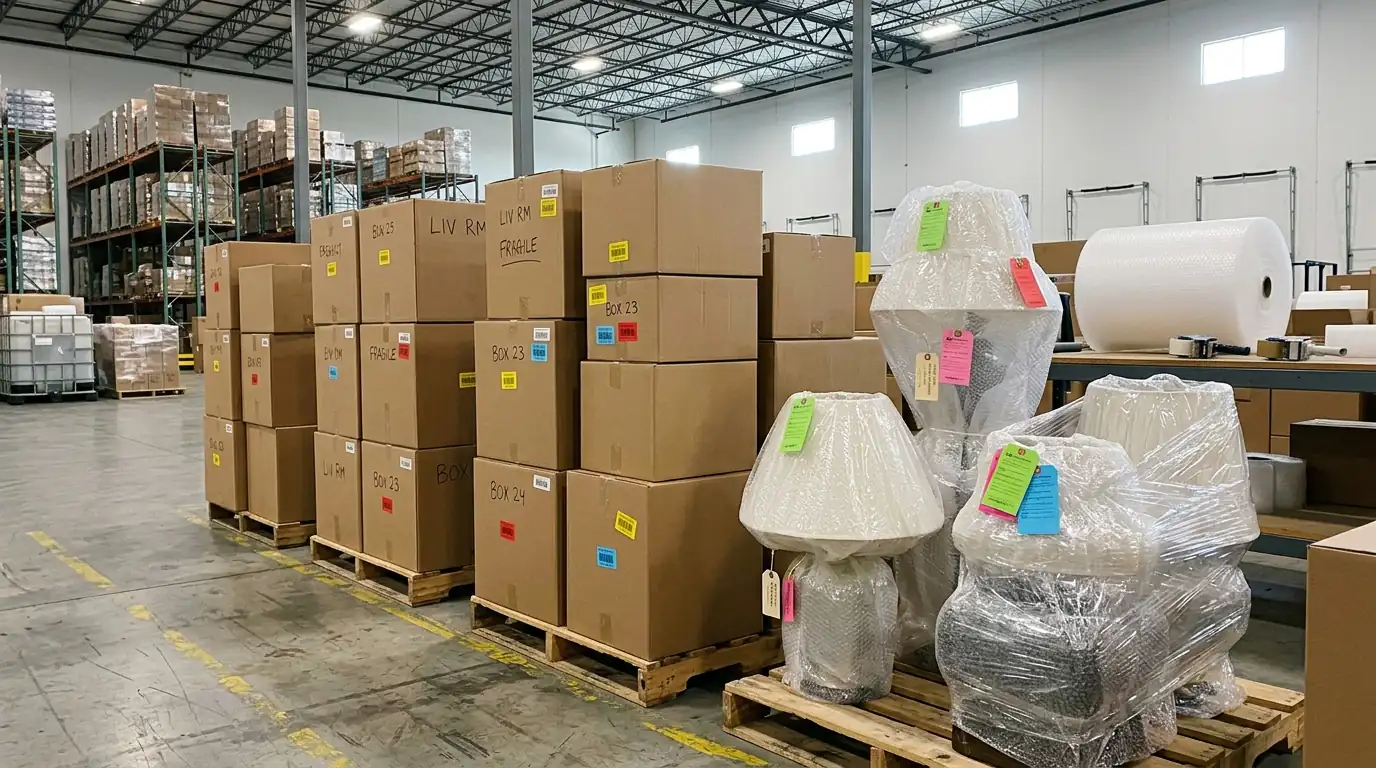
It also helps to keep items sorted by room. Restoration crews inventory and pack them that way so everything returns to the right place.
Clothing: what usually cleans up
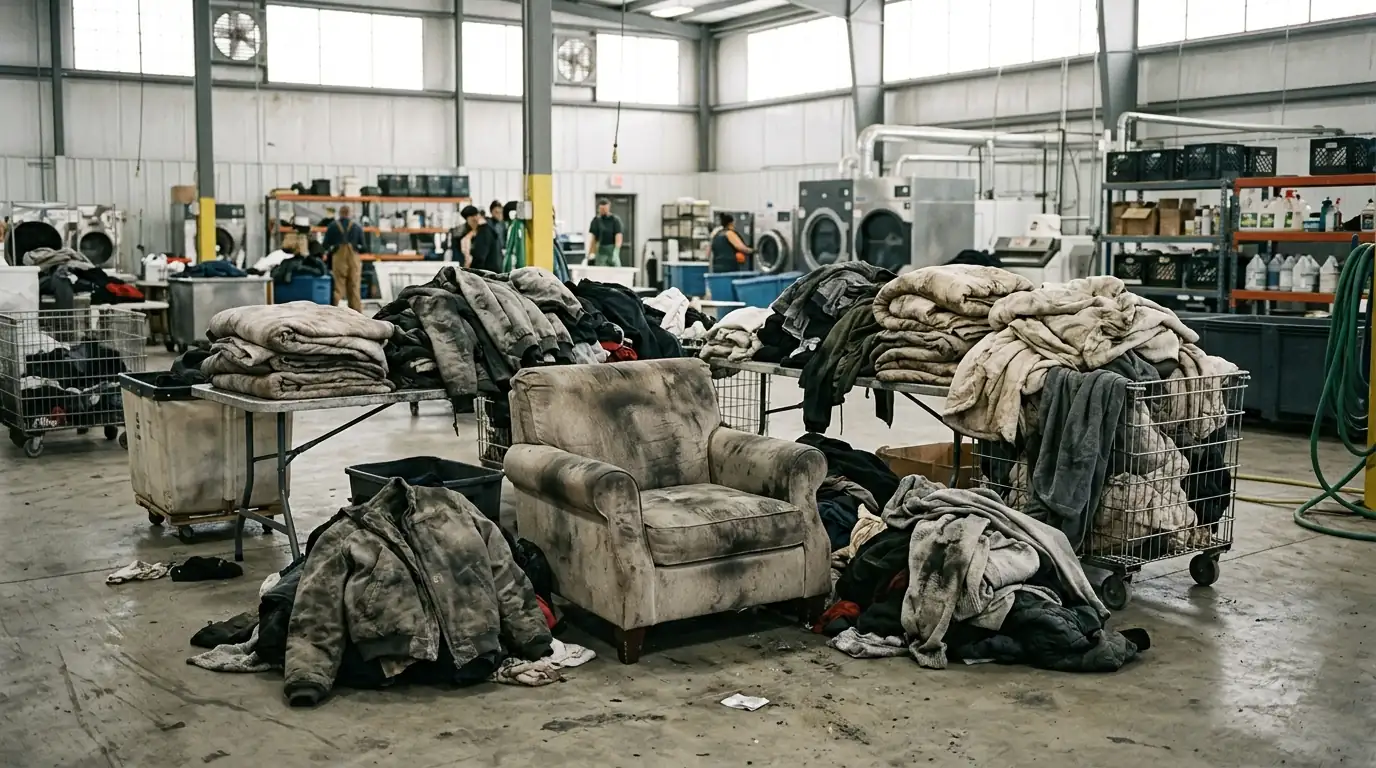
Everyday washables like cotton, polyester and blends usually come clean with smoke-specific detergents, sometimes after more than one wash. Household detergent alone often leaves the smell behind and can set soot stains on light fabrics.
Wool, silk, suits, coats and other dry-clean-only items need dry cleaning or specialty wet cleaning designed for delicate fabrics. Leather jackets, shoes and bags are cleaned and conditioned by hand.
- Usually saved: cotton, polyester and blend washables
- Usually saved with care: wool, silk, suits and coats
- Usually saved by hand: leather jackets, shoes and bags
- Usually replaced: melted synthetics and scorched fabric
- Usually replaced: anything heavily soaked and left wet for days
Bedding, pillows and mattresses
Sheets, blankets and pillowcases wash well. Comforters with synthetic fill can often be cleaned; down and feather items need specialty cleaning. Pillows that took heavy smoke are usually cheaper to replace.
Mattresses are the hardest call. They cannot be washed and they absorb smoke deep into the foam and padding. A mattress that was in a smoky room but away from the fire can sometimes be cleaned and deodorized; one that took heavy smoke or water is usually replaced.
Not sure what can be saved? Call and we will sort it with you before anything is thrown out.
Call (313) 391-5430Furniture: wood, upholstery and everything in between
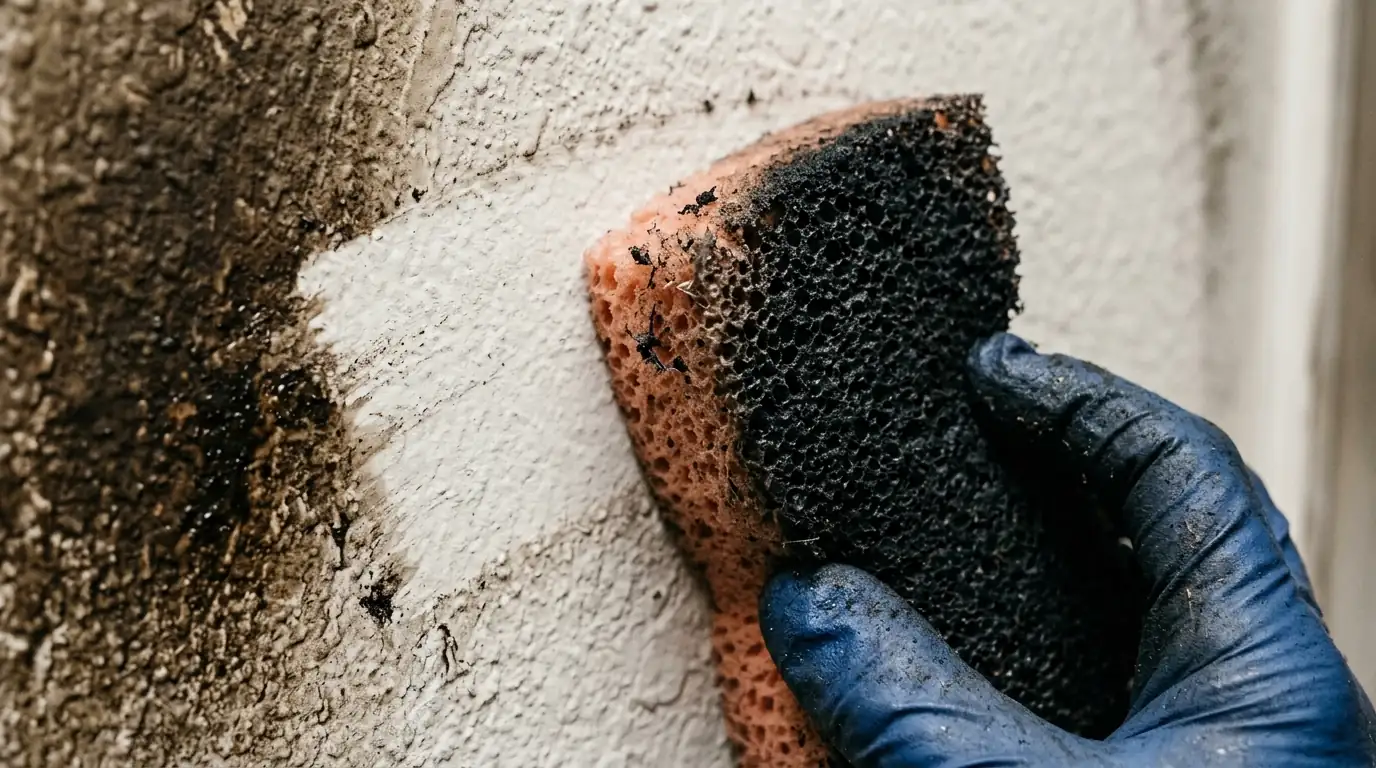
Solid wood furniture usually cleans well. Loose soot is dry sponged off first, then the wood is cleaned with a wood-safe cleaner and, if needed, the finish is refreshed. Veneer that lifted from heat or water can often be repaired.
Upholstered furniture is cleaned on site or at a facility by fiber type, after HEPA vacuuming. Removable cushion covers are cleaned separately and the foam deodorized. Pieces with burn marks, melted fabric or water damage to the frame are usually replaced.
Electronics, papers and keepsakes
Electronics should not be powered on until they are cleaned, because soot is conductive and acidic. Many can be saved if cleaned early. Papers, books and photographs need their own process: dry items are cleaned and deodorized, while wet ones are frozen quickly and freeze-dried later.
Family keepsakes, artwork and heirlooms deserve a separate conversation. Some are worth specialist restoration even when cleaning would cost more than replacing an ordinary item.
What usually has to go
Some items are not worth cleaning or are not safe to keep, no matter how they look.
- Food, medicine and cosmetics that were in heat or smoke
- Melted, warped or softened plastics
- Charred fabric and furniture
- Stuffed toys and pillows with heavy smoke, which are hard to clean through
- Items soaked by firefighting water and left wet long enough to grow mold
What you can do yourself, and what to send out
A few things are safe to handle at home if you need them right away. The rest is better sent for cleaning so smoke stains and odor are not set into the fabric.
- Fine to wash at home: lightly smoky cotton clothing, with a strong detergent
- Fine to air out: books and papers that are dry, in a dry room
- Send out: wool, silk, down, leather and dry-clean-only items
- Send out: heavily sooted or wet items
- Send out: upholstered furniture and mattresses
How a contents cleanup runs
In a larger loss, belongings are photographed, inventoried by room and packed out so the house can be cleaned and repaired. They are cleaned by material while the work goes on, deodorized where needed and returned to the rooms they came from. Items that cannot be saved are listed with photos for the claim.
Essentials, such as work clothes, school clothes and medicine, can be cleaned and returned first. See contents pack-out and storage and clothing and textile smoke cleaning.
Children's things, toys and baby items
Items that children chew, sleep with or put in their mouths deserve extra caution. Hard plastic toys from closed bins usually clean well; soft toys, crib mattresses, car seats and anything that sat in heavy smoke are often better replaced, both for hygiene and because some, like car seats, have safety rules about damage.
Bottles, pacifiers and feeding items that were exposed to heat or smoke should be replaced. Clothing and bedding for babies and young children can be cleaned with the rest of the household's textiles, and washed again at home before use if that gives you peace of mind.
Smoke-damaged belongings questions
Usually, with smoke-specific detergents and sometimes more than one cycle. Heavy odor may need deodorizing after washing.
Not before it is assessed. Solid wood usually cleans well; upholstery often does too unless it burned or got soaked.
Sometimes, if it was away from the fire and stayed dry. Mattresses that took heavy smoke or water are usually replaced.
Contents coverage usually pays for cleaning or replacing damaged belongings. Keep photos and the inventory.
Light smoke on cotton, yes, with a strong detergent. Heavily sooted items can transfer soot to the machine and other loads.
Do not power them on until cleaned. See electronics cleaning after a fire.