Quick answer
Fire insurance claim help in Detroit starts before cleanup: photographing every room, taking moisture readings, mapping soot and writing an itemized scope that an adjuster can price. We meet the adjuster on site and file supplements when demolition reveals damage nobody could see, while the settlement itself stays between you and your insurer.
What we do on a claim, and what stays with you
A fire claim is paid from documentation. The adjuster needs to see what was damaged, how badly and what it takes to put it back. When that record is thin, damage gets missed, and it is hard to add it back once the walls are painted.
We build that record as part of the job: photos and video of every room before cleaning, moisture readings, soot type by room, a line-item scope and a contents inventory when items are packed out.
What we do not do is negotiate your settlement or represent you against your insurer. That is between you, your agent and, if you choose one, a public adjuster. Our job is to make the damage clear and the scope accurate.
What a fire claim covers and what drives the numbers
The size of a claim depends on the damage, the coverage and how completely the loss is documented.
- Structure damageCleaning, tear-out and rebuilding of the house itself.
- ContentsCleaning or replacing belongings, usually priced from an inventory.
- Additional living expensesWhere you live while the house is repaired, if your policy covers it.
- Hidden damageWhat demolition uncovers, added by supplement.
- Policy limits and wordingCoverage caps, deductibles and exclusions set the ceiling.
Claim documentation
On the first visit we photograph every room from the doorway and up close, including ceilings, closets and the basement, before anything is moved. We take moisture readings where the firefighting water went and note the soot type, because dry, oily and protein residue are cleaned differently and priced differently.
That becomes a written, line-item scope with quantities, the format most adjusters use. You get copies of everything, so you are never relying on anyone else's record of your own house.
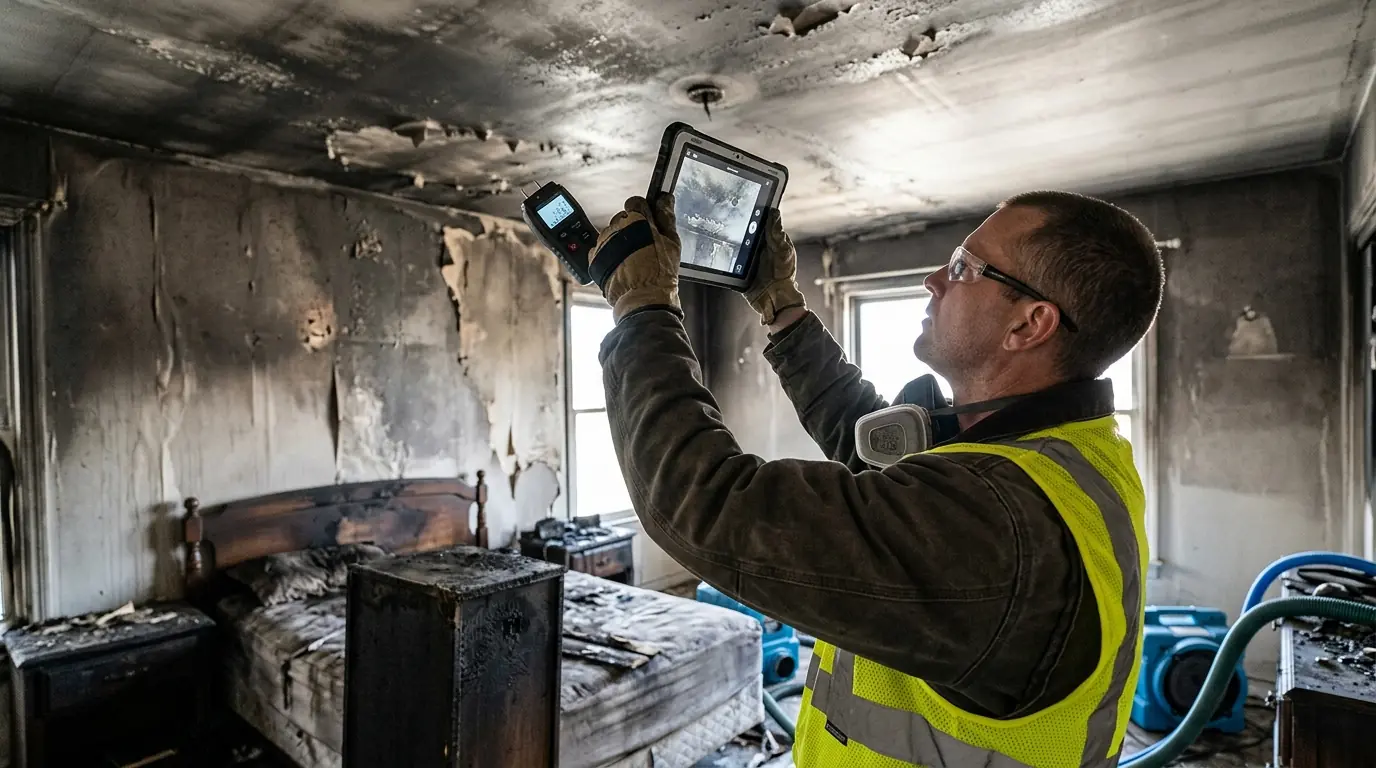
Adjuster walkthrough
When the adjuster comes out, we walk the house with them and point to what the scope covers: which rooms took smoke, where the water went, what has to come out and why. It is easier to agree on a scope standing in the room than over email weeks later.
If the adjuster sees something differently, we note it and follow up in writing. Questions about coverage limits and policy terms go to your agent or the adjuster directly. If the adjuster asks for more detail, like extra photos, moisture logs or a revised quantity, we send it quickly so the claim does not stall.
Supplements for missed damage
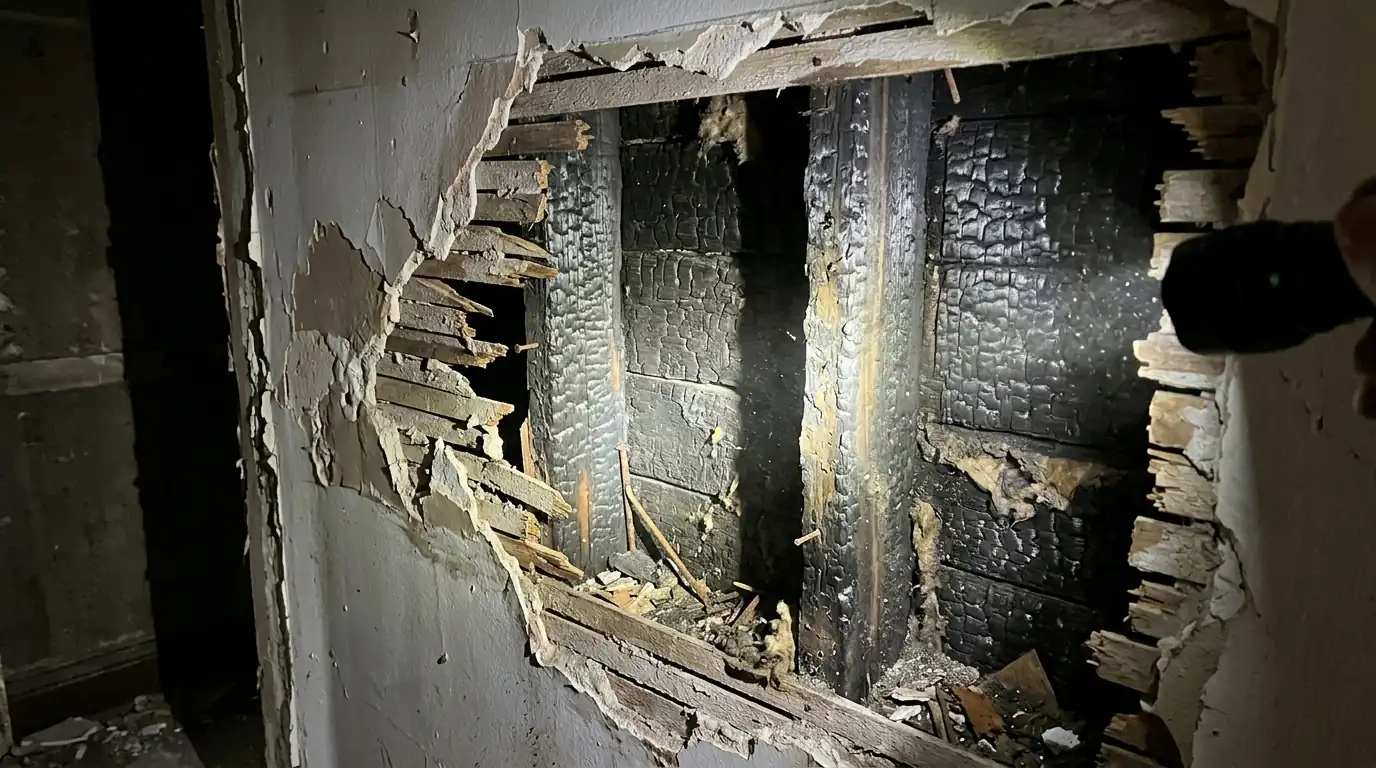
Some damage only shows up after demolition: charred framing behind plaster, wet subfloor under cabinets, smoke in a wall cavity. When we find it, we stop, photograph it and write a supplement with the added work and quantities.
The supplement goes to the adjuster before that work is done whenever the timing allows, so there are no surprises at the end of the job. You see every supplement we send, along with the photos behind it, so you always know what has been asked for and why the scope changed.
Just had a fire and not sure what the insurer needs? Call and we will document the house before anything is moved.
Call (313) 391-5430What to have ready when you call your insurer
- Your policy number and agent's contact
- The fire department report number, if you have it
- Photos of the damage before anything is moved
- A list of where the household is staying
- Receipts for emergency purchases
- A rough list of damaged belongings by room
- Our scope and photo record once we have been out
- Notes of every call with the adjuster
How we support a claim
- 01
Document before anything moves
Photos, video, moisture readings and soot mapping on the first visit.
- 02
Protect the property
Board-up and water removal, which most policies expect.
- 03
Write the scope
An itemized scope with quantities, shared with you and the adjuster.
- 04
Walk it with the adjuster
We meet on site and follow up in writing.
- 05
Supplement as needed
Hidden damage found later is photographed and submitted.
Fire claims for Detroit owners and renters
Renters occupy 52.8% of Detroit's housing units, which means many fire claims here involve two policies: the owner's policy covers the building, while the tenant's renters policy, if there is one, covers their belongings and living costs. We document the structure and the contents separately so each policy gets the record it needs, and we tell landlords and tenants early which items belong on which claim.
How long a fire claim takes
Emergency work like board-up and water removal happens right away and is documented as it is done. The scope usually follows within days of the first visit, and the adjuster's inspection is scheduled by the insurer.
Larger claims with contents and rebuilding can run for months, mostly because of supplements, contents pricing and material lead times. A complete record from day one is what keeps that from dragging further.
Fire insurance claim questions
Call your insurer to open the claim, and call us to secure the house and document it. Both can happen the same day.
Check your policy wording. Many insurers offer a list as a convenience; read what yours says before assuming you must use it.
No. We document the damage and write the scope. Negotiating on your behalf is a public adjuster's role, which you can hire separately.
We photograph it and send a supplement to the adjuster with the added work, usually before that work is done.
Many homeowners and renters policies include additional living expenses, but limits vary. Ask your agent, and keep every receipt.
Our guide to filing a fire insurance claim in Michigan walks through the steps.
