Quick answer
Commercial fire damage restoration in Detroit is planned around the date you need to reopen: we secure the building, remove water and stabilize soot first, then clean the areas that let you operate before the rest. Restaurants, offices and warehouses each carry different residues and inspection steps, and every item gets documented for the commercial insurance claim.
Getting a business open again after a fire
A commercial fire is rarely only about the burned room. Smoke travels through ceiling plenums, shared HVAC and open floor plans, so a fire in one back room can close the whole space.
We start with what keeps the building safe and dry, then map where the smoke went. From there we plan the work in phases: the areas you need to open first get cleaned and cleared first, and heavier repairs follow behind a containment wall where possible.
We also document for the commercial carrier as we go: photos, moisture readings, an itemized scope and a contents inventory, so the claim moves alongside the work.
How a commercial fire job runs
- 01
Secure and stabilize
Board-up, water removal and early soot stabilization so the building stops getting worse.
- 02
Walk it with you
We map smoke paths and agree on what has to reopen first.
- 03
Phase the cleanup
Priority areas are cleaned first behind containment where needed.
- 04
Clean systems and contents
HVAC, electronics, inventory and fixtures are cleaned or listed.
- 05
Repair and hand back
Repairs, final cleaning and walkthrough for inspections and reopening.
Offices and retail
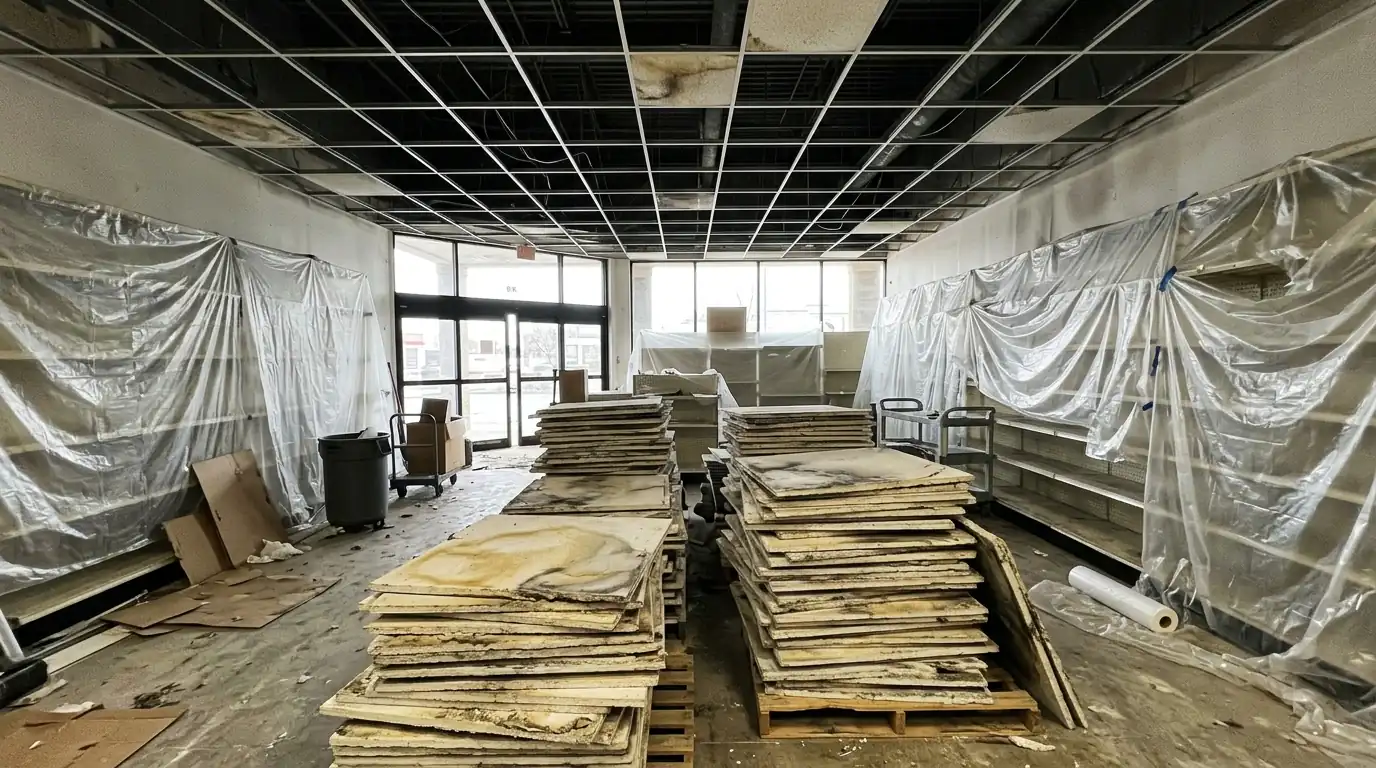
Offices and stores usually take smoke damage through drop ceilings and shared ductwork. Ceiling tiles above the smoke path are almost always replaced; the grid, walls, fixtures and shelving are cleaned.
Merchandise and paper records get sorted early: what is sealed and unaffected, what can be cleaned, and what goes on the loss list. Computers and electronics in the smoke path come out for separate cleaning, and we clean the HVAC so the smell is not pushed back in when the system restarts.
Restaurants
Restaurant fires usually start at the cooking line and leave heavy grease-based residue on hoods, ductwork, walls and ceilings. That residue needs degreasers, not general cleaners, and the hood and exhaust duct are cleaned by a hood-cleaning specialist before the system runs again.
Food, packaging and anything that touches food that was in the heat or smoke is discarded. Prep surfaces, walk-ins and dining rooms are cleaned so the health inspection and the fire marshal can sign off on reopening.
Warehouses and shops
Warehouses, garages and light-industrial shops have high ceilings, exposed steel and inventory stacked to the roof. Soot settles on beams and deck where it is hard to reach, so we work from lifts and often use dry ice blasting on steel and masonry.
Stored goods are triaged pallet by pallet, and machinery near the fire is protected from corrosive residue until it can be cleaned or serviced. Where operations can continue in part of the building, we isolate the work area with containment and negative air.
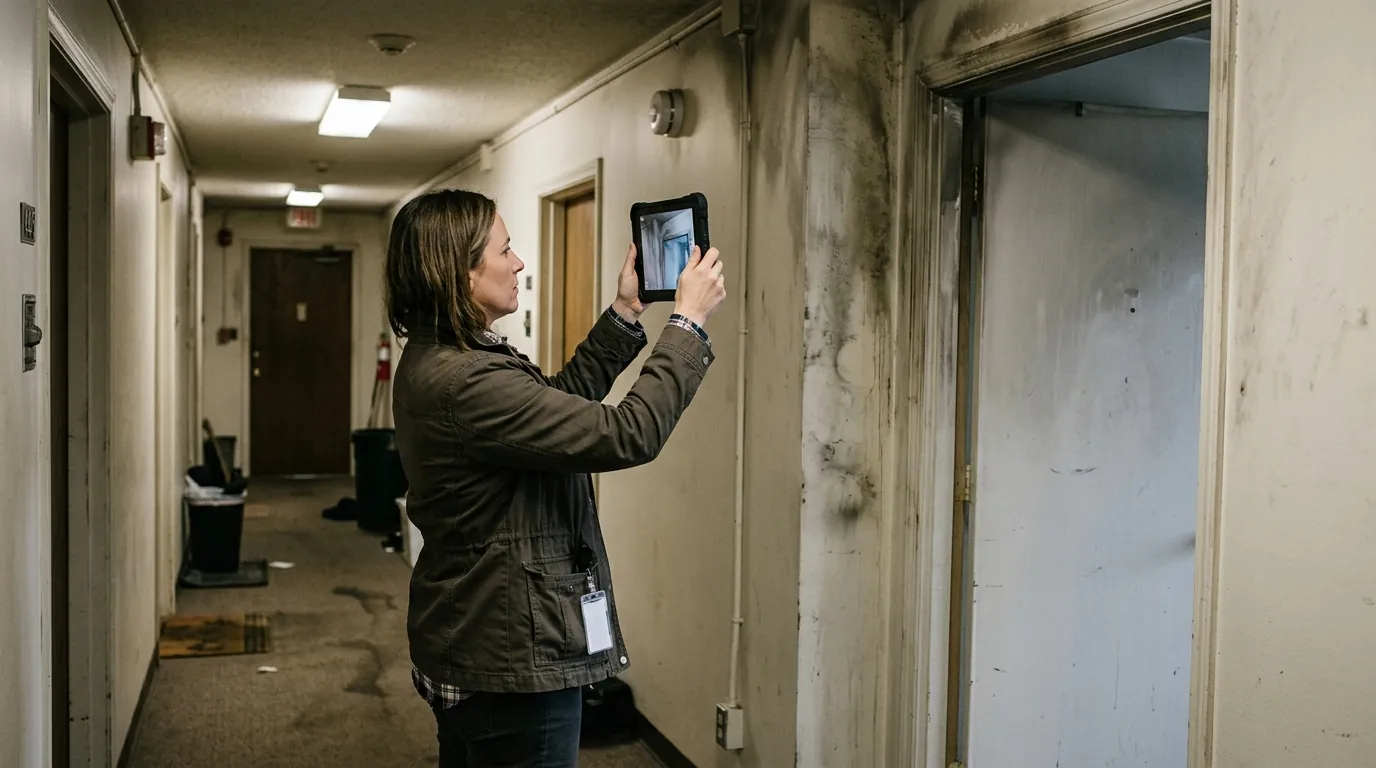
Business closed after a fire or smoke event? Call any hour and we will walk the building with you.
Call (313) 391-5430How long a business stays closed
A small smoke loss in an office or store can often be cleaned in days, especially when the work runs after hours. A kitchen fire or a building-wide smoke loss usually takes weeks, mainly because of inspections, hood and duct cleaning and replacement materials.
We give you a phased schedule after the walkthrough so you can plan staff, deliveries and customers around it.
Fire losses in Detroit commercial buildings
The Detroit Fire Department answered 3,237 structure fires in 2025, and commercial buildings are part of that count. Many of the city's storefronts and small industrial buildings are older masonry with wood roof framing and later drop ceilings added underneath, which gives smoke a hidden space to travel through. That is why we open ceiling tiles and check the plenum above the burned area on the first visit instead of only cleaning what shows below.
What a commercial scope usually covers
- Board-up and roof protection
- Water extraction and drying
- Ceiling tile and plenum inspection
- Soot cleaning of walls, fixtures and steel
- HVAC and ductwork cleaning
- Inventory and equipment triage
- Containment for phased work
- Itemized scope and photo record for the carrier
What drives commercial fire restoration cost
Commercial jobs vary more than residential ones, so we price from a walkthrough and itemized scope.
- Square footage and ceiling heightHigh ceilings and large floor plates add lift work and time.
- Type of residueGrease from a kitchen fire and plastic smoke from electrical fires need different chemistry.
- HVAC and plenumShared ductwork and drop-ceiling plenums spread smoke through the building.
- Inventory and contentsTriage, cleaning and documentation of stock and equipment.
- Phasing and after-hours workKeeping part of the business open means containment and staged work.
Commercial fire restoration questions
Often, yes. We isolate the work area with containment and negative air so unaffected areas can keep operating.
We can schedule work around your hours when it shortens the closure or keeps part of the business running. We agree on it at the walkthrough.
The hood and exhaust duct are cleaned by a hood-cleaning specialist. We clean the kitchen, walls, ceilings and dining areas around it.
We sort it into unaffected, cleanable and loss, photograph it and list it for your carrier. Food and anything that contacts food in the smoke is discarded.
Yes. Smoke often crosses into neighboring units through shared plenums, and we coordinate with the building owner and other tenants.
Photos, an itemized scope, moisture records and a contents list. We produce these as the work goes; see fire insurance claim help.
