Quick answer
Plaster and drywall repair after a fire in Detroit starts with testing each wall and ceiling: soaked, heat-cracked or charred sections come out, while sound plaster with only surface soot can usually be cleaned and sealed. Older plaster and lath can be patched in plaster or replaced with drywall, and ceilings that took hose water are checked for sag before anyone works under them.
Saving plaster where it is sound, replacing it where it is not
Walls near a fire take three kinds of damage at once. Heat cracks and delaminates plaster, hose water soaks it and the lath behind it, and smoke residue sits on and in the surface. Each one points to a different fix.
We would rather clean and seal a wall than tear it out, because that keeps cost and dust down. But plaster that has let go of its lath, or drywall that stayed wet, will not hold paint or stop odor, and patching over it only delays the tear-out.
The rebuild follows the cleanup. Framing is cleaned or repaired first, and stained framing is sealed, so the new wall is not closed over residue.
What changes the cost of wall and ceiling repair
Wall repair is priced by area and by the material, and plaster matching takes more labor than drywall.
- How much comes outA few patches cost far less than full rooms taken down to the studs.
- Plaster match or drywallPatching plaster to match an old wall takes more time than hanging drywall.
- CeilingsOverhead work and ceiling height add labor and staging.
- Framing repair and sealingCharred or stained framing has to be dealt with before the wall closes.
- Finish and paintWhole-room paint so patches disappear adds to the scope.
Patching plaster versus replacing with drywall
| Patch in plaster | Replace with drywall | |
|---|---|---|
| Best for | Small areas on sound walls | Large areas or whole rooms |
| Look | Matches old walls and curved corners | Flat modern finish |
| Time | Several coats with drying time | Hang, tape and finish in fewer days |
| Cost | More labor per square foot | Less labor on large areas |
Plaster and lath
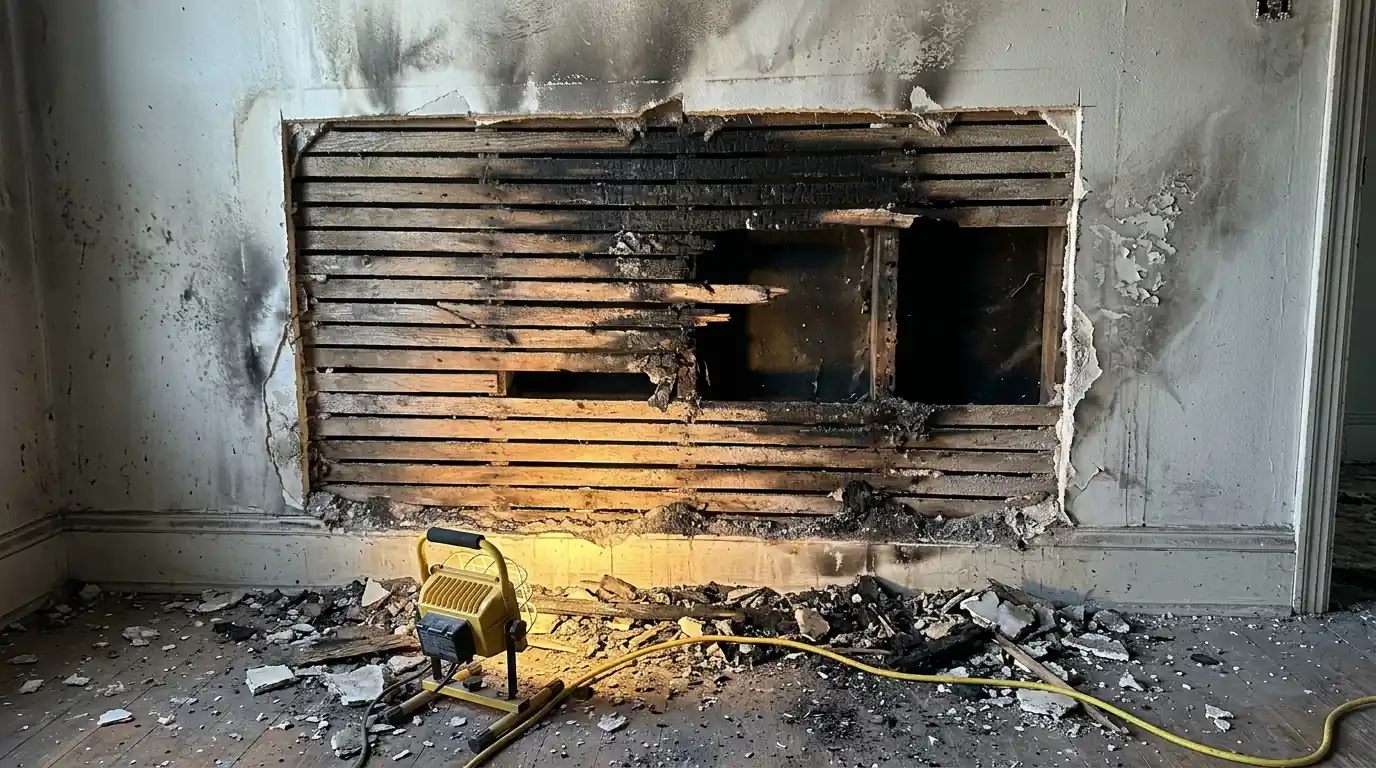
Plaster walls are common in older Detroit houses, and they behave differently from drywall after a fire. Tap-testing finds areas where the keys behind the plaster have broken; those sections sound hollow and will crack or fall once they dry.
Where the plaster is sound, we clean and seal it. Where it has let go, we cut back to solid edges and either patch in plaster to match the wall or replace the section with drywall shimmed flush. On a whole-room loss we usually recommend drywall over the old lath or new framing, and we explain the tradeoff before any work starts.
Drywall
Drywall that took hose water loses strength as the gypsum softens, and the paper face grows mold if it stays wet. Charred or soaked sheets come out, usually a few feet past the visible damage, so the new sheet lands on dry framing.
We hang, tape and finish to the level of the surrounding walls, prime with a stain-blocking primer where smoke touched the framing or the old surface, and paint the whole wall or room so the patch does not show.
Ceiling replacement
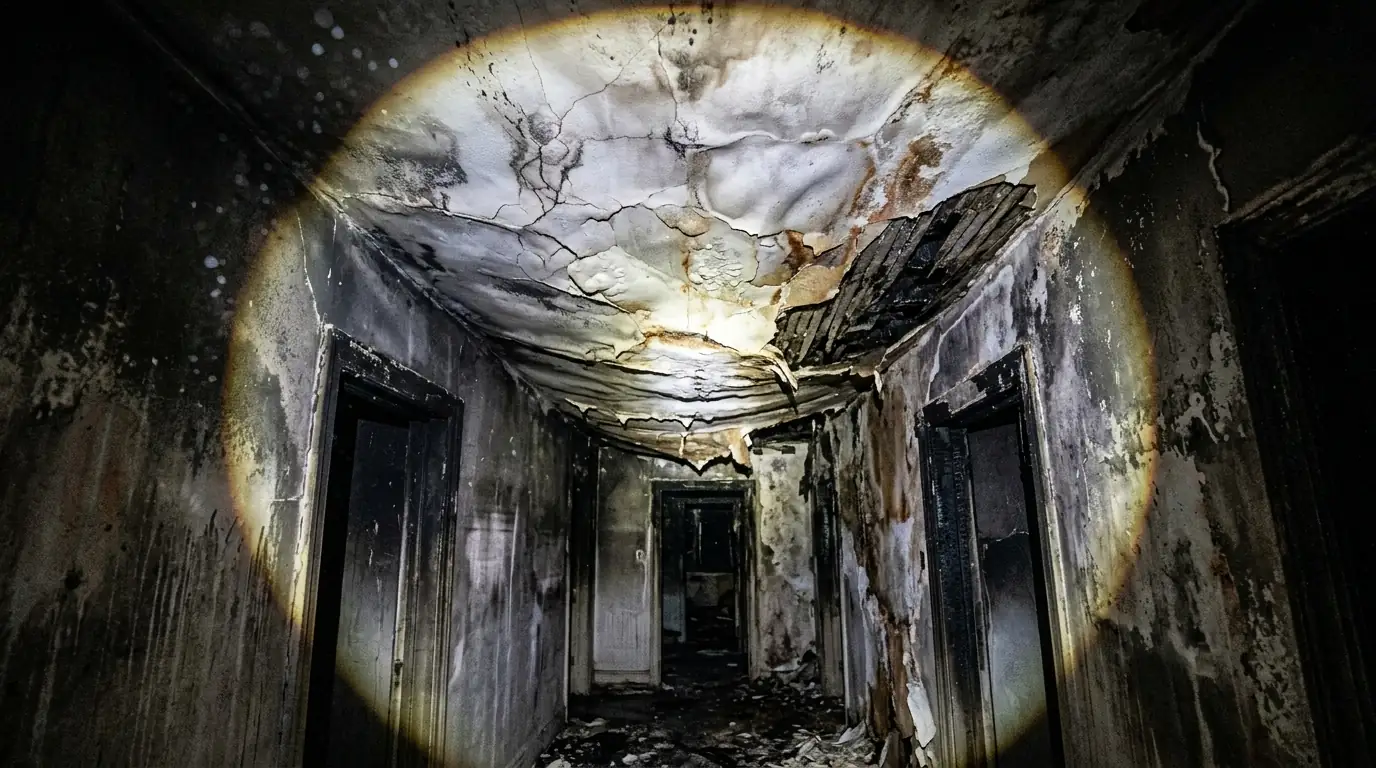
Ceilings take the most heat and the most water. A plaster ceiling that has sagged or cracked in a spiderweb after firefighting can drop without warning, so we check it before anyone works under it and take it down in a controlled way if it is not sound.
The new ceiling goes up once the joists above are dry, cleaned and, where charred, repaired or sealed. In older homes we check for insulation and wiring changes in the attic above while the ceiling is open.
Walls cracked or ceilings sagging after a fire? Call and we will check what can stay before anything comes down.
Call (313) 391-5430What a wall and ceiling rebuild includes
- Tap-test and moisture map of every wall
- Controlled removal of failed plaster or drywall
- Charred insulation removed from open cavities
- Framing dried, cleaned and sealed
- Plaster patching or new drywall
- Taping and finishing to match
- Stain-blocking primer
- Finish paint on the whole wall or room
How wall and ceiling repair runs
- 01
Test every surface
Tap-testing, moisture readings and soot checks, wall by wall.
- 02
Remove what failed
Loose plaster, soaked drywall and charred material come out.
- 03
Prepare the framing
Framing is dried, cleaned, repaired where charred and sealed.
- 04
Rebuild
Plaster patches or new drywall, taped and finished to match.
- 05
Prime and paint
Stain-blocking primer, then paint so the repair disappears.
Plaster walls in the older homes around Detroit
Most of the housing in Hamtramck and in Grosse Pointe Farms was built before 1939, and plenty of Detroit's own homes date from the same decades, so a good share of the walls we rebuild are original plaster on wood lath rather than drywall. That matters after a fire because plaster holds smoke odor in its surface differently and cracks from heat in ways drywall does not. We match the repair to what is already there when a patch will blend in, and suggest drywall when most of a room has to come down.
Plaster and drywall repair questions
Often, if it is still bonded to the lath and was not soaked. We clean it and seal it with a stain-blocking primer before painting.
Sagging, spiderweb cracks or a soft, bulging area are warning signs. Stay out from under it and let us check it before anyone works nearby.
Plaster patches blend into older walls; drywall is faster and cheaper over large areas. We recommend based on how much of the room has to come out.
Water and heat damage extends past the stain line. Cutting back to dry, sound material keeps mold and cracks from showing up later.
Yes. Primer and finish paint are part of the job so patches do not show. See smoke sealing and repainting.
No. Closing a wet wall traps moisture and odor. Framing is dried and, where needed, sealed before the new surface goes on.
