Quick answer
Soot removal in Detroit starts with identifying the soot type: dry soot from fast, hot fires lifts with dry chemical sponges and HEPA vacuuming; wet, oily soot from plastics, rubber and furnace puff-backs needs degreasing cleaners and more passes. Wiping any soot with water first smears it into paint and plaster, which is why dry removal always comes before wet cleaning.
Why the type of soot matters
Different fires burn different materials at different temperatures, and they leave different residue. Wood and paper burning hot leave a dry, powdery soot. Plastics, foam and rubber burning at lower temperatures leave a sticky, smeary soot. Furnace puff-backs leave an oily film.
The wrong cleaner or the wrong order makes things worse. A wet rag on dry soot drives it into the surface; a dry sponge on oily soot just smears it around. Testing first tells us which method each room needs.
Soot is also acidic. Left on surfaces, it etches glass, corrodes metal and yellows paint, so removal is a priority after a fire, not something to put off until the rebuild.
Signs of soot you might miss
Dark strings in ceiling corners
Soot webs form on cobwebs and static and fall apart if wiped.
Lines on ceilings over the framing
Ghosting follows joists and studs behind the surface.
A film on windows and mirrors
Fine soot settles on glass even in rooms that look clean.
Dull or spotted metal
Soot is acidic and starts corroding chrome and brass.
Gray on light fabrics
Upholstery and drapes picked up soot from the air.
How soot removal runs
- 01
Test the soot
Each room tested to identify dry, oily or protein residue.
- 02
Protect and filter
Contents protected; HEPA scrubbers running.
- 03
Dry removal
HEPA vacuuming and dry sponging of loose soot.
- 04
Wet cleaning
Cleaners matched to the residue, top to bottom.
- 05
Seal where needed
Stain-blocking primer and paint for stains that remain.
Dry soot
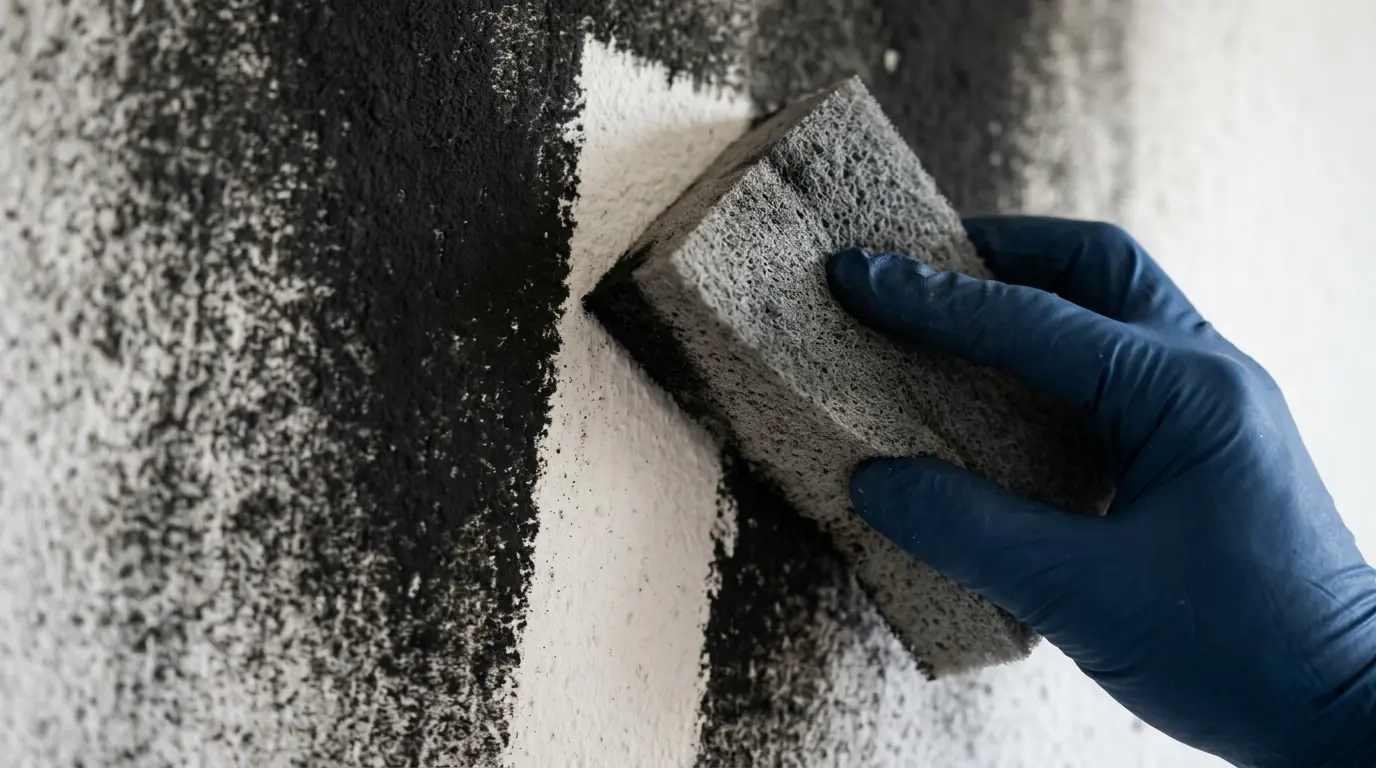
Dry soot looks powdery and black or gray and comes from fast, hot fires burning natural materials. It is the easiest to remove if handled correctly: HEPA vacuuming first, then dry chemical sponges wiped in single strokes, turned and replaced as they load.
Only after the loose soot is off do we wet clean. Skipping the dry step and going straight to water is the most common way a light soot job turns into a repaint. Porous surfaces like flat paint, unsealed brick and acoustic ceiling texture get extra care, since they grab soot the fastest.
Wet, oily soot
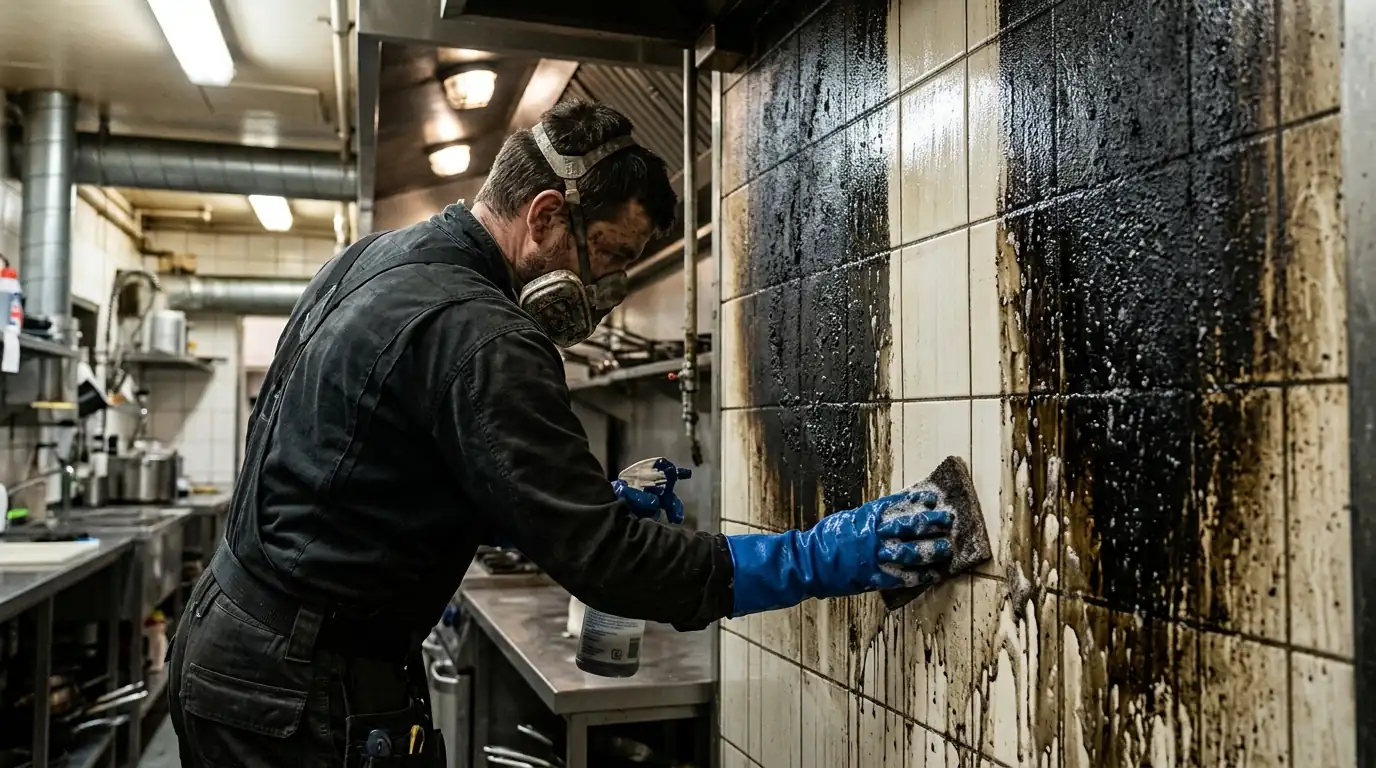
Wet or oily soot is sticky, smeary and often has a stronger smell. It comes from plastics, foam, rubber and synthetic materials burning, and from oil furnace puff-backs. Dry sponges smear it, so it needs degreasing cleaners and often several passes.
We test a small area first to confirm the cleaner lifts the residue without damaging the paint or finish. Surfaces that stay stained after cleaning are sealed with a stain-blocking primer and repainted, rather than scrubbed until the paint fails.
Soot webs and ghosting
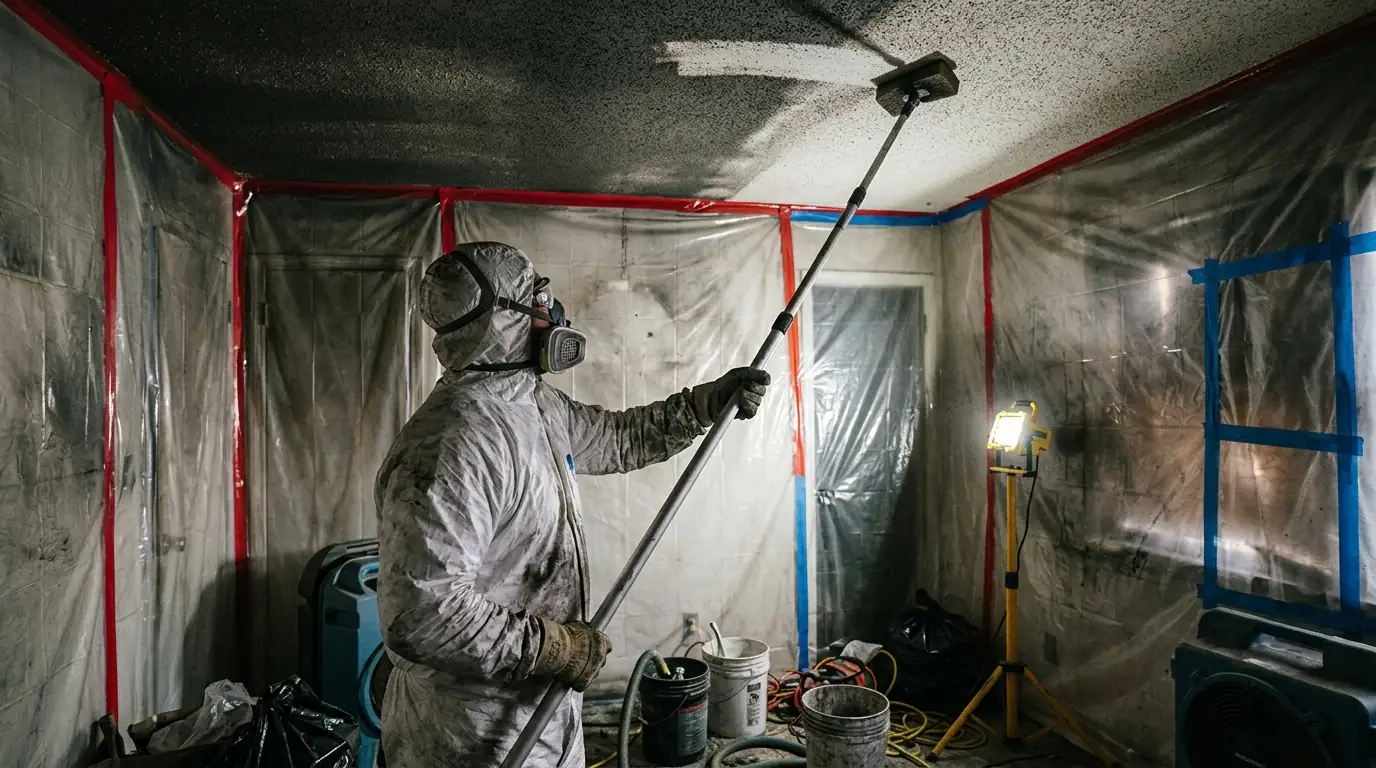
Soot webs are dark strings that hang from ceiling corners and fixtures. They form when soot collects on cobwebs and static, and they fall apart if wiped. We HEPA vacuum them carefully before any cleaning.
Ghosting is a pattern of dark lines on walls and ceilings that follow the framing behind them, where cooler surfaces over studs and joists attract more soot. It cleans like the soot type around it, but often needs sealing and paint to disappear completely. Both are worth checking for in rooms that look clean at first glance, especially upstairs.
Soot on walls and ceilings? Call before anyone wipes it; the wrong method sets it in.
Call (313) 391-5430Soot through shared walls in Detroit duplexes
Streets like Cliff Street near our service office include two-unit duplex buildings, and in buildings like these soot from a fire in one unit often turns up in the other: on the shared wall, in the shared stairwell and around fixtures on the other side of the party wall. We test both units on duplex jobs, since the neighbors' side is easy to miss when the fire unit is the obvious mess.
Dry soot compared with oily soot
| Dry soot | Wet, oily soot | |
|---|---|---|
| Looks like | Powdery, black or gray | Sticky, smeary, often brown-black |
| Comes from | Fast, hot fires in wood and paper | Plastics, rubber, foam, oil puff-backs |
| First step | HEPA vacuum and dry sponge | Test patch with a degreaser |
| Common mistake | Wiping with water first | Dry sponging, which smears it |
What changes the cost of soot removal
Soot removal is priced by area and by the type of soot, since oily soot takes more work.
- Area affectedSquare footage of walls, ceilings and surfaces.
- Soot typeOily soot takes more passes and stronger chemistry.
- SurfacesPlaster, drywall, wood, brick and fabrics each clean differently.
- Sealing and paintNeeded where cleaning cannot fully remove stains.
- Air filtrationHEPA scrubbers running during the work.
National figures put smoke damage cleanup at about $425 to $1,800 for a typical job, or $3.50 to $7.00 per square foot (Yelp). These are planning figures, not a quote.
Soot removal questions
Not with water. It smears and sets soot into the paint. Dry removal comes first.
A rubber sponge that lifts dry soot without water. It is wiped in single strokes and replaced as it loads.
That is ghosting: soot collects more over the cooler framing behind the surface.
Soot particles irritate lungs and the residue is acidic. Use protection and keep cleaning to professionals for heavy soot.
Usually, with masonry cleaners and brushing, sometimes in several passes.
Odor treatment finishes the job. See smoke odor removal.
