Quick answer
Smoke damage restoration in Detroit cleans every surface smoke reached, not only the burned room: walls, ceilings, trim, closets, cabinets, fixtures and belongings are tested, then dry sponged, HEPA vacuumed and wet cleaned with methods matched to the residue. Ducts are cleaned so smoke is not recirculated, and the house is deodorized once the residue is gone.
How smoke damages a house beyond the fire
Smoke is hot gas carrying fine particles and oily compounds. It flows through open doors and gaps under closed ones, up stairwells, into return ducts and through wall and ceiling cavities. As it cools, it drops residue on everything it touches.
The result is a film on walls and ceilings, residue inside closets and cabinets, soot on light fixtures and window glass, and odor in fabrics and porous materials. Left in place, the residue yellows paint, corrodes metal and keeps releasing odor.
Smoke restoration is about thoroughness: testing every room, cleaning in the right order and with the right method, then deodorizing what is left.
Signs smoke reached a room
Gray film on windows
Wipe the inside of a window; a gray mark means smoke residue.
Dark lines on carpet edges
Filtration lines along walls and under doors.
Smudges around registers and fixtures
Smoke moved through the ducts and ceiling openings.
Odor inside closets
Closets hold smoke even with the door shut.
Dull fixtures and hardware
Chrome and brass losing their shine from acidic residue.
How smoke damage restoration runs
- 01
Test every room
Dry sponge tests and visual checks, including closets, attic and basement.
- 02
Protect and remove
Electronics and sensitive items protected; contents sent for cleaning.
- 03
Dry clean first
HEPA vacuuming and dry sponging of loose soot.
- 04
Wet clean
Cleaners matched to the residue, top to bottom.
- 05
Ducts, seal and deodorize
System cleaned, stains sealed, house deodorized.
Whole-house smoke cleanup
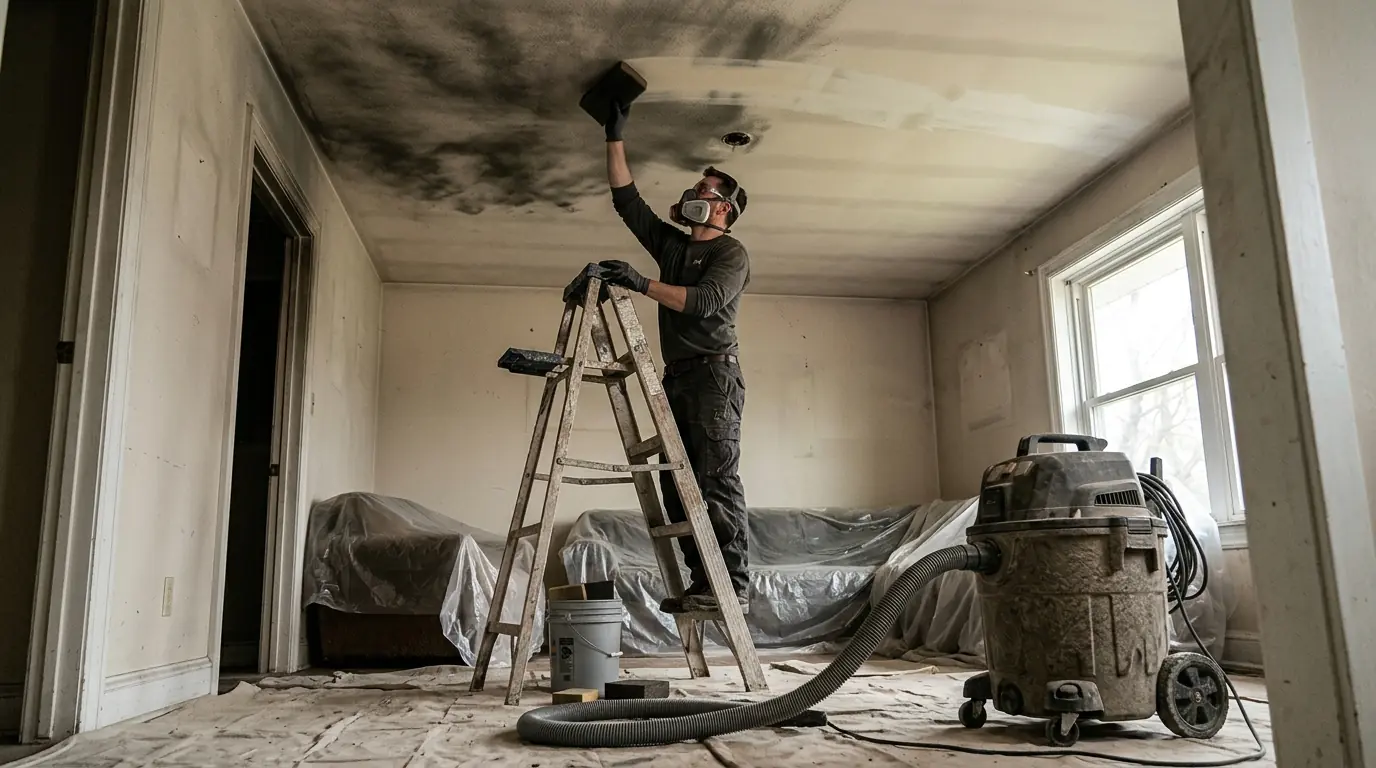
We test each room with dry chemical sponges and work from the most affected areas outward. Ceilings first, then walls, trim, doors and floors, so nothing already cleaned gets dirty again. Loose soot is HEPA vacuumed and dry sponged before any liquid touches a surface.
Wet cleaning follows with cleaners chosen for the residue type. Light fixtures, window glass, blinds and hardware are cleaned too. When cleaning is done, painted surfaces that stayed discolored are sealed with a stain-blocking primer and repainted.
Smoke in closets and cabinets
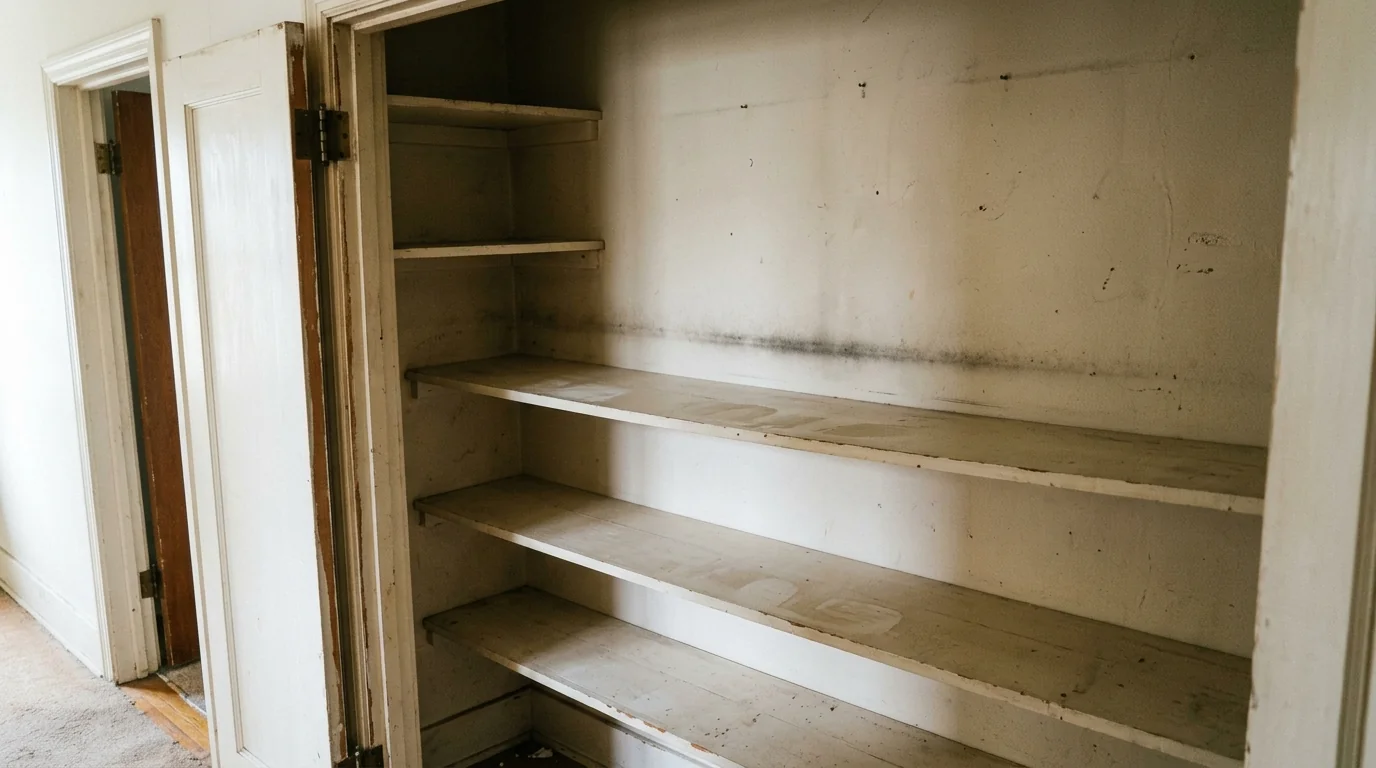
Closets and cabinets pull in smoke and hold it, because the air inside barely moves. Closed doors slow the smoke but rarely stop it. Clothing, linens, dishes and stored items in those spaces usually carry odor even when they look clean.
We empty closets and cabinets, clean the interiors, shelves and doors, and send the contents for cleaning by material. The empty spaces are deodorized before anything goes back, so clean items do not pick the smell up again. Built-in kitchen and bathroom cabinets get the same treatment, with drawers pulled so the cabinet boxes behind them are cleaned too.
Smoke that traveled to other floors
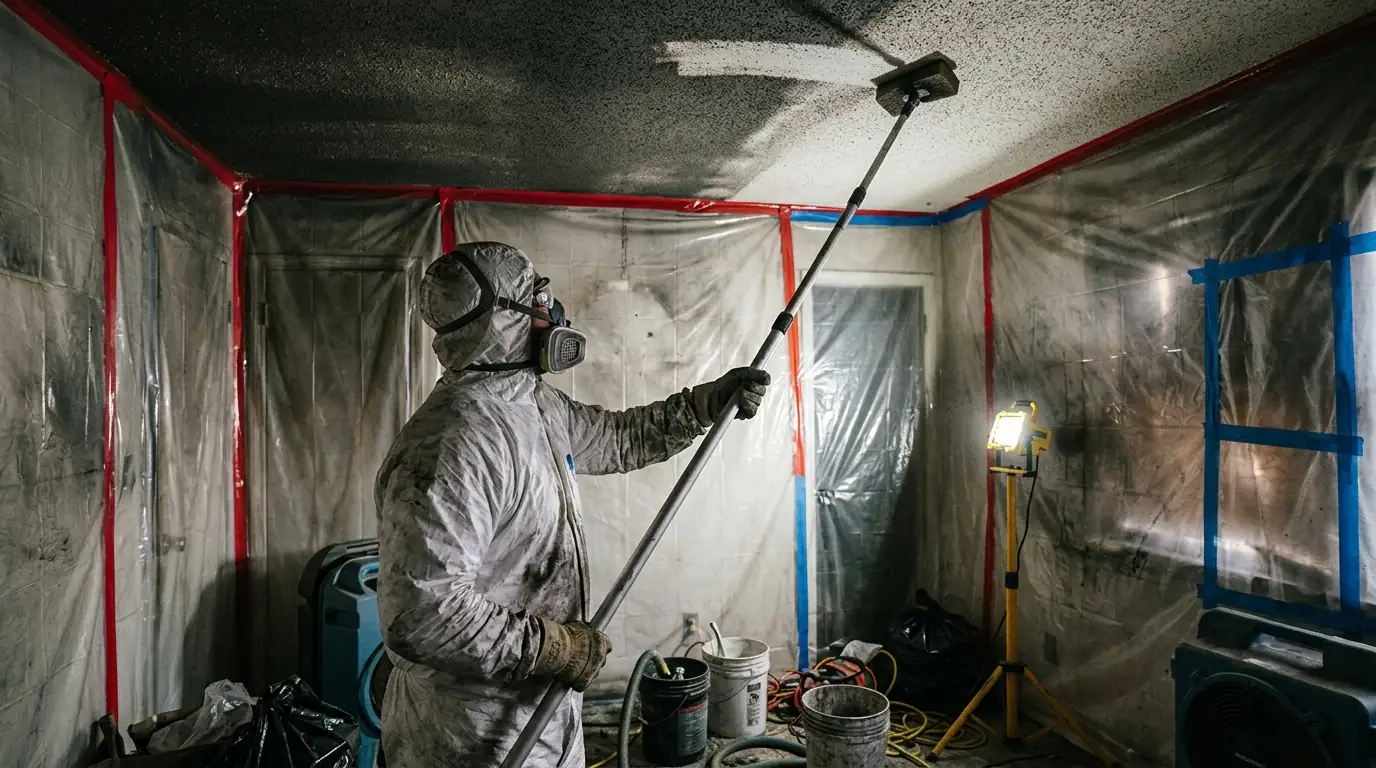
Smoke rises, so rooms above a fire often take more residue than rooms beside it. Stairwells act like chimneys, and ceiling fixtures and chases carry smoke into the attic and the floor above.
We test upper floors and the attic on every job. Bedrooms over a kitchen or basement fire often need full cleaning, and attic insulation that filtered smoke is replaced. Basements under the fire usually have water damage as well, which is dried before soot cleaning. We note every floor and room in the scope, so your adjuster can see why rooms far from the fire are included.
Smoke through the whole house after a small fire? Call and we will test every room.
Call (313) 391-5430Smoke losses in Detroit houses
Structure fires in Detroit dropped from 4,741 in 2014 to 2,154 in 2022, and a large share of what remains are small fires, a stovetop, an outlet, a space heater, that are put out quickly. Those are exactly the losses where smoke damage is the main problem: the burned area is small, but the smoke has moved through a whole house. Older Detroit houses with open stairwells and plaster walls make that spread wider.
What smoke damage restoration includes
- Dry sponge testing of every room
- HEPA vacuuming of loose soot
- Ceilings, walls, trim and doors cleaned
- Closets and cabinets emptied and cleaned
- Light fixtures, glass and hardware cleaned
- Duct and register cleaning
- Stain-blocking primer where stains remain
- Odor treatment after cleaning
What changes the cost of smoke damage restoration
Smoke restoration is priced room by room, based on how much residue there is and what it is on.
- Number of rooms affectedEvery room smoke reached is tested and cleaned.
- Residue typeOily and protein residues take more work than dry soot.
- Closets and cabinetsInteriors and contents add to the scope.
- Ducts and atticCleaning the system and replacing attic insulation.
- Sealing and paintStain-blocking primer and repaint where cleaning is not enough.
Smoke damage restoration questions
Smoke flows through doorways, stairwells, ducts and cavities and drops residue as it cools.
Light smoke on washable paint, maybe. Heavier residue smears with water and household cleaners and can set stains.
Not without cleaning and a stain-blocking primer. Smoke bleeds through ordinary paint.
Yes. See contents cleaning after smoke.
A few rooms can take a few days; a whole house longer, depending on residue and contents.
Usually most of it. Odor treatment afterward handles what remains in porous materials.
