Quick answer
Water removal after firefighting in Detroit starts the same day the fire department releases the house: we pump standing water from the basement, pull soaked carpet and insulation, and set air movers and dehumidifiers. Mold can start growing on wet materials within a couple of days, so we take moisture readings on every visit and keep drying until walls, framing and subfloors test dry.
Why the water is often worse than the fire
A fire may damage one or two rooms. The water used to put it out runs through ceilings, down wall cavities and into the basement, soaking rooms the fire never reached. Plaster ceilings sag, hardwood cups, insulation packs down and basements fill.
Wet materials start growing mold quickly, and water mixed with soot is dirtier than a burst pipe. That is why the drying starts on the first visit, alongside board-up and tarping, rather than waiting for the cleanup.
We document everything as we go: moisture maps, equipment placement and daily readings. Insurers look for that record when they review drying on a fire claim.
Signs water went further than you think
Stains spreading on ceilings downstairs
A ceiling stain that grows over a day or two means water is still moving through the cavity.
Hardwood cupping or lifting
Boards that cup or lift at the edges have taken on water from below or above.
A musty smell in the basement
Mustiness after a few days means materials are staying wet long enough for mold to start.
Soft or bulging plaster
Plaster that feels soft or bulges is holding water and may fail.
Cold, damp walls days later
Walls that still feel cool and damp days after the fire are not drying on their own.
How water removal after a fire runs
- 01
Check safety
Power, gas and ceilings are checked before crews work inside.
- 02
Pump and extract
Standing water out of basements and floors, soaked carpet pulled.
- 03
Open wet cavities
Wet insulation and drywall cut out so framing can dry.
- 04
Dry and dehumidify
Air movers, dehumidifiers and heat where the house is cold.
- 05
Measure until dry
Moisture readings logged every visit until materials test dry.
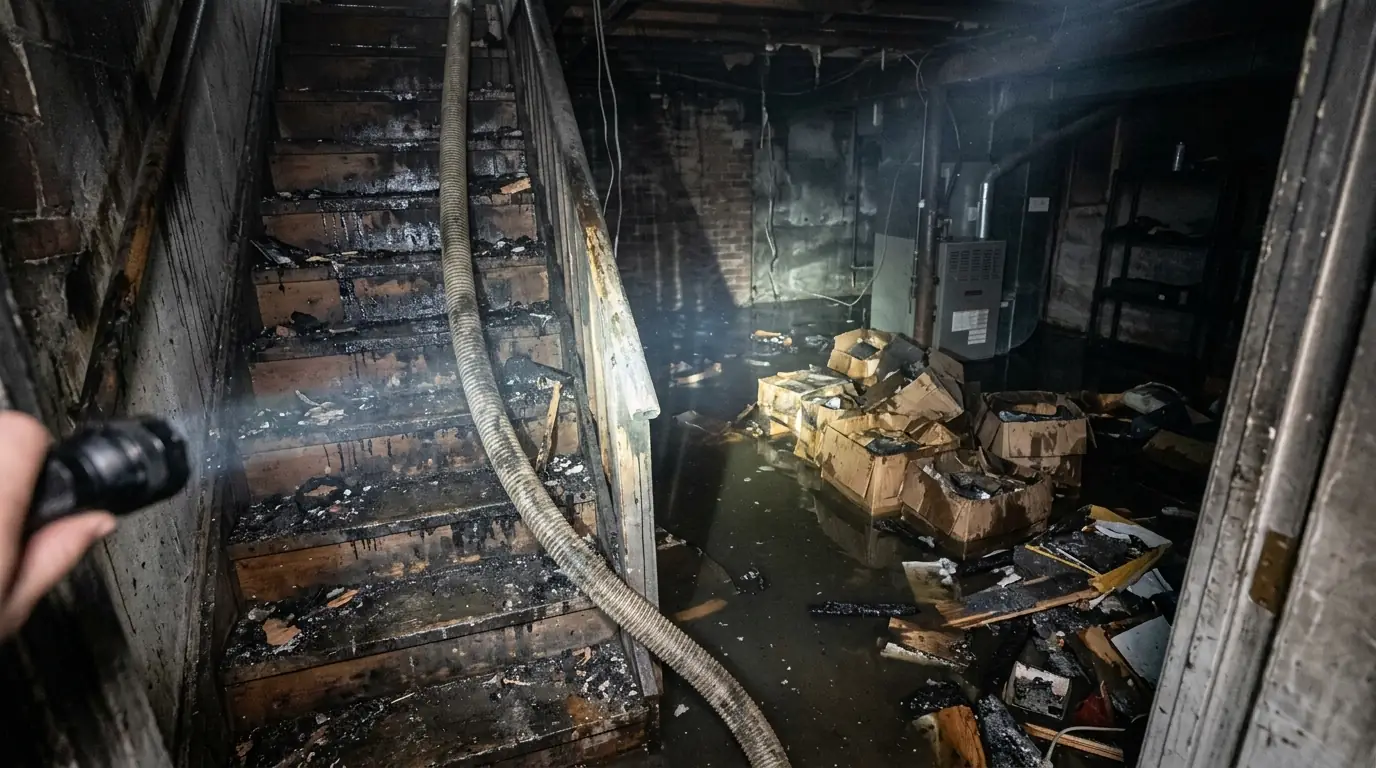
Basement pump-out
Firefighting water collects at the lowest point, which in most Detroit houses is the basement. We pump out standing water, then extract what is left from carpet and floors with truck-mounted or portable extractors.
Stored boxes, furniture and anything on the basement floor come out first so they can dry or be listed. We check the floor drain and sump, clear debris and make sure the pump is running if the power is safe. Wet drywall and insulation on basement walls are usually cut out to a few feet above the waterline so the cavities can dry.
Soaked plaster ceilings
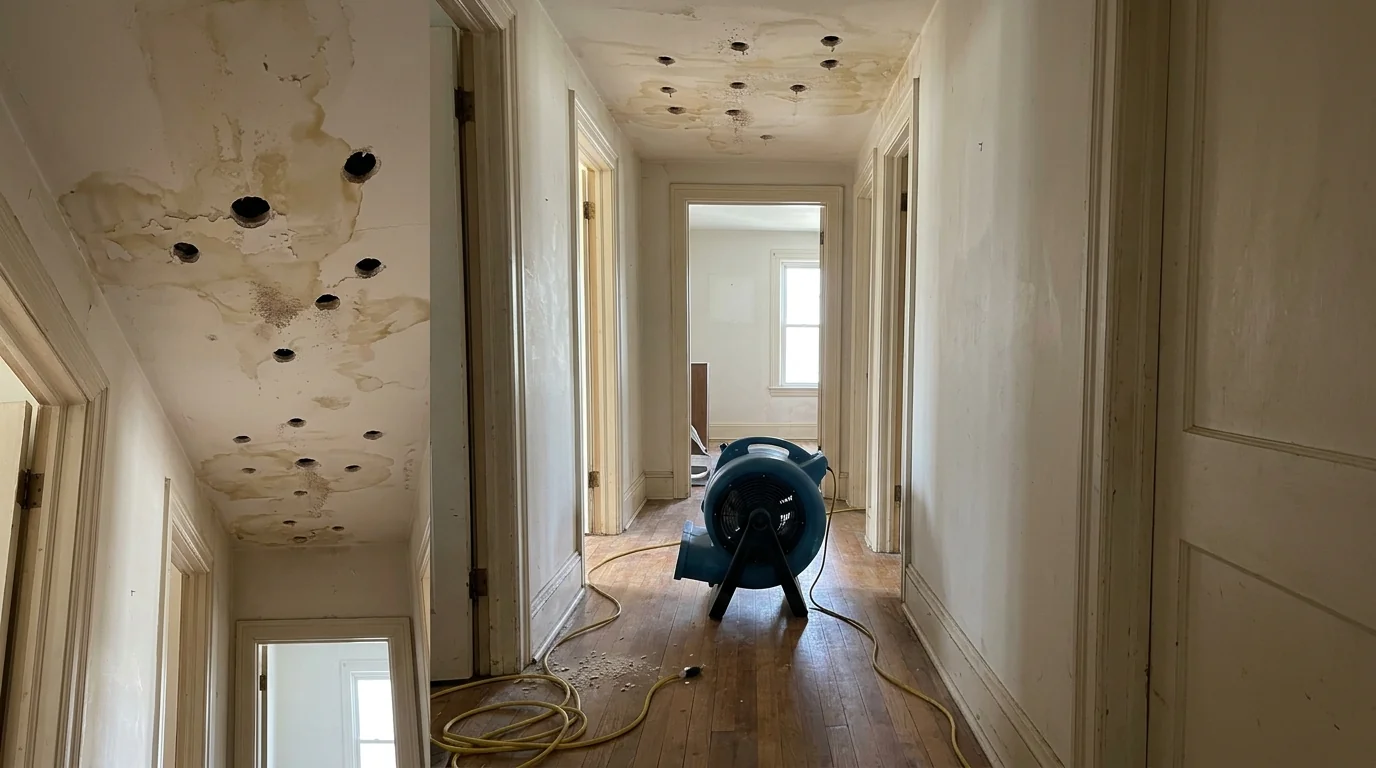
Plaster ceilings under a fire or hose line can hold a lot of water before they show it. Signs are staining, cracking, a soft feel and sagging. A saturated plaster ceiling can drop, so we check ceilings before anyone works under them and take down any that are failing.
Ceilings that are wet but sound get holes drilled or cavities opened so air can move through. We dry from above and below where access allows, and test until the plaster and the joists above read dry before deciding what can stay.
Structural drying with dehumidifiers
Once standing water is out, drying is about moving air and pulling moisture out of it. Air movers blow across wet surfaces while dehumidifiers remove the water they release. In an unheated house after a fire, we set heat or use desiccant dehumidifiers so drying keeps working in the cold.
Framing, subfloors and hardwood are measured with moisture meters on every visit and logged. Equipment comes out when readings reach normal levels for the material, not on a fixed number of days.
Basement full of water after the fire? Call now; drying starts on the first visit.
Call (313) 391-5430Water in the basements of Detroit bungalows
Homes on Cliff Street near our service office include 1941 brick bungalows with partly finished basements, and that is where firefighting water ends up in most of the houses we dry. Finished basement walls hide wet insulation and framing behind paneling or drywall, so we cut inspection openings rather than assume they are dry. Many of these basements also hold the furnace and water heater, which need checking before they run again.
What you can do before we arrive
Safe to do
- Stay out from under sagging ceilings
- Move valuables out of the basement if the power is off and it is safe
- Photograph standing water before it is pumped
- Open windows if the weather allows and the house is secure
Leave for us
- Walking into standing water with the power on
- Using a household vacuum on water mixed with soot
- Running fans that blow soot around the house
- Closing up walls or ceilings that feel damp
What changes the cost of water removal after a fire
Drying is priced by how much is wet, how much has to come out and how long the equipment runs.
- How much water and whereA soaked basement and ceilings take more work than one wet room.
- Materials removedCarpet, pad, insulation and drywall that cannot dry in place.
- Equipment and daysNumber of air movers and dehumidifiers and how long they run.
- Cold weatherHeat or desiccant drying in an unheated house adds cost.
- Soot in the waterDirty water means more cleaning on every surface it touched.
Water removal after a fire: questions
On wet materials it can start within a couple of days, which is why drying begins on the first visit.
Firefighting water runs down through floors and wall cavities to the lowest point, which is usually the basement.
Sometimes, if they stay bonded and dry out. Ceilings that sag or crack in a web pattern usually have to come down.
Usually several days, longer in cold weather or when framing and subfloors are soaked. We decide by moisture readings, not a fixed schedule.
Water damage from putting out a covered fire is generally treated as part of the fire loss. Keep our drying logs for your claim.
We contain and remove it as part of the job; see mold remediation after a fire.
