Quick answer
Winterizing a fire-damaged home in Detroit means draining the water lines, fixtures and water heater, or setting safe temporary heat, whenever the house will sit without heat in freezing weather. With Detroit's normal January low at 19.2F, a house with the gas shut off after a fire can freeze its pipes, and a burst line adds water damage to the fire claim.
Why a fire loss turns into a freeze loss
The fire department usually shuts off the gas, and often the power, before they leave. Broken windows and ventilation holes let cold air straight in. Nobody is running the faucets or checking the basement.
In a Michigan winter that combination freezes water lines, traps, water heaters and boiler loops. When they thaw, they leak into walls and ceilings that are already damaged, and the insurer may treat the new damage as something the owner should have prevented.
Winterizing is part of stabilizing the house. It happens alongside board-up and water removal, not after them.
Signs the house is at risk of freezing
No heat since the fire
If the furnace or boiler has been off since the fire department left, the clock is already running.
Frost on the inside of windows
Frost or ice on interior glass means the house is at outdoor temperature.
Water still turned on at the main
An unheated house with the water on is the setup for a burst line.
Open windows or a hole in the roof
Cold air coming straight in drops the temperature fast, even with some heat.
A red tag on the gas meter
A utility shutoff tag usually means the gas will stay off until repairs and an inspection.
How winterizing a fire-damaged house runs
- 01
Check what is shut off
Gas, power and water status, and whether the house will be worked in.
- 02
Close the openings
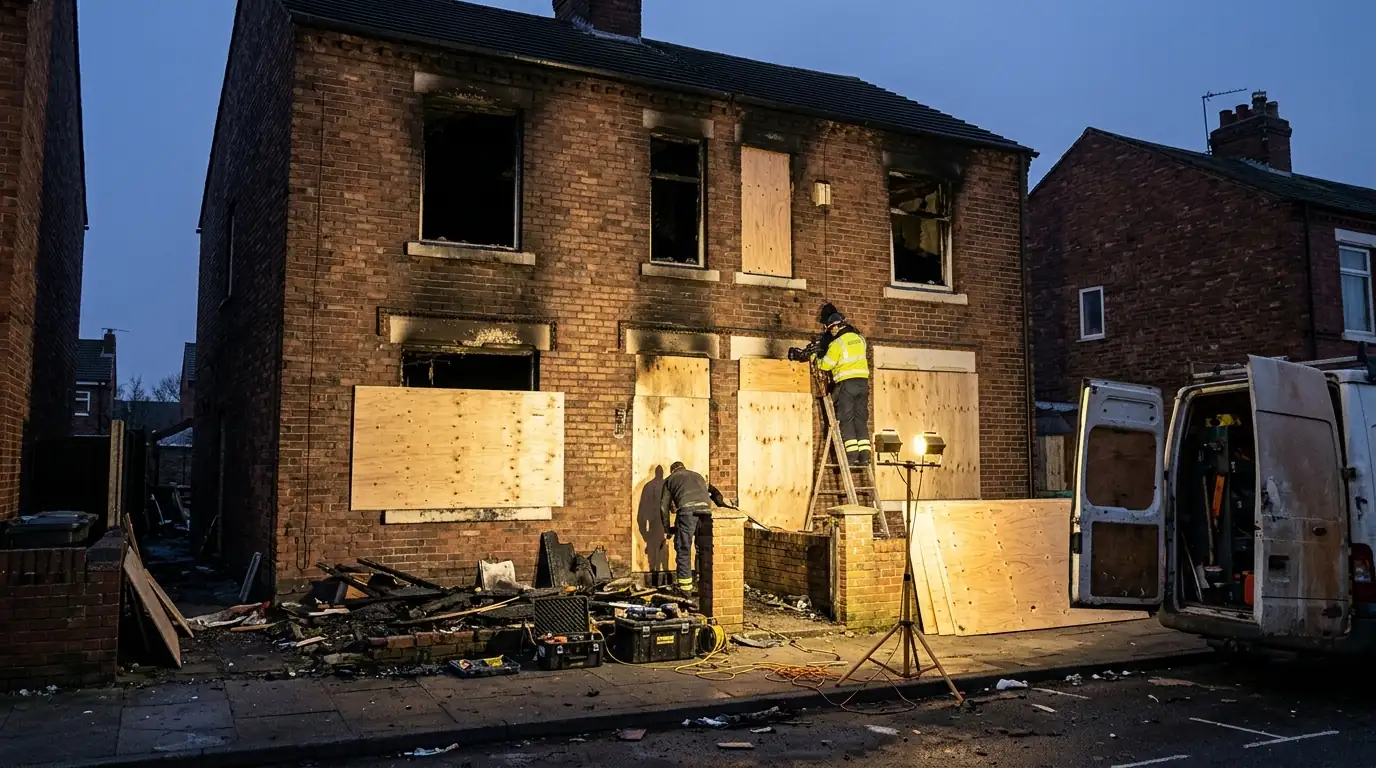
Board-up and tarps so cold air and snow stay out.
- 03
Drain or heat
Full drain-down with antifreeze in traps, or safe temporary heat.
- 04
Tag and document
Every valve and fixture tagged, with photos and a written list.
- 05
Monitor
Return visits to check temperatures, pumps and openings until service is restored.
Plumbing drain-down
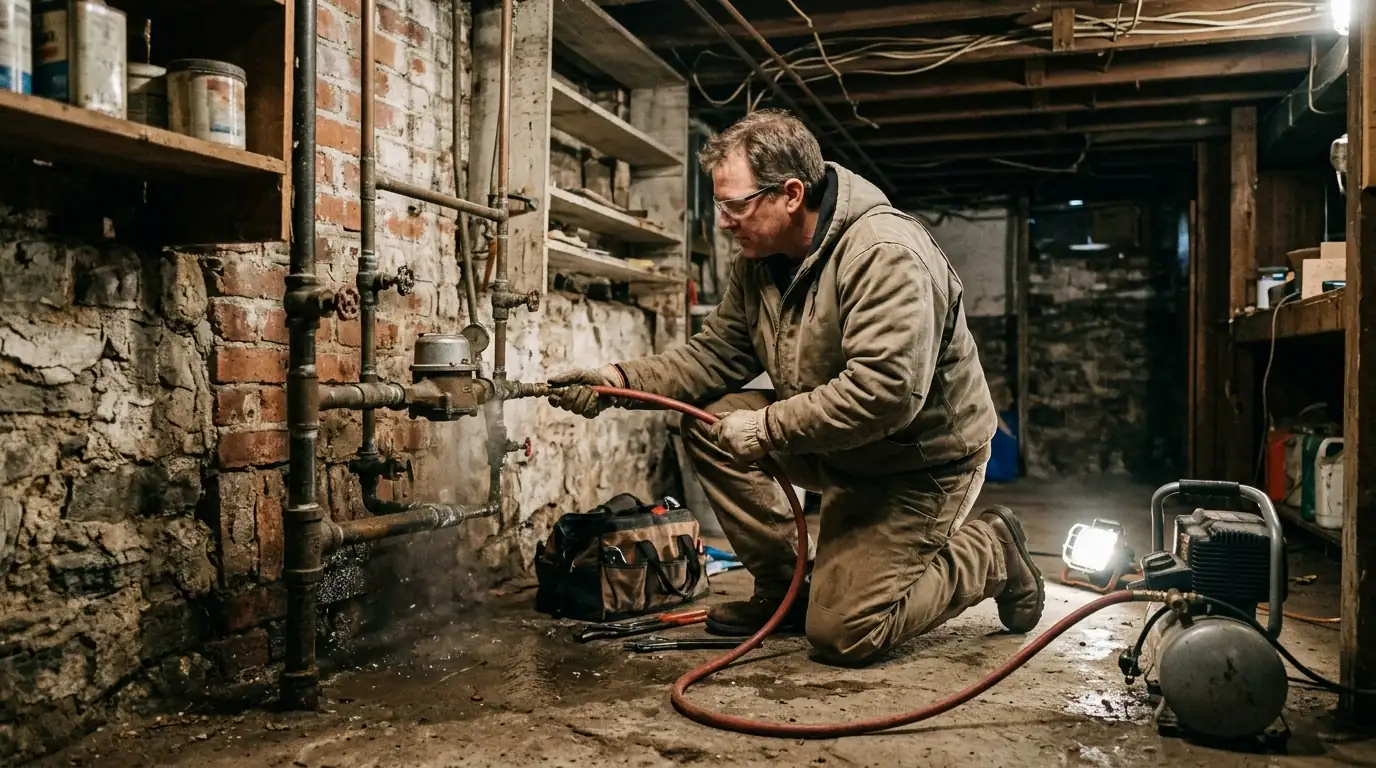
When the house will stay empty and unheated, draining is the safest option. We shut the water off at the main, open every fixture from the top floor down, drain the water heater, blow out the lines with compressed air and pour plumbing antifreeze into the traps and toilets.
Hot water and steam heating systems get drained too, since a frozen boiler loop is expensive to replace. Every valve and fixture gets a tag, and you get a written list so the plumber who re-commissions the house knows exactly what was done.
Temporary heat
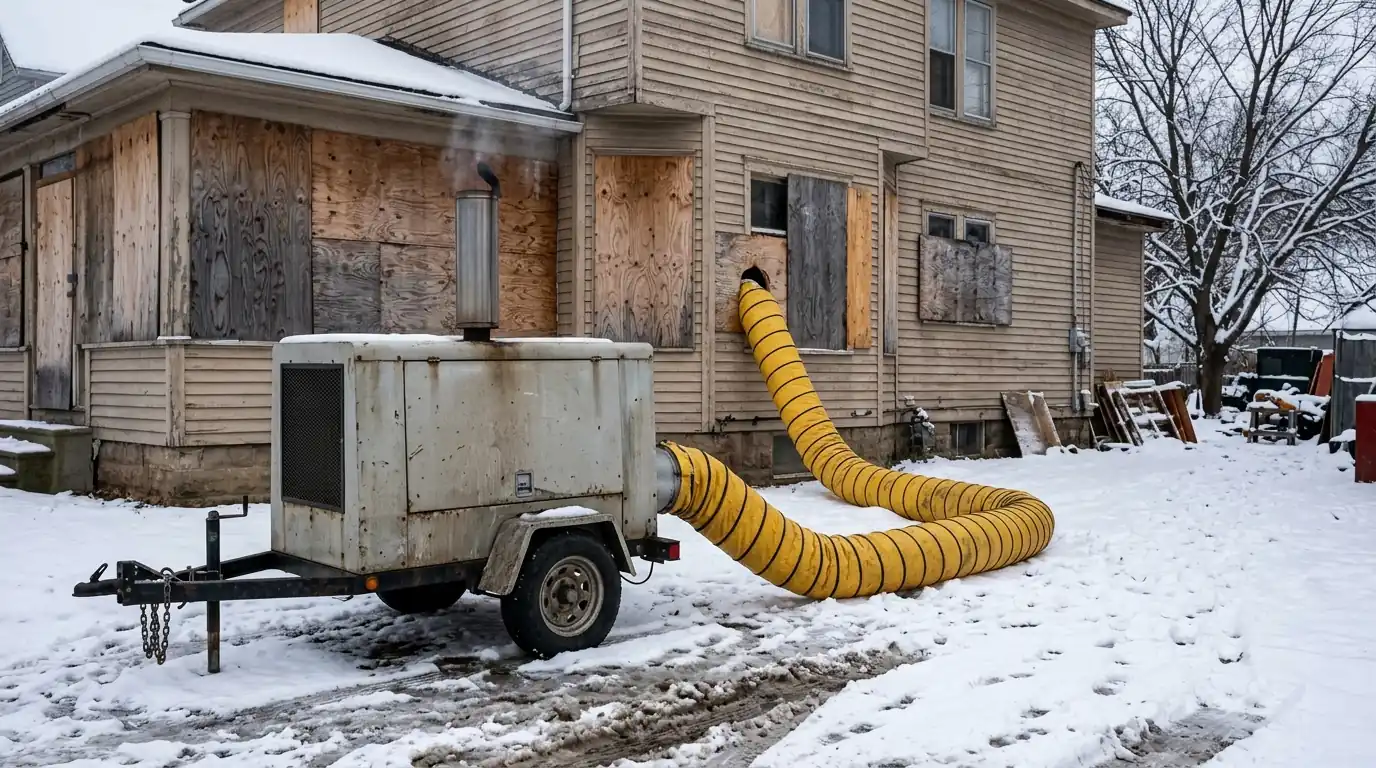
When work will go on inside through the winter, or the house has a hydronic system that is hard to drain fully, temporary heat is the better choice. We set electric heaters on dedicated circuits where the power is safe, or indirect-fired heaters outside with ducting in, never open-flame heaters inside a damaged house.
Heat alone is not enough if the openings are still open, so it goes with board-up and tarps. We check the temperature in the coldest room and the basement on every visit.
Protecting a house with the gas shut off
Many houses sit with the gas off for weeks while the insurer and the utility sort out what has to happen before service is restored. During that stretch we keep the house closed up, the plumbing drained or heated, and the sump pump running if the power is on, since a basement that already took hose water cannot take more.
We photograph the gas meter tag, the thermostat and the drained fixtures on each visit. That record shows the insurer the house was protected, which matters if something fails later.
Heat off and a freeze coming? Call the line now; winterizing is part of the first visit.
Call (313) 391-5430How long it takes
A typical single-family drain-down takes a few hours once the water is off; a large house with a boiler takes longer. Temporary heat can go in the same day once the power situation is known.
The real time is the stretch afterward, while the house waits for repairs and the gas to come back. That is why monitoring visits are part of the job.
How cold it gets when the heat is off in Detroit
Detroit's normal January runs from a high of 32.3F to a low of 19.2F, with 14.0 inches of snow in an average January, and Flint's normal January low is colder still at 16.0F, which matters for houses we protect out of the Grand Blanc office. A house that loses its heat to a fire any time from late November through March should be treated as a freeze risk from the first night, not after the first cold snap.
What winterizing includes
- Water shut off at the main
- Every fixture opened and drained
- Water heater drained
- Lines blown out with compressed air
- Plumbing antifreeze in traps and toilets
- Boiler or hot water loop drained
- Valves and fixtures tagged with a written list
- Photos of meters, thermostat and drained fixtures
What affects the cost of winterizing
Winterizing is a short job compared with the rest of a fire loss, but a few things change the scope.
- Size of the plumbing systemMore floors, bathrooms and fixtures mean more lines to drain and tag.
- Heating system typeHot water and steam systems take longer to drain than forced air.
- Drain-down or heatTemporary heat adds equipment rental, fuel or power and monitoring visits.
- Openings to closeHeat is wasted if windows and roof holes are not boarded and tarped.
- How long the house sitsLonger vacancies mean more monitoring visits and photos.
Winterizing after a fire: questions
If the heat is off and the house will be empty in freezing weather, yes. A small fire can still shut off the gas for weeks.
Draining is safest for an empty house. Temporary heat makes sense when work goes on inside or the heating system is hard to drain fully.
Not unattended, and never fuel-burning heaters inside a damaged house. We use electric heaters on safe circuits or indirect-fired heaters outside the building.
Protecting the house from further damage is usually expected by policies, and winterizing is part of that. Check your policy and keep the photos and list we provide.
A plumber re-commissions the system when the house is ready. Our tagged list shows them every valve and fixture that was drained.
Yes. Heat does little with open windows, so winterizing goes with emergency board-up and tarping.
