Quick answer
Fireplace and chimney smoke cleanup in Detroit removes soot from the fireplace face, mantel, walls, ceilings and furnishings after a backdraft or chimney fire, using dry sponging and cleaners suited to brick, stone, wood and paint. Creosote residue from a chimney fire is oily and strong-smelling, so cleaning is followed by odor treatment. The flue itself is inspected by a chimney professional before the fireplace is used again.
Why fireplace soot spreads so far
A fireplace that backdrafts pushes smoke into the room instead of up the flue, usually because of a cold flue, a blocked damper, poor draft or a house with too little makeup air. The soot settles on everything nearby and drifts through the house.
A chimney fire is different: creosote built up inside the flue ignites, burning very hot and loud. Smoke and creosote residue can come back into the room, and heat can crack the flue liner, which is a fire risk the next time the fireplace is used.
Candle soot is a smaller version of the same problem, a fine black residue that builds up over time on walls and ceilings.
Signs the fireplace or chimney caused the soot
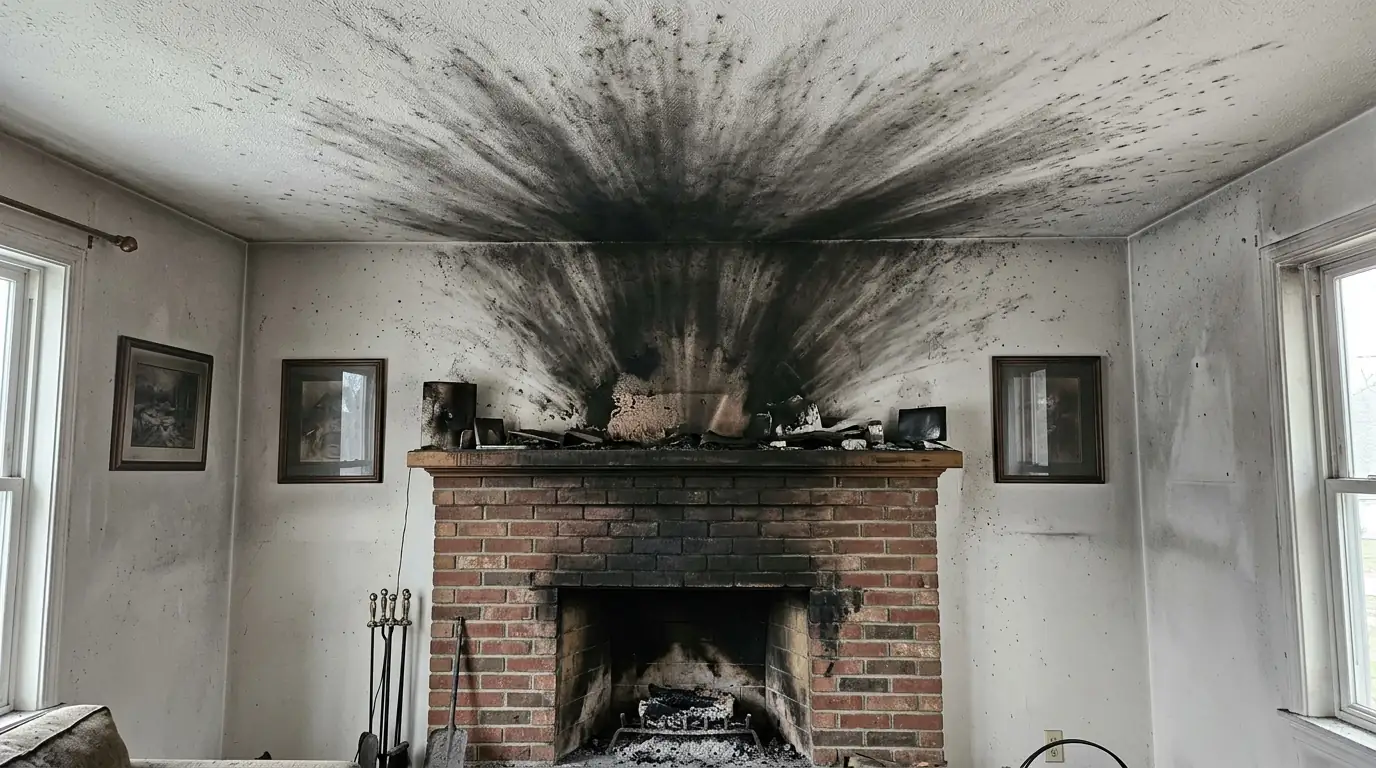
Soot fanning up from the fireplace opening
The pattern above the opening points to a backdraft.
A loud roar from the chimney
A rumbling or roaring sound often means a chimney fire.
A tarry, creosote smell
Stronger and oilier than ordinary wood smoke.
Debris or flakes on the roof or hearth
Flaky creosote or pieces of liner after a chimney fire.
Black film on walls over time
Gradual buildup points to candle or fireplace soot.
How fireplace smoke cleanup runs
- 01
Make sure the fire is out
No cleanup until the fireplace and flue are cold and the fire department has cleared any chimney fire.
- 02
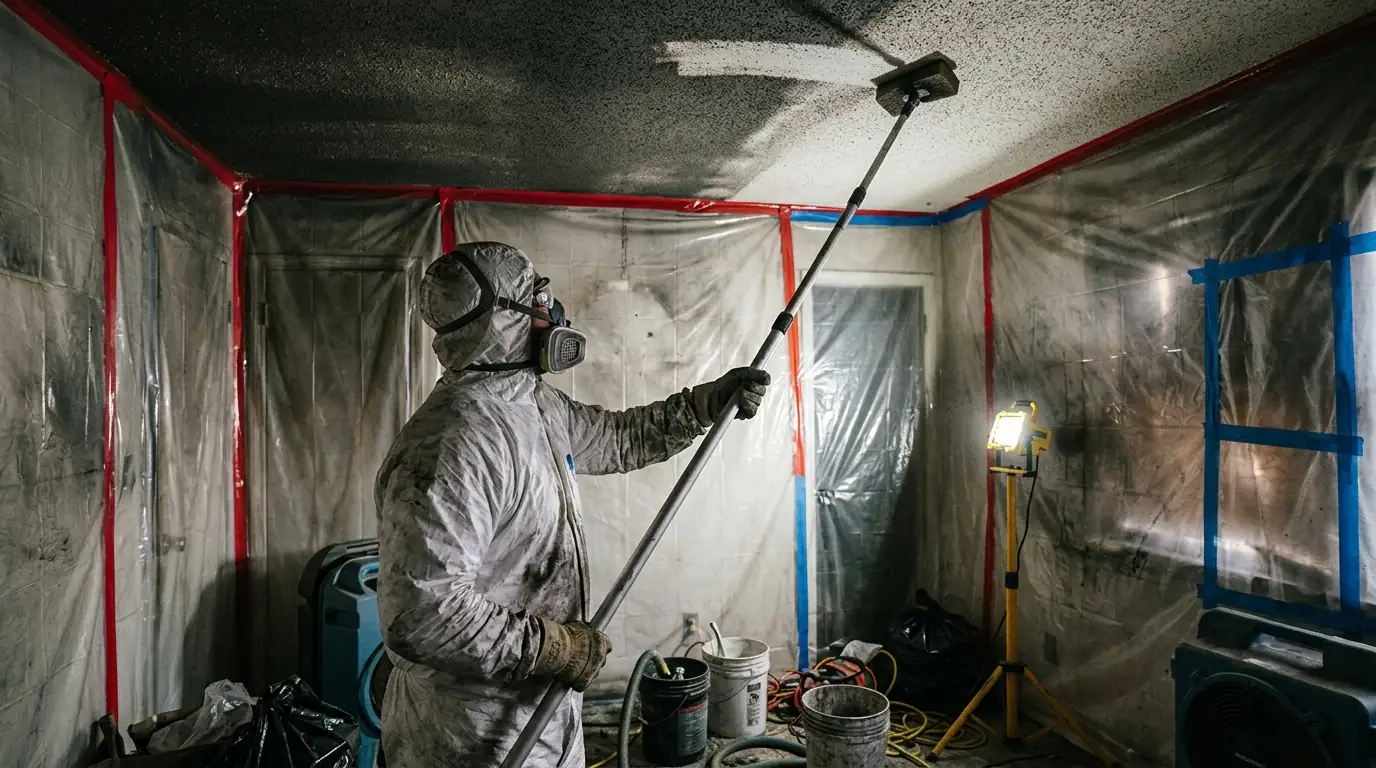
Protect and vacuum
Floors covered, loose soot HEPA vacuumed.
- 03
Clean by surface
Masonry, wood, paint and fabrics each cleaned their own way.
- 04
Deodorize
Odor treatment, especially after creosote.
- 05
Flue inspection
A chimney professional inspects before the next fire.
Backdraft soot
Backdraft soot usually shows as a dark fan above and around the fireplace opening, spreading across the ceiling and onto nearby walls and furniture. We protect the floor, HEPA vacuum loose soot and dry sponge walls and ceilings before any wet cleaning.
Brick and stone get cleaners and brushes suited to masonry; wood mantels get a wood-safe cleaner and, if needed, a finish refresh. Paint that stays stained is sealed and repainted. We note the likely cause, like a closed damper or cold flue, so it can be addressed before the next fire.
Chimney fire residue
After a chimney fire, the room may have oily creosote residue as well as soot, with a strong, tarry smell. Cleaning takes degreasing cleaners and more passes than ordinary soot, and the room is deodorized afterward.
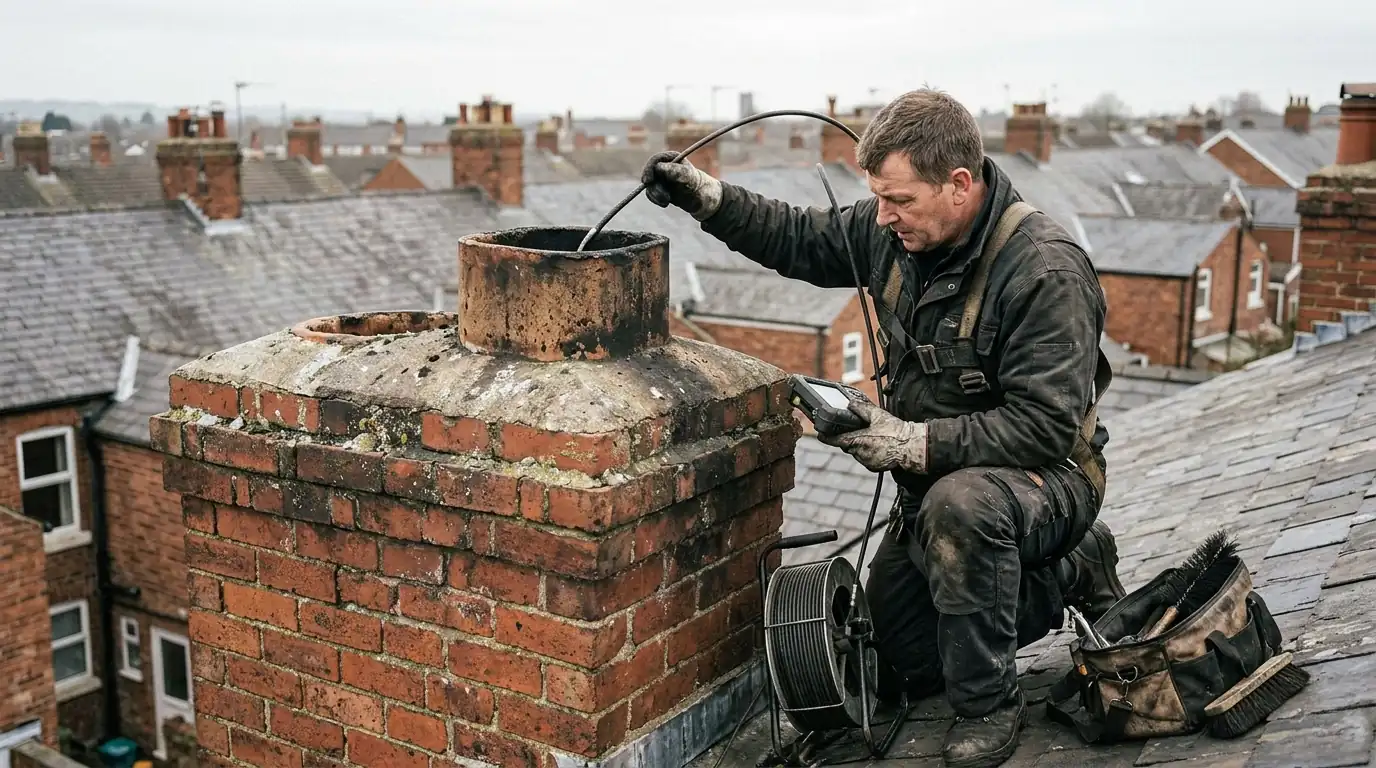
The flue is inspected by a chimney sweep or mason before the fireplace is used again, since chimney fires can crack clay liners and damage the masonry. Attic framing near the chimney is checked too, in case heat traveled through the chase. If the flue needs relining or masonry repair, we schedule the room's final paint after that work so it is not dirtied again.
Candle soot
Candle soot builds up slowly as a fine black film on walls and ceilings, often concentrated above where candles burn and along air paths near vents and doorways. It can also show up as dark lines on carpet edges and ghost marks on walls where air flows around framing.
We clean it with dry sponging and gentle cleaners, then seal and repaint where the film has stained the paint. Because it is so fine, the ducts and filter are checked too, since the system often carries it around the house.
Fireplace backdraft or chimney fire? Call the line; we will clean up the room and the smell.
Call (313) 391-5430Fireplace season around Detroit and Flint
Fireplaces get heavy use here in the cold months; Flint's normal January low is 16.0F, and many older houses in the area still have wood-burning fireplaces in their living rooms. The first fires of the season, when the flue is cold and creosote has built up from the year before, are when backdrafts and chimney fires are most likely. A chimney sweep before the season and a quick check of the damper prevent most of the cleanups we do.
What to do after a backdraft or chimney fire
Do this
- Call the fire department for any chimney fire
- Let the fireplace go cold and leave the damper as the firefighters left it
- Photograph the soot before cleaning
- Book a chimney inspection before the next fire
Avoid this
- Lighting another fire to test the draft
- Wiping soot off painted walls with water
- Vacuuming soot with a regular vacuum
- Painting over soot stains
What changes the cost of fireplace and chimney smoke cleanup
Cleanup cost depends on how far the soot spread and whether creosote is involved.
- Rooms affectedOne living room versus soot spread through the house.
- Soot or creosoteOily creosote residue takes more passes and deodorizing.
- SurfacesBrick, stone, wood mantels and painted walls each need their own care.
- DuctsSystem cleaning if soot was pulled into the returns.
- Sealing and paintStained ceilings and walls sealed and repainted.
National cost guides put smoke damage cleaning at about $200 to $1,200 per room (Angi). Chimney inspection and flue repair are separate. These are planning figures, not a quote.
Fireplace and chimney smoke questions
A cold flue, a closed or partly closed damper, a blocked chimney or a house that is too airtight to supply air for the fire.
It can be. Heat can crack the liner and reach nearby framing. Have the chimney inspected before using it again.
Yes, with masonry cleaners and brushes; heavy staining may need repeated cleaning.
Cleaning the residue first, then odor treatment. See smoke odor removal.
A chimney sweep or mason inspects and cleans the flue. We clean the room and the house.
When it covers walls and ceilings or has gone into the ducts, yes.
