Quick answer
Lightning strike fire damage in Detroit usually means three things at once: an entry hole in the roof or chimney, a smoldering fire in the attic or walls, and wiring scorched as the charge found ground. We tarp the roof first, clean smoke and char from the attic down, and repair framing and finishes after an electrician checks every circuit.
What a strike does to a house
Lightning looks for the easiest path to ground. On a house that is usually the chimney, a roof vent, a satellite dish or the top of a gable, then down through wiring, plumbing or framing. Where it enters, it can blow out shingles, split rafters and start a fire in the attic insulation.
Some strike fires are obvious. Others smolder inside a wall or under insulation for hours, which is why the fire department often opens ceilings to check. By the time we arrive, the roof is open, the attic is wet and smoky, and several circuits may be dead.
We handle the structure, the smoke and the water. The electrical system needs a separate check by an electrician before anything is powered back up.
Signs a strike did more than it looks like
A burning smell with no visible fire
A smoldering fire in insulation or a wall cavity can take hours to show. Call the fire department first.
Tripped breakers and dead circuits
Several circuits out at once after a strike points to surge damage in the wiring.
Electronics that died at the same moment
TVs, routers and appliances failing together suggests the surge went through the house wiring.
Shingles on the ground or a cracked chimney
Debris around the house usually marks the entry point.
Water stains appearing on ceilings
A small roof hole lets rain in long before anyone goes into the attic.
How we handle a strike
- 01
Cover the roof
Tarp the entry point and any fire-damaged roof on the first visit.
- 02
Water out, power checked
Pump and dry what the firefighting soaked; an electrician checks circuits.
- 03
Clean the attic down
Remove insulation, clean char and smoke from the attic to the rooms below.
- 04
Repair the structure
Decking, rafters, ceilings and walls rebuilt where needed.
- 05
Finish and document
Paint, final cleaning and a full list of damaged items for your claim.
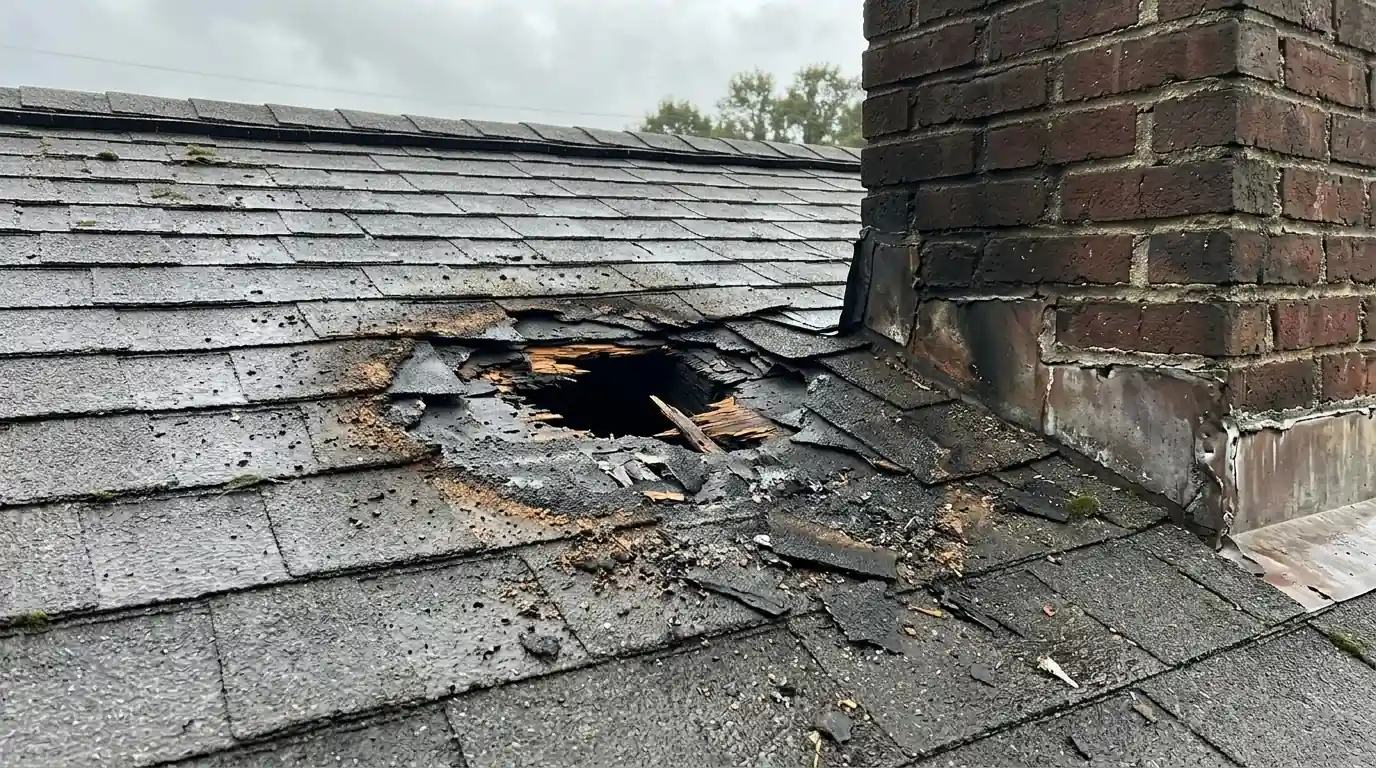
Roof entry point
The entry point is often a hole the size of a fist or larger, with shingles blown off around it and sometimes a cracked chimney crown. Rain and snow go straight in, so we tarp it on the first visit, secured to sound decking rather than nailed through the damaged area.
Once the attic is cleaned, the burned decking and shingles are cut out to sound wood and replaced, and the chimney is flagged for a mason if the flue or crown cracked.
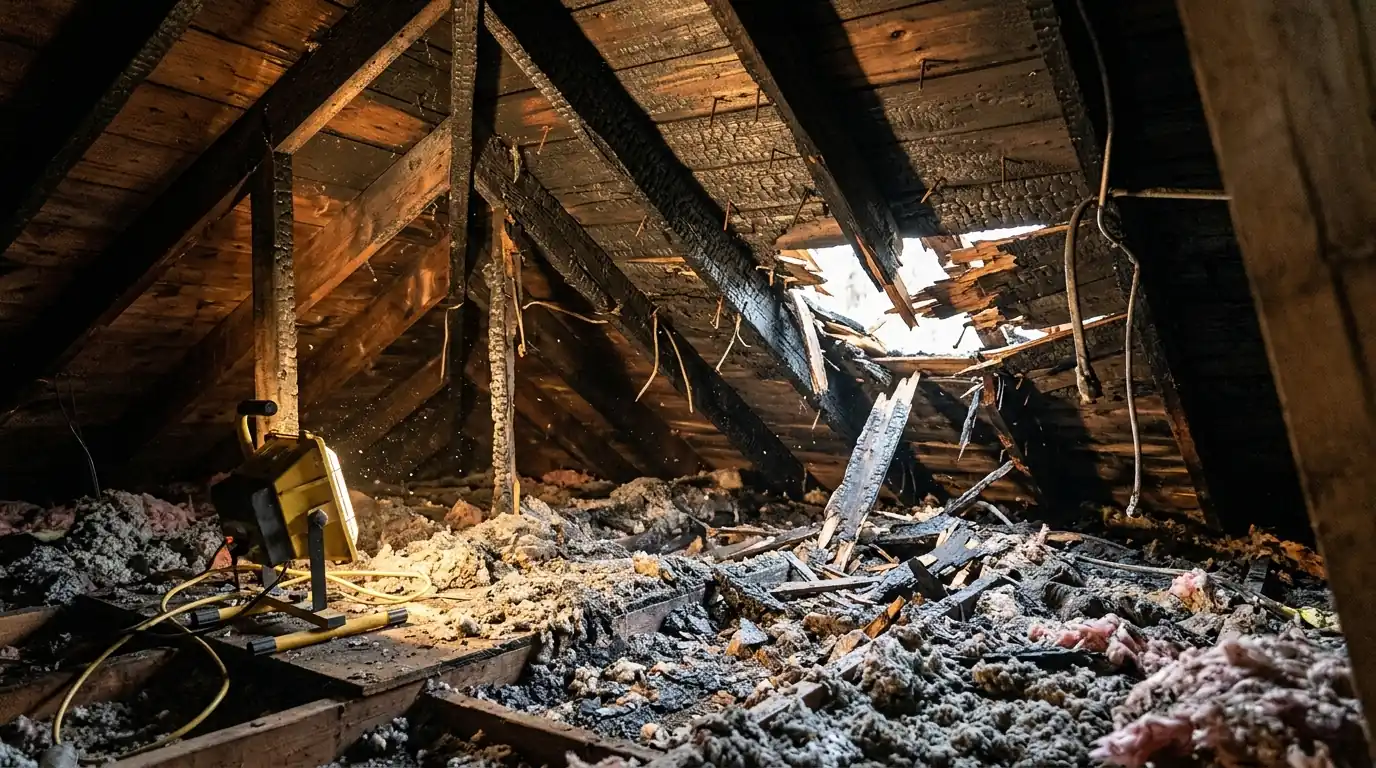
Attic fires from a strike
When the strike ignites the attic, the damage is a mix of charred rafters and sheathing, burned and soaked insulation and a heavy smoke layer that drops through ceiling fixtures and gaps into the rooms below.
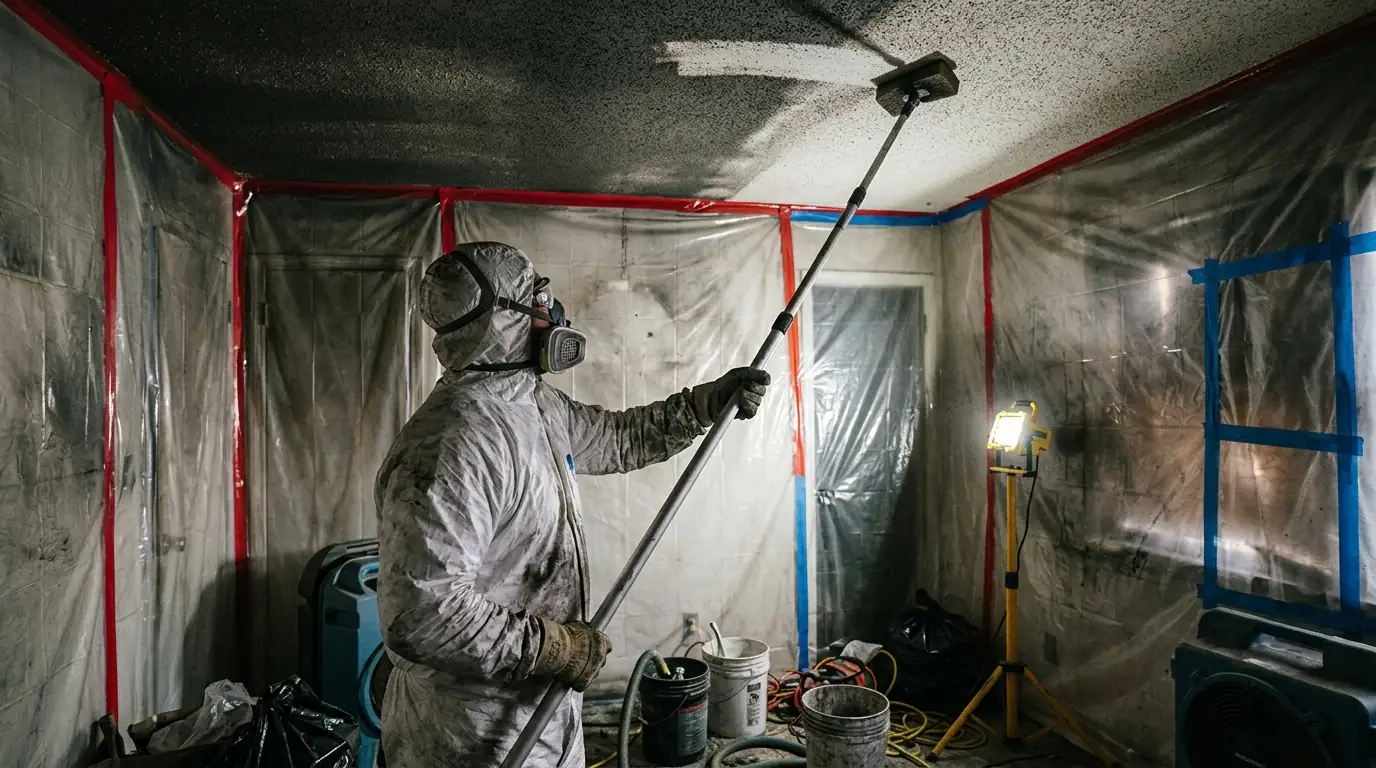
We remove the insulation, clean or soda blast the charred framing, repair or sister what is weakened and seal the rest so the odor stays out. Ceilings below that took water are tested and replaced where they sag, and the rooms under the attic get the same soot cleaning as any other fire, since the smoke layer settles on walls, fixtures and closet contents directly beneath.
Scorched wiring and surge damage
The charge often travels through the house wiring, scorching outlets and fixtures and damaging anything plugged in. Burn marks around outlets, tripped breakers and dead circuits are common, even in rooms far from the entry point.
An electrician inspects and repairs the wiring. We clean the smoke residue around burned devices, open walls where the electrician needs access and list damaged electronics and appliances for your claim. Surge damage is often internal, so a TV or furnace control board that powers on can still fail weeks later, and we note every item that was plugged in at the time.
Lightning hit the house? Call the fire department if you smell smoke, then call us to cover the roof.
Call (313) 391-5430How long strike repairs take
The roof tarp and water removal happen on the first visit. A strike with no fire, just a roof hole and scorched outlets, is often repaired within a couple of weeks once the electrician is done.
A strike that burned the attic runs longer, because insulation, framing and ceilings have to be removed, cleaned or rebuilt and inspected before the house is closed up.
Storms and older roofs around Detroit and Grand Blanc
The median Detroit home was built in 1947, and houses of that age often have tall brick chimneys and older electrical service, both of which a strike tends to find. Storm damage reaches the Grand Blanc side of our area too; the National Weather Service confirmed an EF-2 tornado with 115 mph winds along a 5.7-mile path there, and the board-up and tarping work after a severe storm looks a lot like the first visit after a strike.
What drives the cost of lightning damage repair
Strike damage ranges from a small roof patch to a burned attic, so the scope decides the price.
- Size of the roof openingA small entry hole is a patch; a burned section needs decking and rafters.
- Attic fireInsulation removal, char cleaning and framing repair add up quickly.
- Water belowFirefighting water in ceilings and walls brings drying and replacement.
- Wiring accessOpening and closing walls for the electrician's repair.
- Damaged contentsElectronics and appliances hit by the surge are listed or replaced.
National cost guides put fire damage restoration at about $4 to $7 per square foot of affected area (Angi). The electrician's repair is separate. These are planning figures, not a quote.
Lightning strike damage questions
If you smell smoke or see scorching, get everyone out and call the fire department, even with no visible flames. Then call us to cover the roof and deal with the water.
Yes. It can smolder in attic insulation or inside a wall for hours before it shows. Firefighters often open ceilings to check.
Standard policies generally cover fire and damage from a lightning strike, including surge damage. Check your policy and keep the photos we take.
An electrician inspects and repairs the wiring. We open and close walls for them and clean the smoke residue around burned devices.
Sometimes, but surge damage is often internal. We list them for your claim and clean the ones that are worth testing; see electronics cleaning.
Only after the fire department is done, the roof is covered and an electrician has checked the circuits you plan to use.
