Quick answer
Smoke odor removal in Detroit works in a fixed order: find where the residue is, clean or remove it, then deodorize what is left with hydroxyl, thermal fogging or ozone, and seal stained framing. Air fresheners and sprays only cover the smell for a few hours, and deodorizing a house that has not been cleaned lets the odor come back as soon as the heat runs.
Why smoke smell keeps coming back
Smoke leaves tiny particles and oily compounds on every surface it touches, including inside wall cavities, ductwork, closets and the fibers of carpet, bedding and upholstery. Those residues keep releasing odor, especially when the house warms up or the humidity rises.
That is why the smell seems to fade after the fire and then returns. Treatment that only targets the air misses the source. Lasting odor removal starts with cleaning or removing the materials that hold the residue.
Once the source is gone, deodorizing handles what remains. We choose the method based on whether the house is occupied, what materials are involved and where the odor is hiding.
What changes the cost of smoke odor removal
Odor removal is priced by how much residue has to be cleaned and which treatment fits the house.
- Where the odor isOne room costs less than a whole house with ducts and attic.
- Cleaning still neededResidue has to come off before any deodorizing works.
- Treatment methodHydroxyl runs longer; ozone and fogging need an empty house.
- Materials removedInsulation, pad or drywall that hold odor may need replacing.
- SealingFraming and surfaces with residual stain are primed.
Choosing an odor treatment
| Hydroxyl | Thermal fogging | Ozone | |
|---|---|---|---|
| People in the house | Yes | No, empty during treatment | No, empty and aired out |
| Speed | Days | Hours | Hours |
| Reaches hidden spaces | Partly | Yes, follows smoke paths | Partly |
| Best for | Occupied homes, sensitive items | Cavities, closets, contents | Empty houses, contents chambers |
Hydroxyl treatment
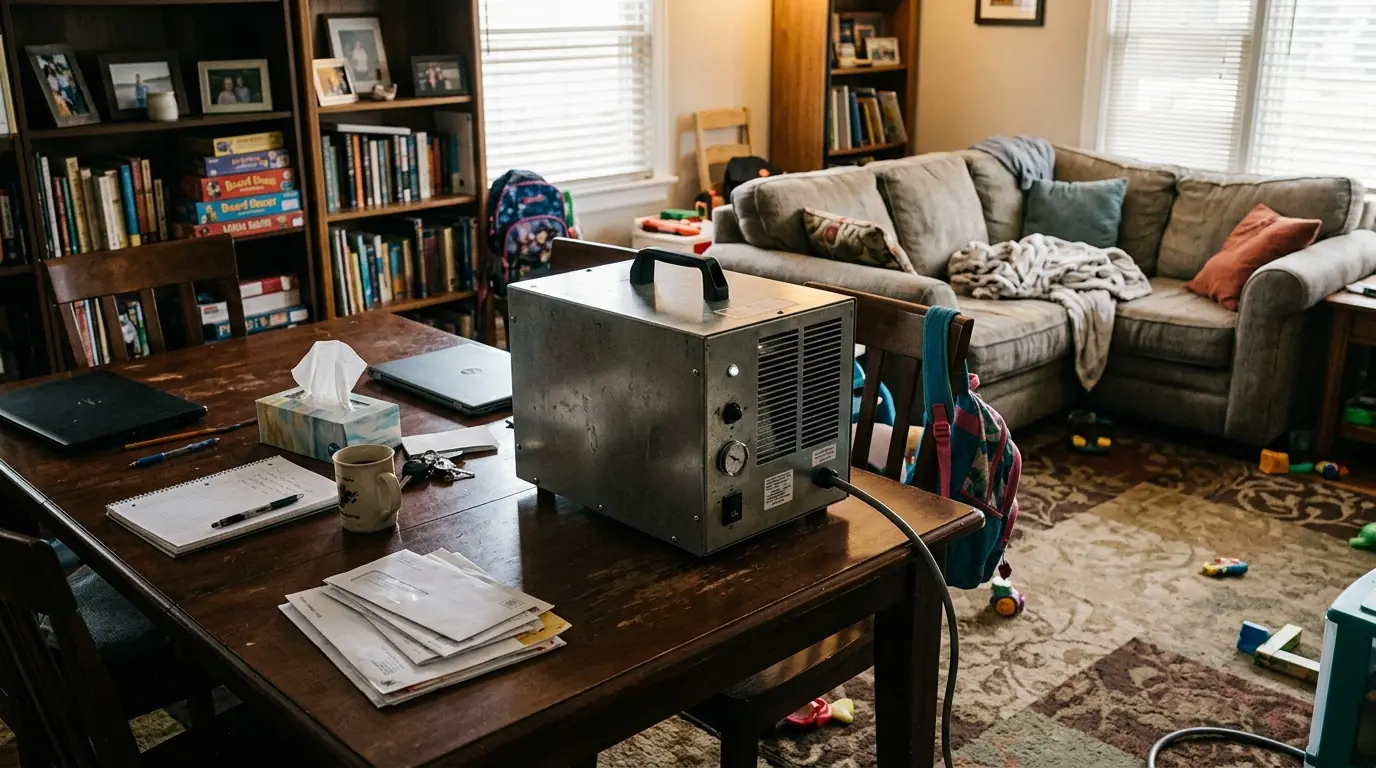
Hydroxyl generators use ultraviolet light to create hydroxyl radicals, which break down odor molecules in the air and on surfaces. They are safe to run with people and pets in the house, which makes them the default for occupied homes and for rooms with sensitive materials.
Hydroxyl is slower than ozone, usually running for several days, and it works best after the heavy residue has been cleaned. We place units by room and move them as rooms clear, and check odor with you as the treatment goes.
Finding the odor source
Odor has to be traced before it can be treated. We check wall cavities near the fire, the insides of cabinets and closets, attic insulation, the ductwork and the air handler, carpet pad, and soft furnishings. Moisture from firefighting can also mix with soot in places nobody looks.
Sometimes the source is a single thing: a pad under a rug, insulation above a ceiling, a return duct. Other times it is spread through the house. Either way, knowing where it is decides what gets cleaned, what gets removed and what gets treated.
Odor that returns on humid days
When odor disappears after cleaning and comes back in warm, damp weather, residue is still in porous materials like drywall, plaster, wood and insulation. Humidity and heat pull it back out into the air.
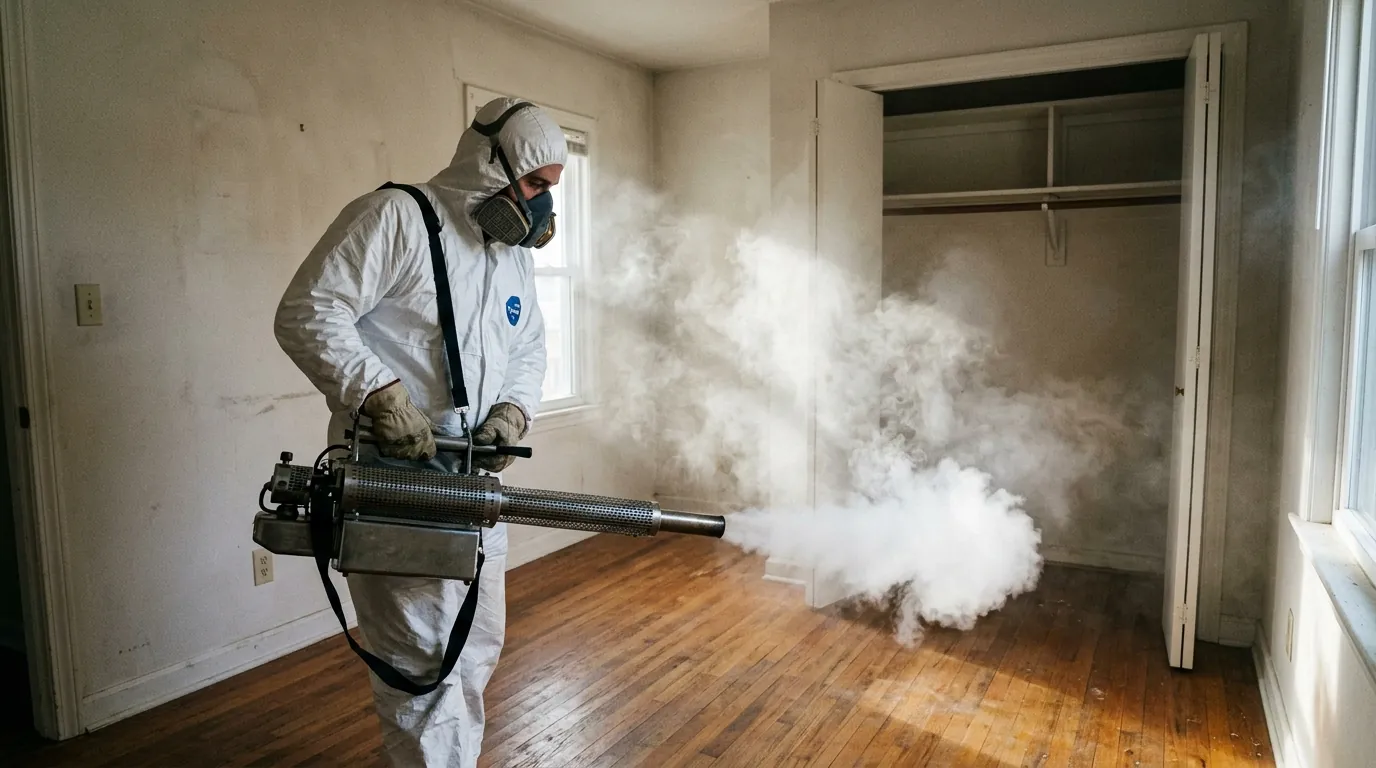
The fix is usually a combination of targeted cleaning, thermal fogging, which follows the paths smoke took into cavities and closets, and sealing stained framing or surfaces with an odor-blocking primer. Where the smell comes from inside a wall, that wall may need to be opened.
Smell still there after cleaning? Call and we will find where it is coming from.
Call (313) 391-5430How smoke odor removal runs
- 01
Trace the source
Cavities, ducts, attic, closets and soft goods are checked.
- 02
Clean or remove
Residue is cleaned off; materials that hold odor are removed.
- 03
Clean the system
Ducts and the air handler are cleaned so they stop spreading odor.
- 04
Deodorize
Hydroxyl, thermal fogging or ozone, chosen for the house.
- 05
Seal and recheck
Stained surfaces are primed and odor checked room by room.
Odor through a Detroit heating season
Detroit's normal January high is 32.3F and the low is 19.2F, so furnaces here run for months at a time. That matters after a fire, because heat is what pushes smoke odor back out of residue in walls, ducts and furniture. A house that seemed fine when it was cleaned in September can smell of smoke again in December. We check the heating system and treat the house with the furnace running when possible, so the result holds through winter.
Signs the odor source has not been removed
Smell returns on warm or humid days
Heat and humidity pull odor out of residue still in porous materials.
Odor strongest when the furnace runs
The ducts or air handler still hold residue.
Smell strongest near the floor
Carpet pad or subfloor is holding the odor.
Odor inside closets and cabinets
Enclosed spaces collect residue and are often missed.
Smell from light fixtures or ceiling vents
Insulation or framing in the attic is still holding smoke.
Smoke odor removal questions
Residue is still in porous materials, ducts or the attic. Heat and humidity release it again.
They help with airborne particles but do not remove residue on surfaces, which is the real source.
Yes. Hydroxyl can run with people and pets in the house, unlike ozone.
Not by itself. Surfaces need cleaning and an odor-blocking primer before paint. See smoke sealing and repainting.
Yes, after cleaning. They are often treated in a sealed room or chamber.
The wall may need opening so the cavity can be cleaned and sealed.
