Quick answer
Carpet and rug smoke cleaning in Detroit depends on what is underneath: wool and synthetic area rugs can usually be cleaned off site, and wall-to-wall carpet with light smoke can be cleaned in place, but pad soaked by firefighting water or saturated with odor is almost always replaced. We check the pad and the tack strip, not just the surface, before recommending cleaning.
Why carpet holds smoke so stubbornly
Carpet acts like a filter. Air moving across and through it leaves soot in the fibers, especially along walls and under doors where air squeezes through. The pad underneath absorbs odor and, after a fire, firefighting water.
Surface cleaning can make carpet look clean while the pad keeps releasing smell. That is why we lift a corner in each room and check the pad and tack strip before recommending anything.
Area rugs are a different job. They come out of the house, get cleaned by fiber type and dried properly, which is rarely possible on site.
What changes the cost of carpet and rug cleaning
Price depends on square footage, fiber type and whether the pad has to be replaced.
- Square footageMore rooms of carpet mean more cleaning or more replacement.
- Rug fiber and constructionWool, silk and hand-knotted rugs need more careful cleaning.
- Water damageWet carpet and pad usually mean replacement.
- Pad and tack stripReplacing pad and tack strip adds material and labor.
- Subfloor sealingNeeded where odor has reached the subfloor.
National cost guides put furniture and textile deodorizing, including rugs and upholstery, at about $200 to $1,000 (HomeAdvisor). Wall-to-wall replacement is priced by the square foot. These are planning figures, not a quote.
What you can do and what to leave to us
Fine to do yourself
- Keep foot traffic off smoky carpet
- Roll up small, dry area rugs and set them aside
- Photograph filtration lines before cleaning
- Open windows to air rooms out when safe
Leave for us
- Vacuuming heavy soot with a household vacuum
- Shampooing carpet that took firefighting water
- Cleaning valuable wool or silk rugs
- Replacing pad and tack strip
Area rugs
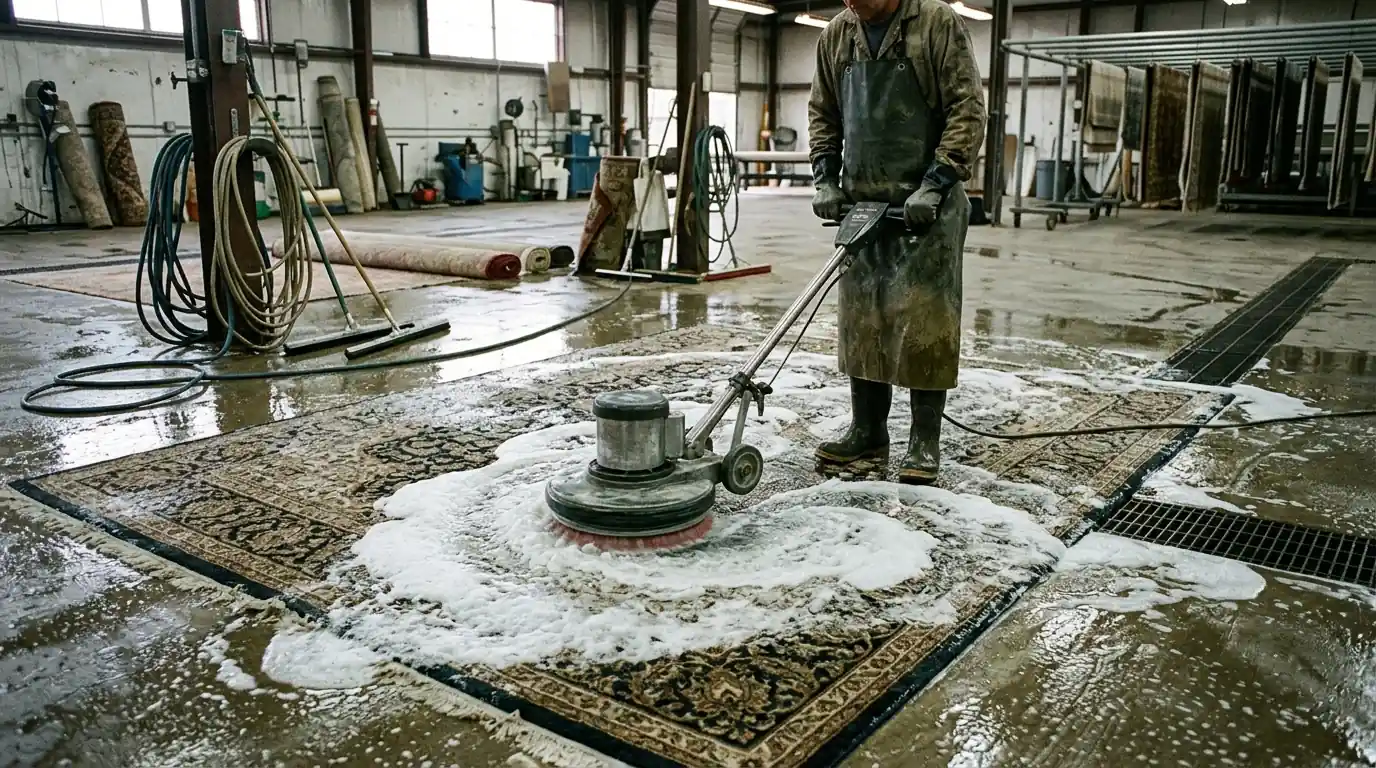
Area rugs are rolled, labeled by room and taken for cleaning. Wool, silk, cotton and synthetic rugs each need different cleaning solutions and drying, and hand-knotted rugs need gentler handling than machine-made ones.
Rugs that took firefighting water are dried quickly to prevent dye bleeding and mildew. We photograph each rug before cleaning and note any damage from heat, like singed fibers or shrinkage, so the rugs that cannot be restored go on your loss list with their condition recorded.
Wall-to-wall carpet
Carpet with light smoke and no water damage can often be cleaned in place: dry soil removal first, then hot water extraction with a deodorizing cleaner, with extra attention to the dark filtration lines along walls.
Carpet that took firefighting water, heavy soot or odor that survives cleaning is usually replaced, since cleaning costs add up without a reliable result. We give you both options, with photos of the carpet and pad, so you and your adjuster can decide. Where only one room is affected, we check whether the same carpet runs into the next room, since replacing half a continuous carpet rarely looks right.
Pad and tack strip
Carpet pad is inexpensive and absorbent, which makes it the worst part of the floor after a fire. Pad that got wet or smells of smoke is replaced even when the carpet above it is saved.
Tack strip along the walls often sits right where filtration lines form and can hold soot and moisture. We replace tack strip where it is wet, rusted or stained, and seal the subfloor underneath if odor has reached it, before new pad and carpet go down.
Carpet still smells after the cleanup? Call and we will check the pad underneath.
Call (313) 391-5430How carpet and rug cleaning runs
- 01
Lift and inspect
A corner is lifted in each room to check pad, tack strip and subfloor.
- 02
Remove rugs
Area rugs are photographed, rolled and taken for cleaning.
- 03
Clean or remove carpet
Light smoke is cleaned in place; wet or saturated carpet comes out.
- 04
Replace pad and strip
Wet or smoky pad and stained tack strip are replaced.
- 05
Reinstall and check
Carpet and rugs go back once floors and rooms are clean.
Carpeted homes in the suburbs around Detroit
Outside the city of Detroit, the median home across the seven-county region was built between 1972 and 1991, and houses from those decades in Oakland, Macomb and Livingston counties often have wall-to-wall carpet in bedrooms and family rooms over plywood subfloor. That carpet collects filtration lines along every wall after a fire. Inside the city, older houses more often have hardwood under area rugs, which is a different job and usually a better outcome.
Signs smoke got into the carpet
Dark lines along walls and under doors
Filtration lines form where air pushed through gaps. They show the smoke path and rarely vacuum out.
Smell strongest near the floor
If a room smells worse when you kneel down, the carpet and pad are holding the odor.
Carpet damp days after the fire
Wet carpet over wet pad will not dry on its own and will start to smell musty.
Gray tone across light carpet
A gray cast that was not there before means soot settled into the fibers.
Odor returns after vacuuming
If the smell comes back after vacuuming, it is in the pad, not just the surface.
Carpet and rug smoke cleaning questions
Filtration lines. Air carrying smoke passed through the gap under baseboards and doors, and the carpet filtered out the soot.
Carpet with light smoke often can. Pad with odor or water damage is almost always replaced.
Not for heavy soot or water-damaged carpet. Hot water on soot can set stains, and wet pad will not dry properly.
Off site, by fiber type, with controlled drying so dyes do not bleed.
That is a separate floor job; see hardwood floor restoration after a fire.
Often, when cleaning will not restore it. We photograph carpet and pad so your adjuster can see why.
