Quick answer
Kitchen fire cleanup in Detroit deals with two residues: oily grease soot from burning cooking fat, and protein residue from burned food, which is a thin yellow film with a strong, lingering smell. Both need degreasing cleaners and hand work on cabinets inside and out, ceilings, walls, the range hood and appliances. Cleaning with ordinary household cleaners smears the residue and leaves the smell behind.
Why kitchen fire residue is so hard to clean
A pan fire burns fat, which produces thick, oily smoke that sticks to everything and smears when wiped. A pot left on the burner produces protein residue: it can be almost invisible, but it has a sharp, lasting smell and discolors paint and finishes over time.
Both spread beyond the kitchen, especially in open floor plans, and both get inside cabinets, drawers and the range hood. Cleaning only what looks dirty leaves the smell in the house.
We clean with degreasing agents made for kitchen fire residue, work top to bottom and inside out, then deodorize. When cabinets or finishes are too damaged, we move to repair or rebuild.
Signs kitchen fire residue spread further
A burned-food smell in other rooms
Protein odor carries through the house even when the residue is hard to see.
Sticky film inside cabinets
Grease smoke got in even with the doors closed.
Yellowing on ceilings and trim
Protein residue discolors paint over days and weeks.
Smudging around vents and fixtures
Air moved the smoke into the ducts and ceilings.
Grease on the hood filter and duct
The hood pulled the heaviest residue straight into its duct.
How a kitchen fire cleanup runs
- 01
Secure and protect
Power to the range checked; appliances and electronics protected.
- 02
Empty cabinets
Contents removed, sorted and listed where needed.
- 03
Clean top to bottom
Ceiling, walls and cabinets degreased; residue type decides the cleaner.
- 04
Hood, duct and appliances
Hood and duct cleaned or replaced; appliances cleaned.
- 05
Deodorize and refinish
Odor treatment, then refinishing or repainting where needed.
Protein residue
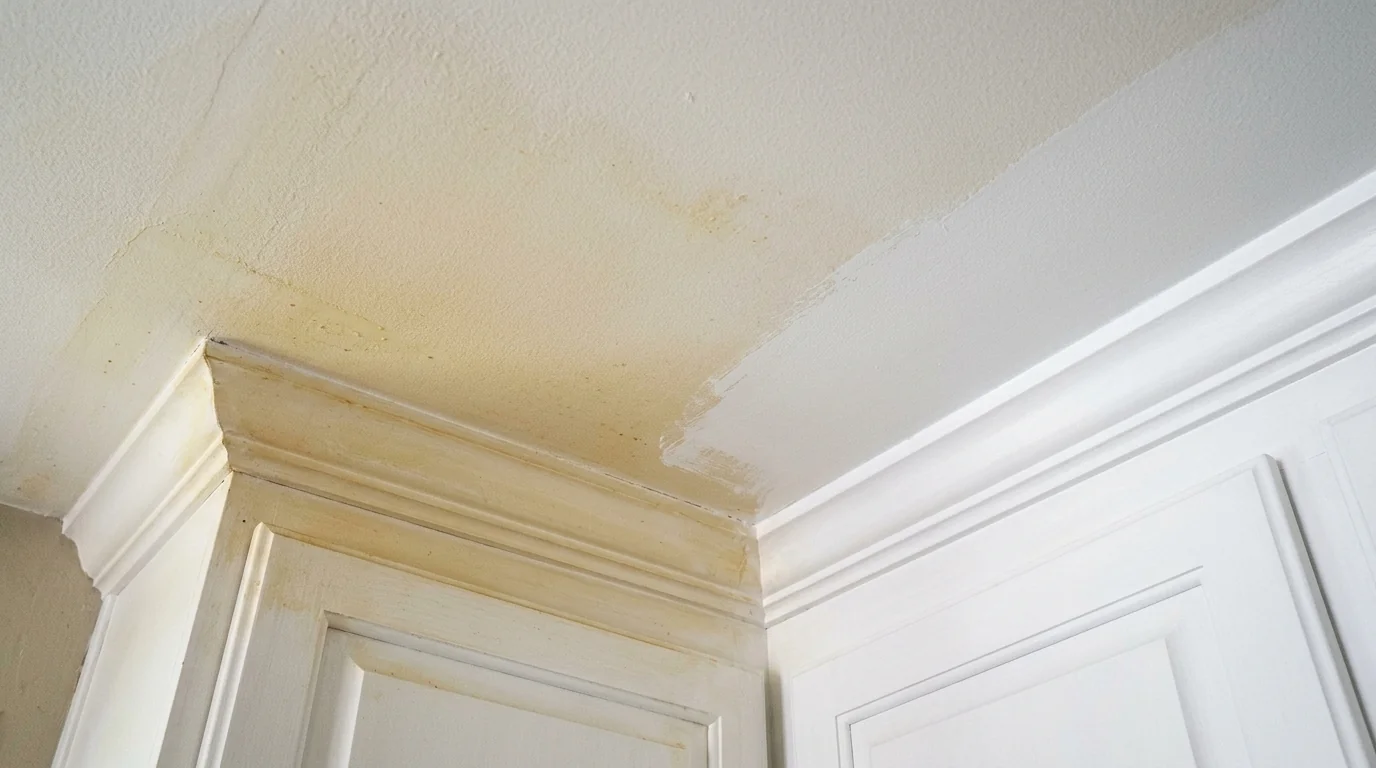
Protein fires, like a pot of beans or a roast left on the stove, leave a film that is often yellowish or barely visible. People are surprised by how strong the smell is compared to how clean the kitchen looks.
We clean every surface the smoke reached, including ceilings, light fixtures and the tops of cabinets, with cleaners made to break down protein residue. Paint that has yellowed may need a stain-blocking primer and repaint. Because the odor is so persistent, we usually follow cleaning with hydroxyl or fogging.
Grease fire residue
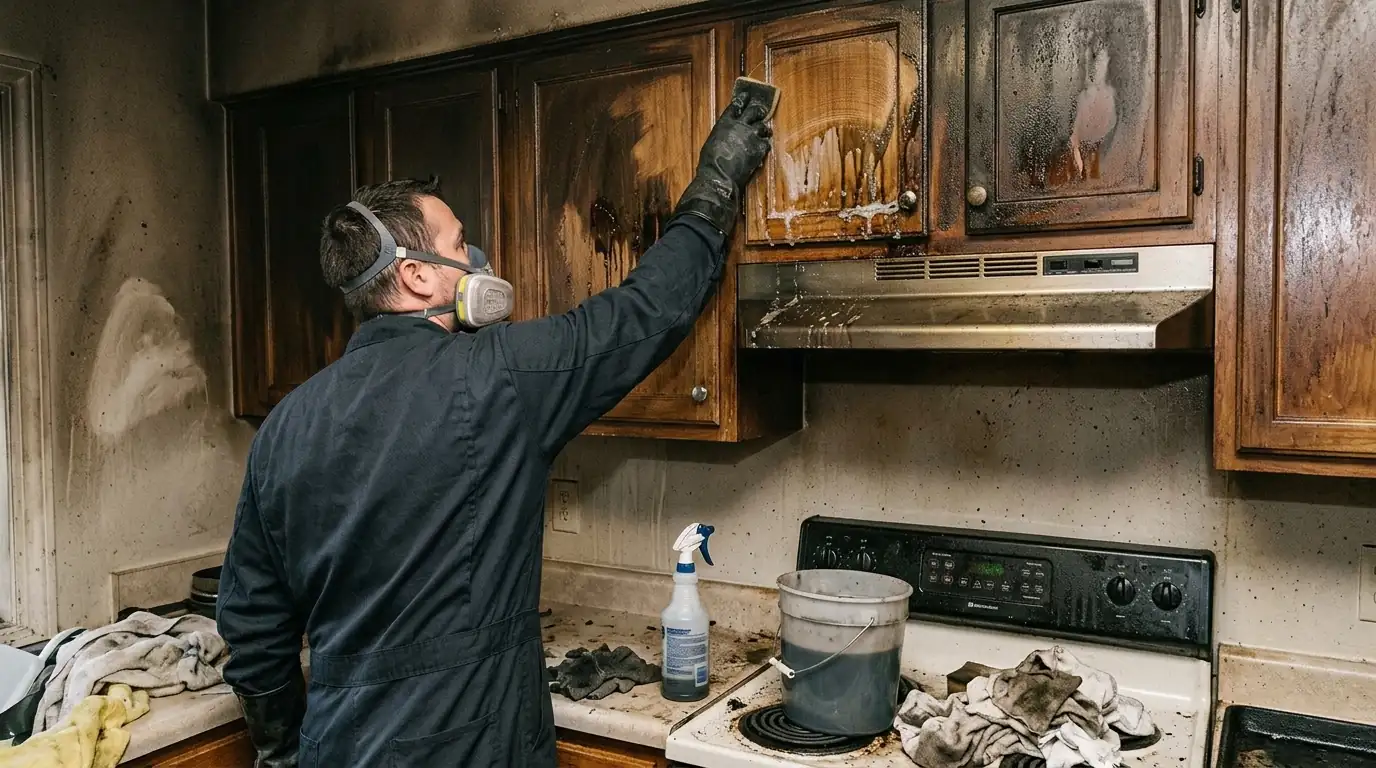
Grease fires leave heavy, oily soot around the range, on the cabinets above it and across the ceiling. We dry sponge loose soot, then clean with degreasers, often in more than one pass, working from the top down so drips do not streak what is already clean.
Cabinet faces near the flames may be scorched or blistered; those are refinished or replaced. Walls, backsplash and grout are degreased, and the countertops are cleaned or listed if heat damaged the surface.
Cabinet interiors and range hood
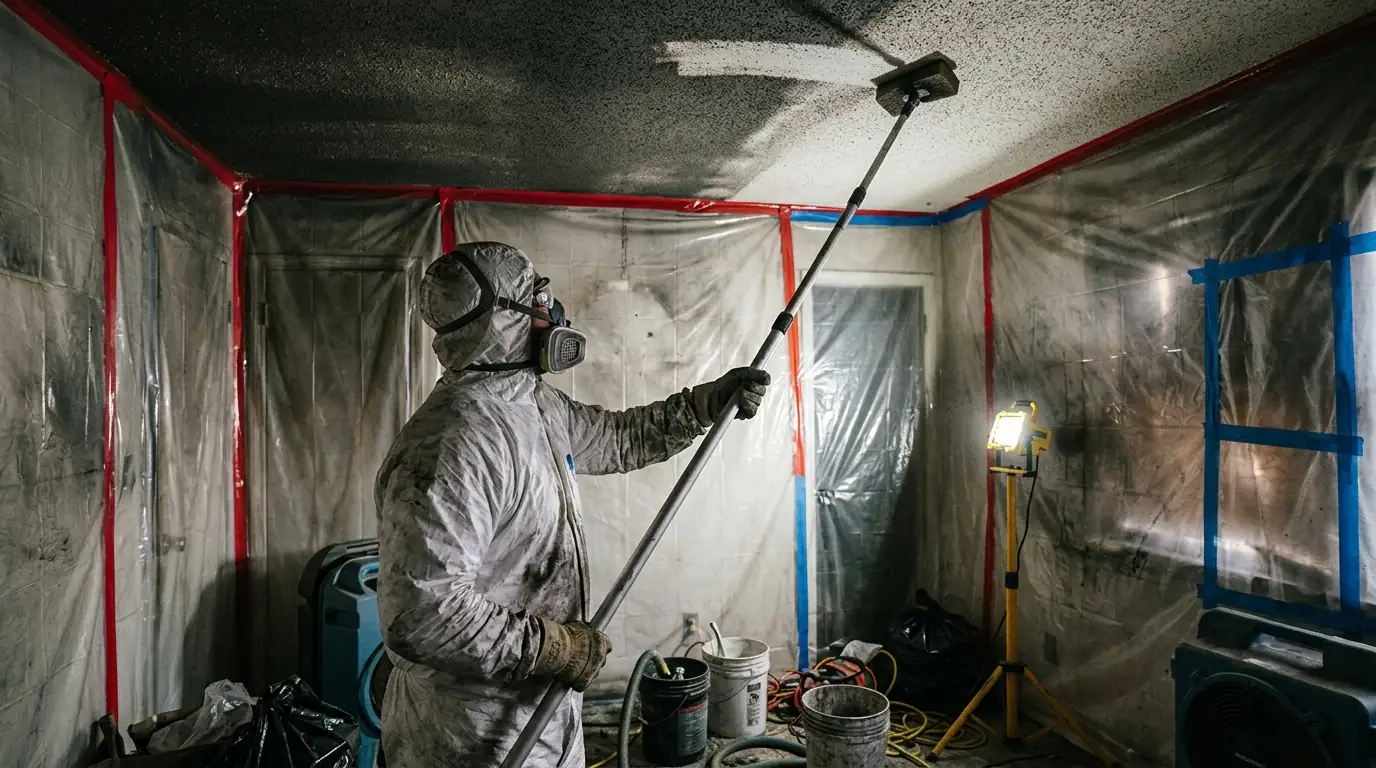
Smoke gets inside cabinets and drawers even when they were closed. We empty them, clean the insides, shelves and drawer boxes, and wash or clean the dishes and cookware that were inside.
The range hood and its duct usually take the heaviest residue. Filters are replaced, the hood is degreased or replaced if heat-damaged, and the duct is checked; grease left in the duct is a fire risk in its own right. Appliances near the fire are cleaned outside and around vents and coils.
Kitchen fire, even a small one? Call and we will get the grease and protein residue off before it sets.
Call (313) 391-5430Kitchen fires in mid-century homes around Detroit
Most homes in Warren were built in the 1960s, with thousands more from the 1950s, and kitchens in houses of that era across Macomb County are often compact, with soffits above the upper cabinets and a hood vented through a short duct. In a small kitchen, grease smoke has nowhere to thin out, so it coats every surface and gets into the soffits and the rooms next door. We open soffit access and clean the duct, not only the visible surfaces.
What to do after a small kitchen fire
Fine to do
- Air the kitchen out if it is safe
- Photograph the cabinets, ceiling and hood
- Throw out food that was exposed to heat or smoke
- Keep the range off until it is checked
Leave for us
- Wiping grease soot with water or all-purpose cleaner
- Scrubbing a yellowed ceiling
- Running the range hood
- Painting over stains
What changes the cost of kitchen fire cleanup
Kitchen fire cleanup depends on the residue type and how far it spread.
- Residue typeGrease soot and protein residue each need their own chemistry.
- SpreadOpen floor plans let residue reach the living and dining areas.
- CabinetsInterior cleaning, refinishing or replacement.
- Hood and ductHood replacement and duct cleaning when the fire went up through it.
- Odor treatmentProtein smell usually needs deodorizing after cleaning.
National cost guides put smoke damage cleaning at about $200 to $1,200 per room (Angi). Cabinet or appliance replacement is extra. These are planning figures, not a quote.
Kitchen fire cleanup questions
Protein residue from burned food is hard to see but has a strong, lasting odor. It needs specific cleaning and usually deodorizing.
Light smoke, maybe. Grease soot smears with ordinary cleaners, and protein odor rarely comes out without the right chemistry.
Not necessarily. Many clean up well. Those near the flames or with heat damage are listed for replacement.
Not until the hood and duct are checked. Grease in the duct is a fire risk.
Often, when they were not scorched. They are cleaned inside and out and refinished if needed.
