Quick answer
Fire debris removal in Detroit is selective tear-out, not a wrecking job: charred drywall and plaster, soaked insulation, burned flooring and ruined contents come out, while sound framing and finishes stay. In older houses we test for asbestos and lead before disturbing materials, then haul debris to a dumpster and clean the house out so cleaning and drying can start.
Tear out what is ruined, keep what can be saved
Every fire job has a demolition phase. Charred materials hold soot and odor, and wet materials grow mold, so they have to come out. But every extra sheet of drywall or plank of flooring removed is one more thing to rebuild.
We mark what comes out room by room before starting, based on burn damage, moisture readings and soot testing. The goal is to remove enough that nothing ruined is left behind, and no more.
Older homes add a step. Many were built with materials that can contain asbestos or lead, so testing comes before demolition, not after.
What drives the cost of fire debris removal
Tear-out and haul-off are priced by volume, access and what testing finds.
- Volume of debrisThe more that has to come out, the more labor and dumpster loads.
- MaterialsPlaster is heavier and slower to remove than drywall.
- Testing resultsAsbestos or lead found in materials adds abatement to the scope.
- AccessUpper floors, basements and long carries add labor.
- Dumpster placementStreet placement may need a permit; tight lots need smaller loads.
Selective tear-out compared with gutting the house
| Selective tear-out | Full gut | |
|---|---|---|
| What comes out | Only burned, soaked or odor-saturated materials | Everything to the studs |
| Rebuild cost | Lower, more original material stays | Higher, every surface rebuilt |
| When it fits | Most losses | Fire spread through most of the house |
| Claim | Matches the documented damage | Needs documentation for every area removed |
Selective tear-out
Charred drywall and plaster are cut back to sound edges; wet insulation, carpet and pad come out; burned trim, doors and flooring are removed. Cabinets and built-ins that can be cleaned are protected or removed carefully for reinstallation.
We work room by room, bagging and carrying debris out rather than throwing it through windows, which keeps the rest of the house cleaner. Every room is photographed before and after tear-out, which your adjuster uses to check the scope against what actually came out.
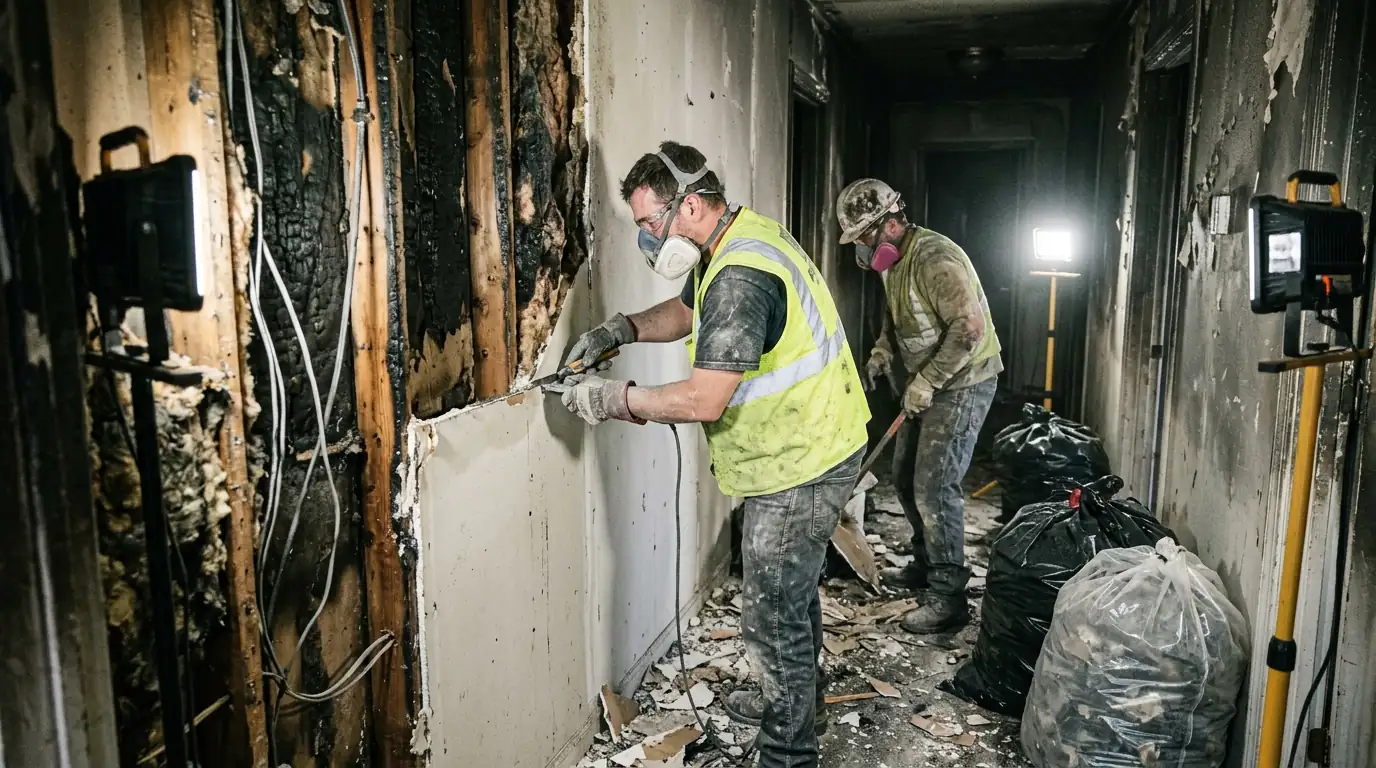
Dumpster haul-off
Debris goes into a roll-off dumpster placed where it will not block the street or damage the driveway, with a permit where the city requires one for street placement. Larger jobs may need more than one dumpster over the course of the work.
Burned contents that are on the loss list are photographed before they go in the dumpster, so nothing is discarded without a record. When tear-out is finished, the house is swept and vacuumed so cleaning crews start on a clear space.
Testing before demolition
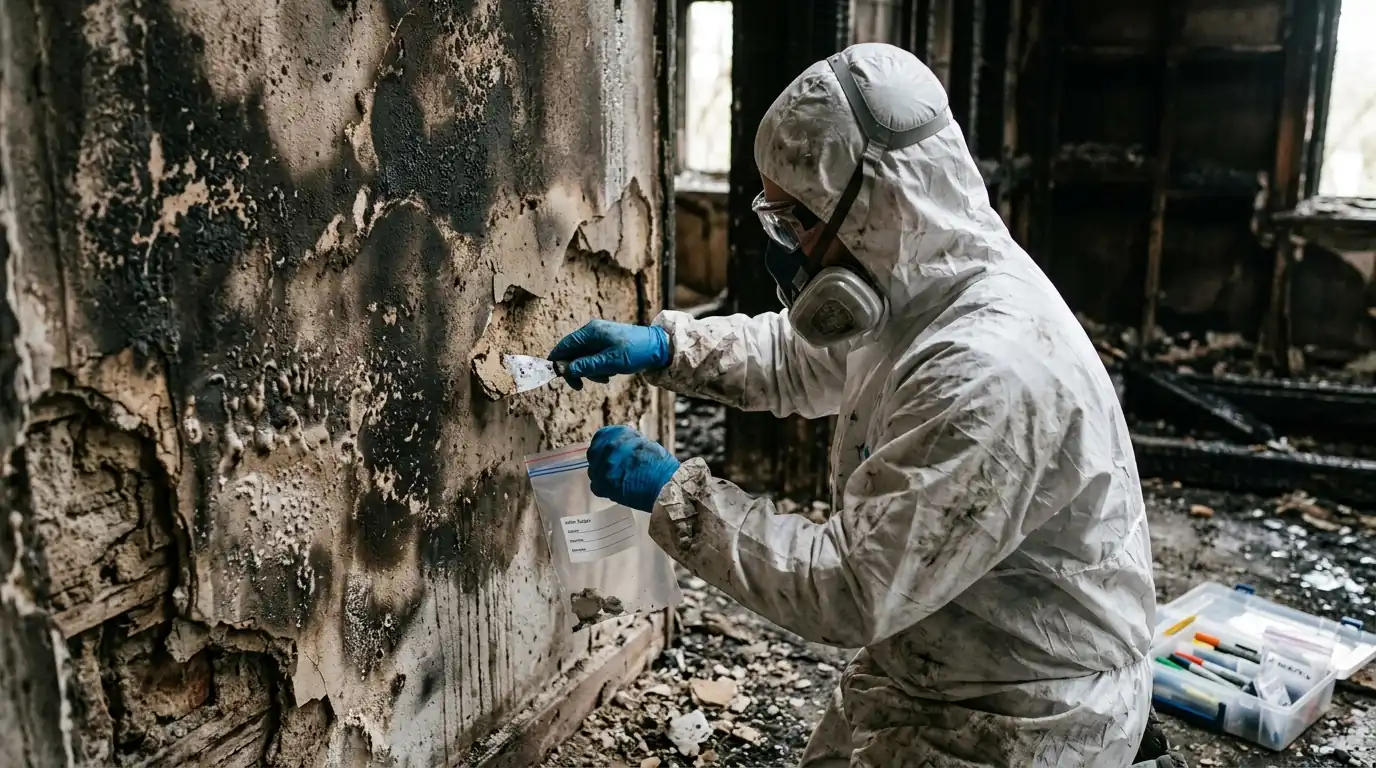
Houses built before 1978 may have lead paint, and older plaster, flooring, pipe insulation and some ceiling textures can contain asbestos. Disturbing them without testing can expose the household and the crew and create a much larger cleanup.
We take samples from materials that will be disturbed and send them for lab testing. If a material tests positive, removal is handled by a qualified abatement crew under the required procedures before our tear-out continues in that area. Lab results are kept with the job file and shared with you and your adjuster, since abatement changes both the schedule and the scope.
Need the burned material out before cleaning can start? Call and we will plan the tear-out.
Call (313) 391-5430What tear-out and haul-off include
- Room-by-room tear-out plan
- Sampling of older materials
- Protection of floors and finishes that stay
- Cutting back to sound edges
- Bagging and carrying debris out
- Dumpster placement and permits where needed
- Photos before and after tear-out
- Sweep and vacuum when finished
How tear-out and haul-off run
- 01
Mark what comes out
Burn damage, moisture and soot readings decide what is removed.
- 02
Test older materials
Samples go to a lab before anything suspect is disturbed.
- 03
Protect what stays
Floors, cabinets and finishes that can be saved are covered.
- 04
Remove and bag
Materials are cut out and carried out room by room.
- 05
Haul and clean out
Debris goes to the dumpster; the house is swept and vacuumed.
Tear-out in Detroit's older houses
In Detroit, 36.3% of homes were built in 1939 or earlier and another 20.3% in the 1940s, and across Southeast Michigan about 41 percent of housing dates from before 1960. Houses from those decades often have layers of old paint, plaster walls and flooring that were installed long before today's materials rules, so testing before tear-out is a normal step on most of our Detroit jobs rather than a special case.
Fire debris removal questions
No. Only burned, soaked or odor-saturated materials. Sound framing and finishes are cleaned and kept.
Older homes may contain them in plaster, flooring or paint. Disturbing them untested can expose everyone in the house.
A qualified abatement crew, following the required procedures, before our tear-out continues in that area. Lab results are kept with the job file and shared with you and your adjuster, since abatement changes both the schedule and the scope.
Photograph everything first, including what you throw away. Undocumented items are hard to claim.
Yes, when the dumpster has to sit on the street and a permit is required.
Cleaning, drying and then rebuilding. See fire damage reconstruction.
