Quick answer
Air duct and HVAC smoke cleaning in Detroit means cleaning the whole air path, not just the vents: return ducts that pulled smoke in, the blower wheel and cabinet, the evaporator coil, the supply trunk and branches, and every register and grille. If any part is skipped, the system redistributes soot and odor through the house the first cold night it runs.
Why the heating system keeps the smell alive
A forced-air system moves the whole volume of the house through the return ducts many times a day. During a fire, or while the house sits smoky afterward, those returns pull soot straight into the system, where it coats the ducts, the filter rack and the blower.
After the rooms are cleaned, that residue is still inside the system. The first time the furnace or air conditioning runs, it blows odor and fine soot back into clean rooms. Cleaning the rooms without the ducts is one of the most common reasons a fire cleanup fails.
We clean the system as part of the job, after heavy cleaning in the rooms and before final deodorizing, so the rooms and the ducts end up clean together.
What changes the cost of duct and HVAC smoke cleaning
Duct cleaning after a fire is priced by the size of the system and how badly it is coated.
- Number of supply and return runsMore rooms mean more branches to clean and more registers.
- How heavy the soot isHeavy coating takes more passes and sometimes duct replacement.
- Flex duct replacementCoated or heat-damaged flex duct is usually replaced.
- Blower and coil accessSome cabinets are easy to open; others take more time.
- Second systemHouses with two furnaces or a separate air handler double the work.
National cost guides list duct cleaning after smoke damage at $150 to $800 (Angi). These are planning figures, not a quote.
Return duct soot
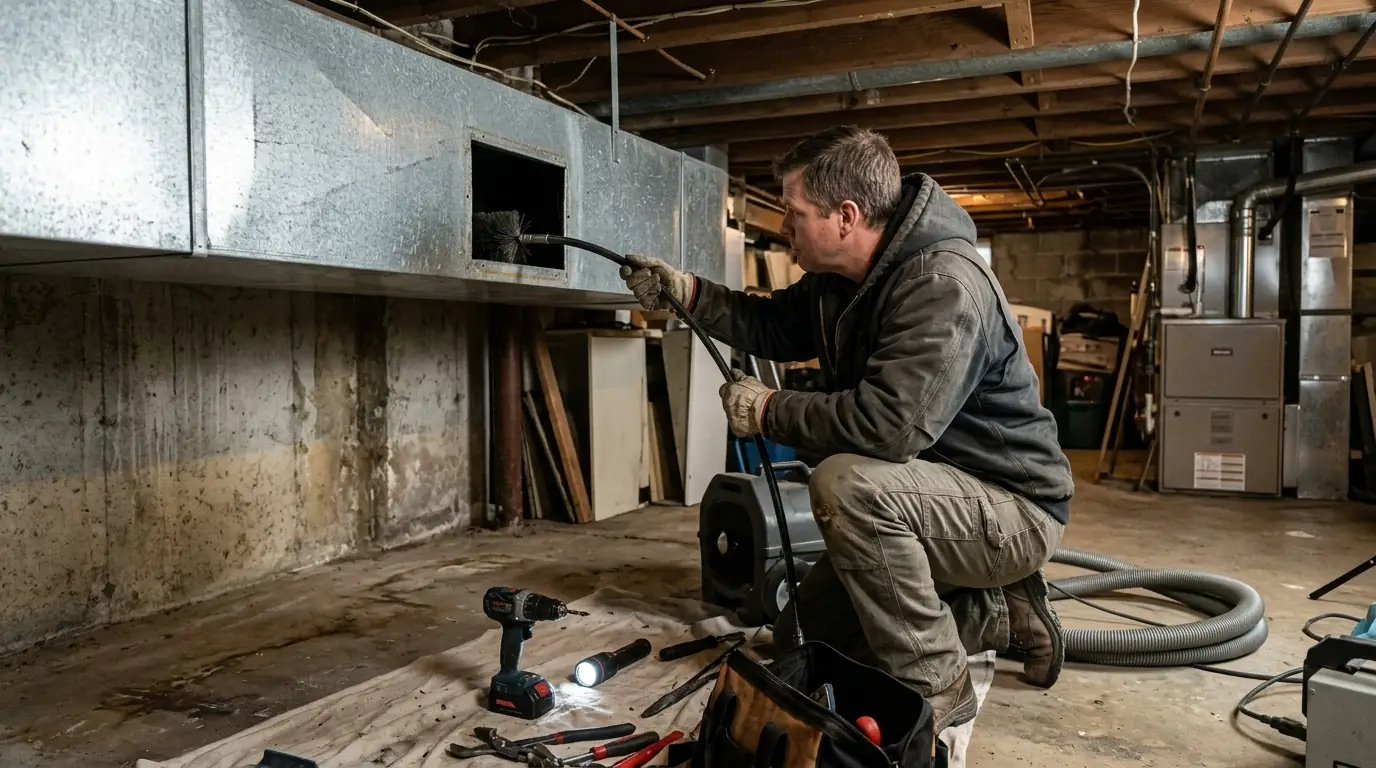
Returns carry the heaviest load because they pulled air straight from the smoky rooms. We open the system at access points, run rotary brushes and air whips through the trunk and branches and pull the loosened soot out under negative pressure with a HEPA collector.
Flexible duct that is heavily coated or damaged by heat is usually cheaper to replace than to clean, and we tell you which runs those are before we start. Every access opening we cut is sealed with a proper sheet metal patch and foil tape afterward, so the system does not leak air into the basement or attic.
Blower and coil cleaning
The blower wheel collects soot in its blades, which unbalances it and keeps pushing odor into the airstream. We remove and clean the wheel and the cabinet, and clean the evaporator coil with a coil cleaner so the air conditioning does not carry smoke into summer.
Burner, heat exchanger and gas controls are a service technician's job. If the fire involved the furnace itself, we coordinate with an HVAC technician before the system runs again. The filter rack and the return plenum right before the blower get cleaned too, since that is where the heaviest soot collects.
Registers and grilles
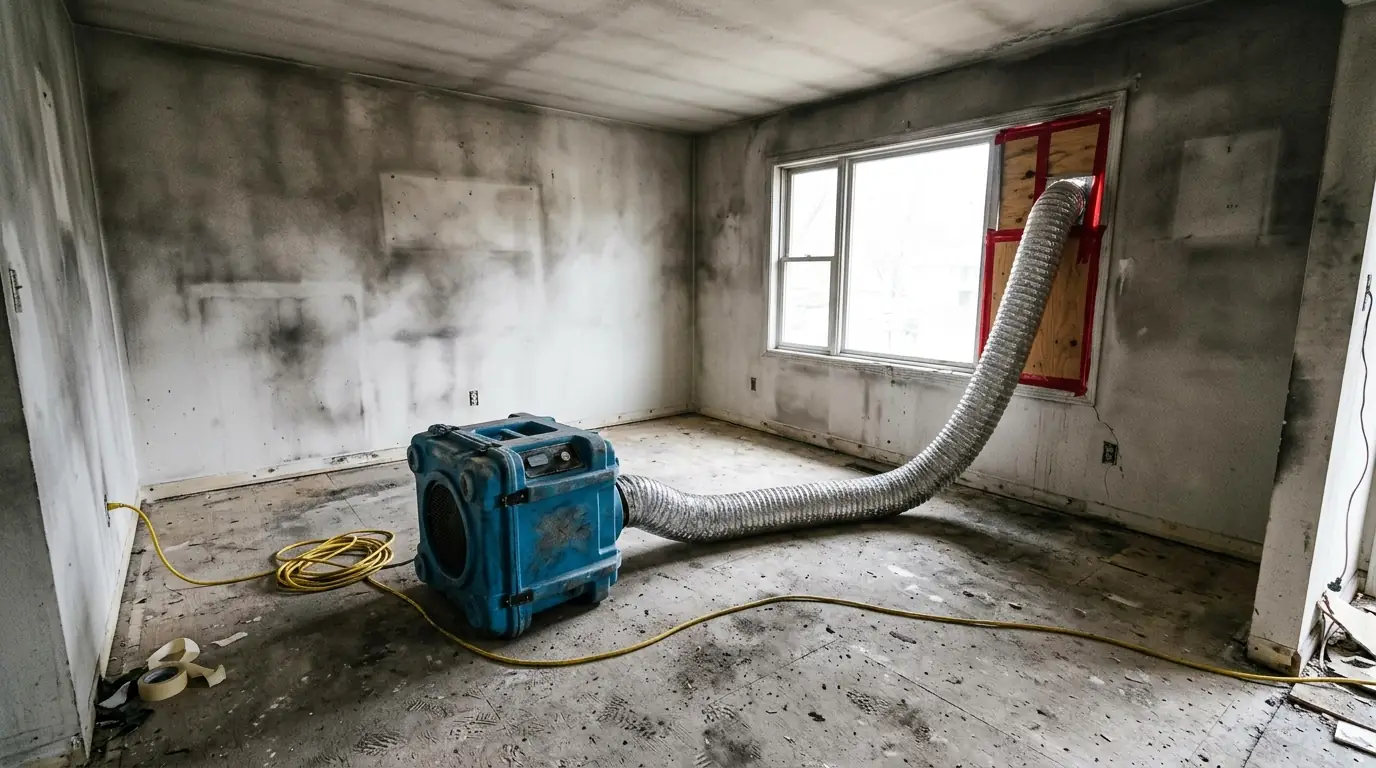
Supply registers, return grilles and the boots behind them often show dark smudging on the ceiling or wall around them. The grilles come off and are washed; the boots are brushed and vacuumed, and the surrounding drywall or plaster is cleaned and, if stained, sealed before painting.
In older houses with floor registers, we also clean the boot and the first run of duct under the floor, which collects soot and debris that fell through the grille. We finish by changing the filter, running the system and checking each room for odor with you.
Smell comes back every time the heat runs? Call and we will clean the system along with the rooms.
Call (313) 391-5430What HVAC smoke cleaning includes
- System shutdown and lockout during cleaning
- Access openings cut and sealed afterward
- Return trunk and branches brushed and vacuumed
- Supply trunk and branches brushed and vacuumed
- Blower wheel removed and cleaned
- Evaporator coil cleaned
- Registers and grilles washed
- New filter and a run test with an odor check
How HVAC smoke cleaning runs
- 01
Shut the system down
The system stays off until it is cleaned, so it cannot spread soot.
- 02
Clean the rooms first
Heavy room cleaning happens first so clean ducts are not recontaminated.
- 03
Clean ducts under negative air
Brushes and air whips loosen soot while a HEPA collector pulls it out.
- 04
Clean blower, coil and registers
Blower wheel, cabinet, coil and every grille are cleaned.
- 05
Run and verify
New filter, system on, and a room-by-room odor check with you.
Ductwork in the suburban homes around Detroit
Outside the city of Detroit, the median home across the seven-county region was built between 1972 and 1991, so most houses we work in across Oakland, Macomb and Livingston counties have forced-air ducts, often with attached garages feeding smoke into the return side. Those systems are where a fire cleanup usually succeeds or fails. In the city's older houses the ductwork is often a later retrofit with long runs and few access points, which changes how we open and clean it.
Signs the ducts carried smoke
Smell when the furnace kicks on
Odor that surges when the heat starts is coming out of the ducts, not the walls.
Dark smudges around registers
Shadowing on the ceiling or wall around a register means soot is blowing out of it.
A black filter after a short time
A new filter that turns gray or black quickly shows how much soot is still in the system.
Soot on the return grille
A dirty return grille means the system pulled smoke in while the house was smoky.
Fine dust settling on clean furniture
Dust that reappears on cleaned surfaces is often soot coming out of the supply side.
Duct and HVAC smoke cleaning questions
No. The filter only catches what reaches it; soot is already coating the ducts and blower beyond it.
Not until the system has been checked and cleaned, if you can avoid it. Running it spreads soot through the house. In freezing weather, see winterizing a fire-damaged home.
We clean the blower, cabinet and coil. The burner, heat exchanger and gas controls are checked by an HVAC technician.
All the common ones, including Carrier, Trane, Lennox, Goodman, Rheem and York. The cleaning is the same regardless of brand.
Lightly soiled flex duct can be. Heavily coated or heat-damaged flex duct is usually replaced because brushing can tear it.
A puff-back fills the ducts with oily soot from the furnace itself. See furnace puff-back cleanup.
