Quick answer
Apartment building fire restoration in Detroit covers the unit that burned, the neighboring units smoke and water reached, and the hallways, stairwells and shared systems in between. We test each unit for soot and moisture, clean common areas so the building stays usable, and inventory each tenant's belongings separately for their own renters claim, while the owner's claim covers the building.
Why apartment fires need a building-wide plan
In a multi-unit building, smoke travels through shared walls, plumbing chases, ceiling cavities, corridors and stairwells. Water from firefighting runs down into units below. One kitchen fire can affect half a floor and the units underneath.
The work has to be organized around the building: which units are safe to occupy, which common areas must be cleaned first so residents can move through the building, and how to get into each unit without disrupting everyone.
Documentation is split by party. The owner or association has the building claim; each tenant has their own contents. We keep those records separate from the first day.
How an apartment building fire job runs
- 01
Secure the fire unit
Board-up, water removal and safety checks.
- 02
Test the building
Neighboring units and common areas tested for soot and moisture.
- 03
Clean common areas first
Hallways and stairwells so residents can move through safely.
- 04
Unit by unit
Cleaning, pack-outs and repairs unit by unit.
- 05
Seal and hand back
Gaps between units sealed, final checks with the owner.
Smoke between units
We test neighboring units above, below and beside the fire unit for soot and moisture, including closets and kitchens where smoke often collects. Units that took only light smoke may be cleaned while residents stay; heavily affected units are cleaned after residents relocate.
Shared walls, plumbing chases and ceiling cavities are where smoke crosses between units. Sealing those gaps during repairs keeps odor from moving between apartments after the job is done, which is one of the most common complaints in older buildings.
Hallways and stairwells
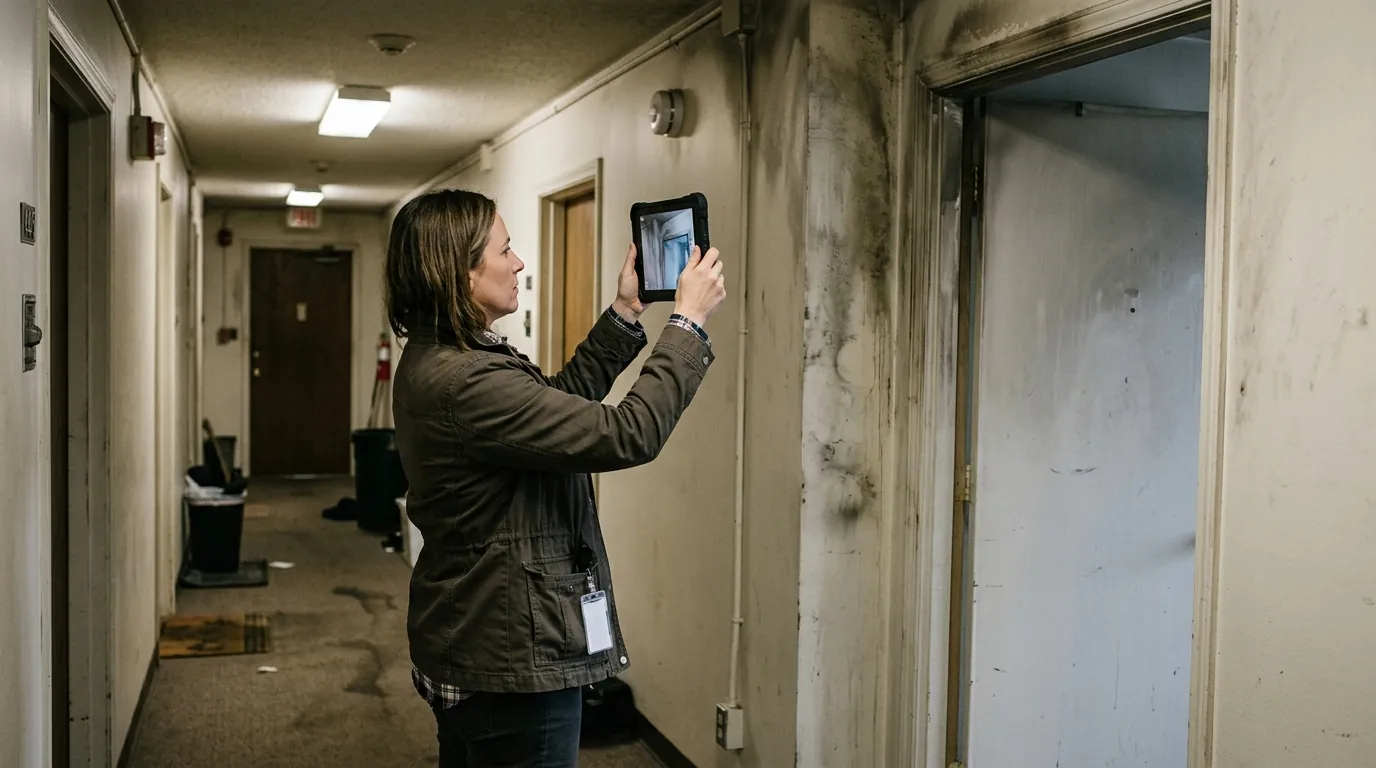
Corridors and stairwells carry smoke to every floor and are the first thing residents see. We clean walls, ceilings, doors, handrails and floors, clean or replace carpet runners and clean the ventilation serving common areas.
Where common areas must stay open, we work in sections and keep exits clear. Fire doors, alarms and sprinkler components are handled by the building's fire protection contractor; we coordinate so our work does not interfere with them. Elevators, mailrooms and laundry rooms near the fire floor are checked and cleaned too, since residents use them every day.
Tenant contents
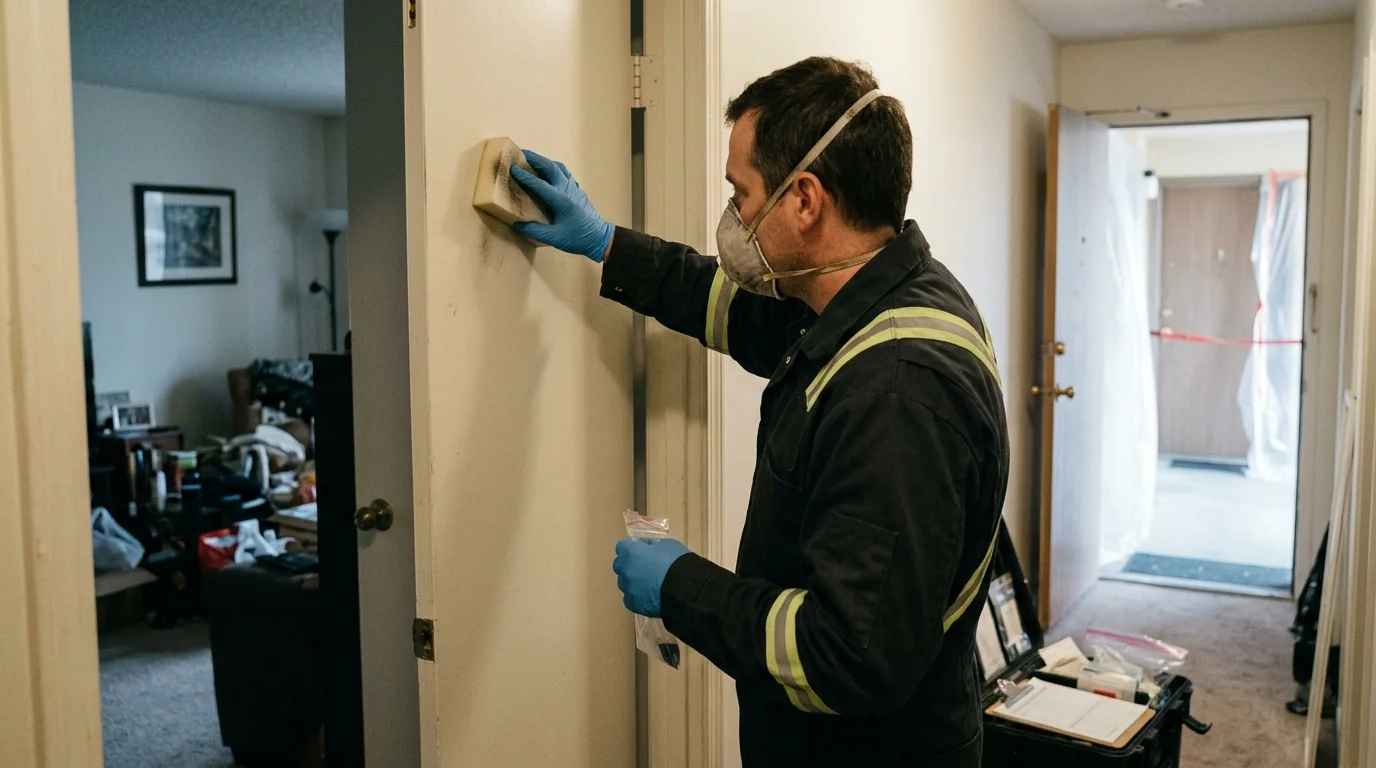
Each affected tenant's belongings are photographed and inventoried by unit, then cleaned, packed out or listed as a loss. That inventory goes to the tenant for their renters claim, not mixed with the building record.
Tenants who were displaced can get essentials cleaned first. We set up a way for tenants to reach us directly with questions about their belongings, so the property manager is not the go-between for every item. Unclaimed belongings in vacated units are stored and listed rather than discarded.
Fire in one of your buildings? Call any hour and we will start with the fire unit and the hallways.
Call (313) 391-5430How long an apartment fire job takes
Common areas are usually cleaned within days so the building stays usable. Lightly affected units can often be cleaned in a day or two each.
The fire unit and heavily affected units take longer, often weeks to months, because of tear-out, inspections and rebuilding.
Multi-unit housing in Detroit
Detroit's housing is mostly single detached houses, 64.3% of units, but 7.1% are single-unit attached homes and 6.4% sit in two-unit buildings, with the rest in larger apartment buildings. In the older walk-ups and courtyard buildings, smoke moves through shared stairwells and chases that were never sealed. We check units that seem far from the fire, especially those above it, before telling any resident their unit is fine.
What apartment fire restoration covers
- Board-up and water removal in the fire unit
- Soot and moisture testing of neighboring units
- Hallway and stairwell cleaning
- Common-area ventilation cleaning
- Tenant contents inventory by unit
- Separate records for owner and tenants
- Sealing of gaps between units
- Coordination with the building's fire protection contractor
What drives the cost of apartment fire restoration
Apartment jobs are priced unit by unit, plus common areas and coordination.
- Number of affected unitsEach unit is tested, cleaned and documented.
- Common areasHallways, stairwells, lobbies and shared ventilation.
- Water damage belowFirefighting water in units under the fire.
- Tenant contentsInventory, cleaning and pack-out per tenant.
- Occupied-building logisticsWorking in sections while the building stays in use.
National figures put smoke damage cleanup at about $3.50 to $7.00 per square foot (Yelp). Multi-unit jobs are priced per unit and common area from the assessment. These are planning figures, not a quote.
Apartment building fire questions
Generally the tenant's renters insurance, if they have it. The building owner's policy covers the building.
Often in units that were not affected or were only lightly affected, once common areas are safe. We help the owner decide unit by unit.
Yes, with one point of contact and regular updates.
By cleaning each unit and sealing the gaps in shared walls, chases and ceilings during repairs.
The building's fire protection contractor. We coordinate with them.
