Quick answer
Roof tarping after a fire in Detroit closes ventilation cuts and burned-through sections with heavy tarps fastened to sound framing over wood battens, not nailed through damaged decking. It keeps rain and snow out of a house that is already wet from firefighting and protects the attic and ceilings until the roof is rebuilt. Tarps are checked after storms and heavy snow.
Why a fire-damaged roof needs a proper tarp
Firefighters often cut holes in the roof to vent heat and smoke, and the fire itself may burn through the decking. Both leave openings that let weather into the attic and down through the ceilings.
A tarp that is nailed into charred decking or held down with a few bricks will blow loose in the first storm. We extend the tarp past the damage onto sound roof, fasten it through wood battens into framing that will hold, and seal the upper edge so water runs over it, not under it.
Tarping goes with board-up and water removal on the first visit. It stays until the roof is repaired, which may be weeks while the claim and permits are sorted out.
Signs a roof tarp needs attention
Flapping or lifting edges
A tarp that moves in the wind will tear or pull its fasteners loose.
New water stains inside
Fresh stains on ceilings mean water is getting under or through the tarp.
Heavy snow sitting on the tarp
Snow over a burned area adds weight to framing that may already be weak.
Sagging into the opening
A sag collects water and ice and needs support underneath.
Visible tears or holes
Debris and ice can puncture a tarp; small tears grow fast in wind.
How roof tarping runs
- 01
Check from inside and out
Attic checked for smoldering material and water; roof inspected from safe footing.
- 02
Clear and bridge the opening
Debris cleared; temporary plywood laid where decking is burned.
- 03
Tarp past the damage
Tarp extends onto sound roof, over the ridge where possible.
- 04
Fasten through battens
Battens screwed into sound framing, edges sealed.
- 05
Check until repaired
Photos for your claim and checks after storms and snow.
Covering ventilation cuts
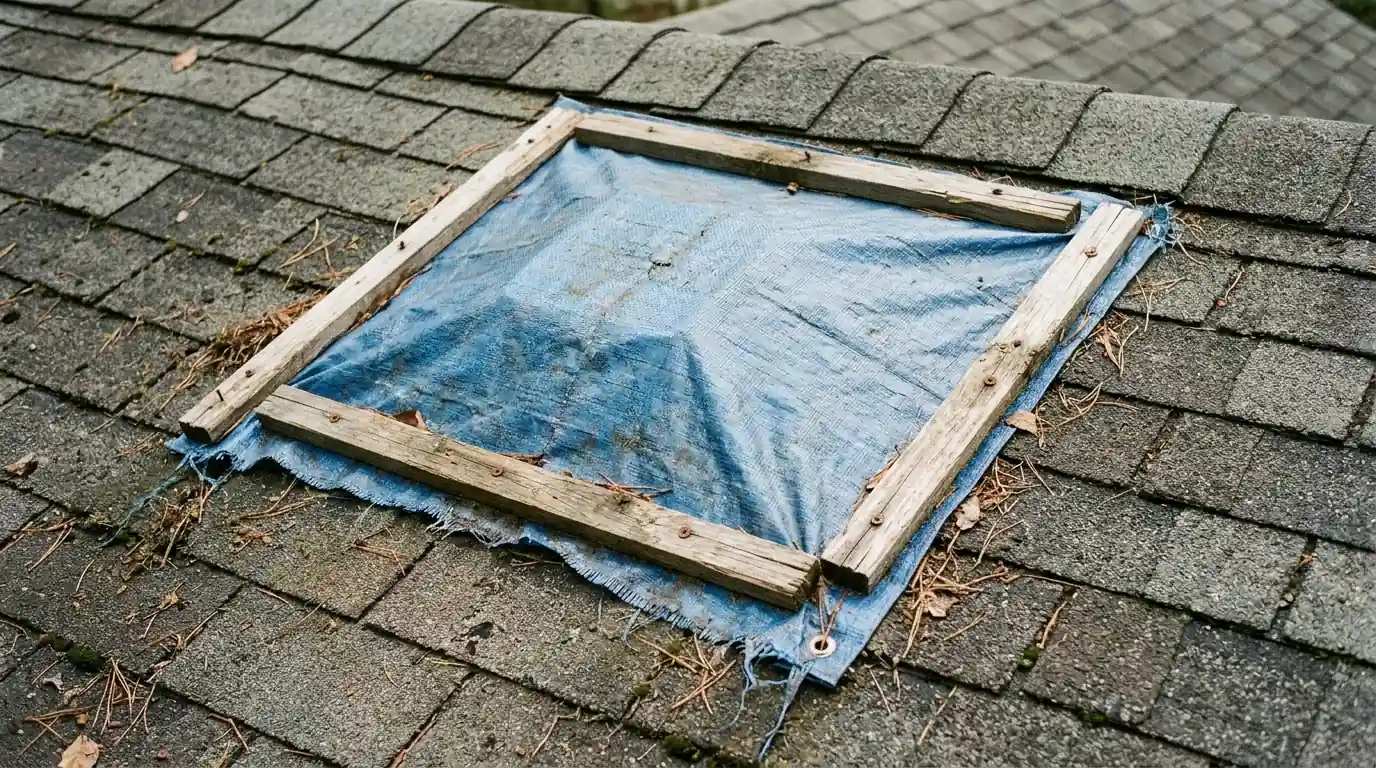
Ventilation cuts are usually square openings a few feet across, often near the ridge. We cover them with a reinforced tarp that runs over the ridge where possible, so the top edge is sheltered and water sheds down both slopes.
The tarp is fastened with battens screwed into rafters on sound roof beyond the cut. Where the cut is close to a chimney or vent, we seal around it so water cannot run in along the flashing. Loose shingles around the cut are fastened down so wind cannot peel them back and lift the tarp edge with them.
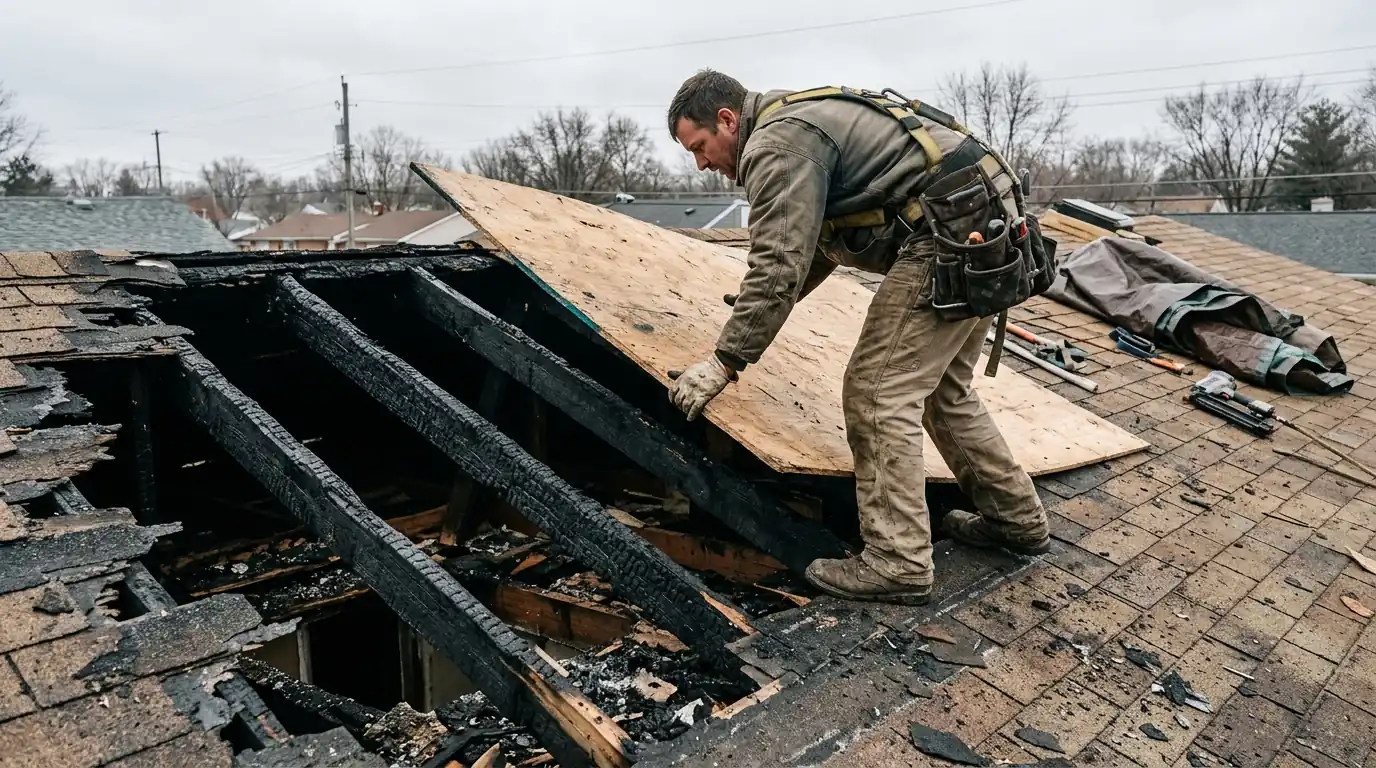
Burned-through roof decking
When the fire burned through, the decking around the opening may be too weak to walk on or fasten to. We work from sound sections and ladders, span the burned area with the tarp and, where needed, lay temporary plywood or framing across rafters first so the tarp does not sag into the hole.
Debris that could puncture the tarp is cleared from the opening. The attic below is checked from inside for smoldering material and water, and the insulation under the opening is pulled if it is soaked.
Winter tarping and snow load
In winter a tarp carries snow and ice as well as rain. We use heavier tarps, closer batten spacing and extra fastening on the windward side, and slope the cover so meltwater runs off rather than refreezing on top.
After heavy snow, we come back to check the tarp and clear snow that is loading a weakened area. A tarp is a temporary fix, so in winter we push for the permanent repair as soon as the weather and the claim allow.
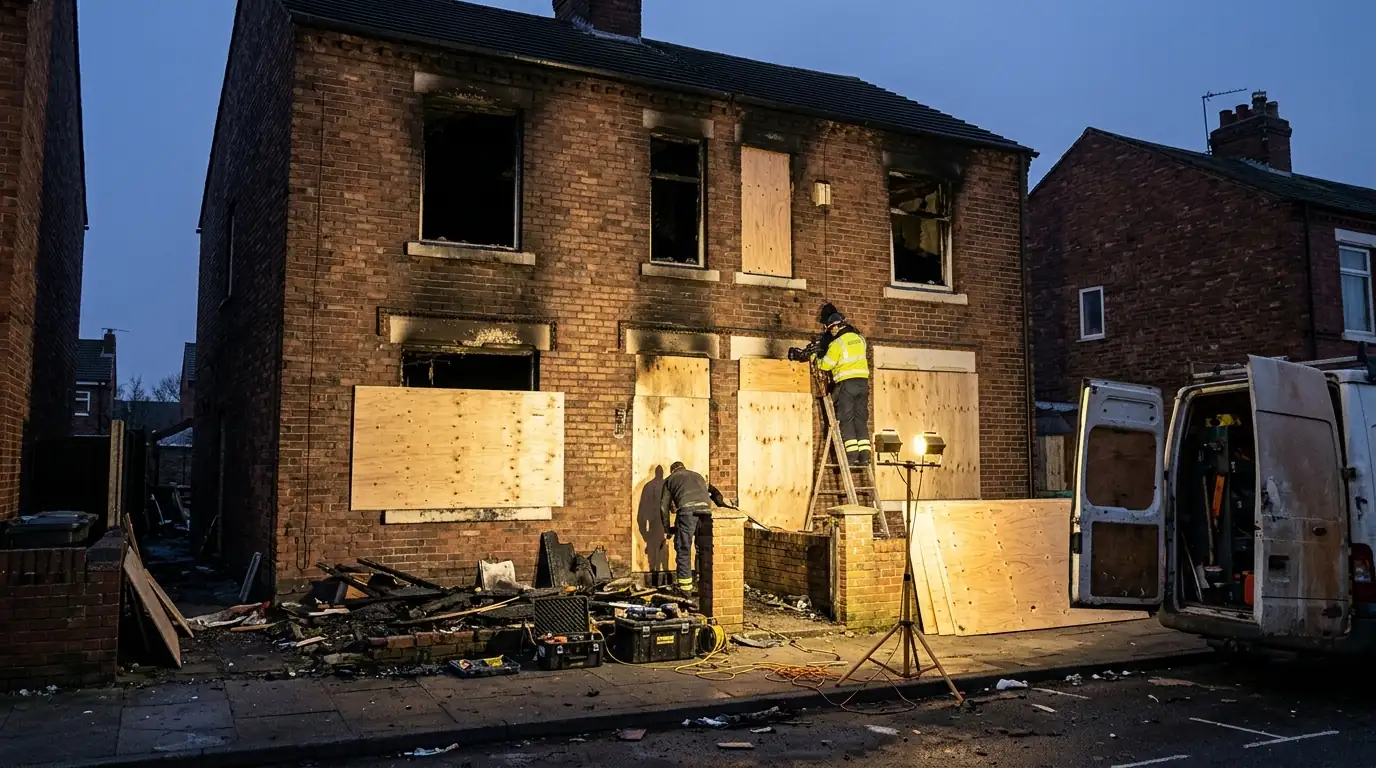
Roof open after the fire? Call now; tarping is part of the first visit.
Call (313) 391-5430Tarping for Michigan snow and storms
Detroit averages 8.9 inches of snow in December, 14.0 in January and 12.5 in February, so a roof opened by a fire in the colder months will carry snow for as long as the tarp is on. Severe storms matter too; the National Weather Service confirmed an EF-2 tornado with 115 mph winds in Grand Blanc, near our head office, and wind is what pulls poorly fastened tarps loose. We fasten for both, and recheck after every major storm or snowfall.
What roof tarping includes
- Attic check below the opening
- Debris cleared from the opening
- Temporary plywood where decking is burned
- Reinforced tarp extended onto sound roof
- Battens screwed into sound framing
- Sealed upper edge and flashing areas
- Photos for your claim
- Checks after storms and heavy snow
What changes the cost of roof tarping
Tarping is priced by the size of the opening, the roof pitch and how much temporary framing is needed.
- Size of the openingA ventilation cut takes less material than a burned section.
- Roof pitch and heightSteep or tall roofs need more safety setup.
- Temporary framingPlywood or framing over burned decking adds material and time.
- Winter conditionsHeavier tarps and extra fastening for snow and ice.
- Return checksVisits after storms and heavy snow.
Roof tarping questions
Weeks to a few months if installed and checked properly. It is a temporary fix, so the permanent repair should follow as soon as possible.
Nails through damaged decking tear out, and nails through good shingles make new leaks. Battens into sound framing hold.
Tarping is part of protecting the property from further damage, which most policies expect. Keep our photos.
Call us. We check and clear snow loading a weakened area.
When it is safe to work on the roof, yes. Otherwise we secure what we can from inside and tarp at first light.
We do; see fire-damaged roof repair.
