Quick answer
Ozone smoke treatment in Detroit is the last step of odor removal, run for several hours in a sealed, empty house after the soot has been cleaned off. Ozone oxidizes odor molecules on surfaces and in the air, but it irritates lungs, so people, pets and plants stay out until the house has been aired and the level has dropped.
Where ozone helps, and where it does not
Ozone is a reactive form of oxygen. A generator produces it in a closed space, it reacts with the odor-causing compounds left by smoke, and it breaks down back into ordinary oxygen once the machine is off and the space is ventilated.
It works on residual odor, not on soot. If the walls, ceilings and ducts are still dirty, the smell comes back as soon as the house warms up, no matter how long the machine runs. That is why ozone comes after cleaning, never instead of it.
It also has limits on materials. Long or repeated treatments can fade some fabrics and dry out rubber and some plastics, so we match run time to the job and remove items that should not be exposed.
What changes the cost of ozone treatment
Ozone is priced by the space treated and how many runs it takes, and it only works when the cleaning is already done.
- Size of the treated areaOne sealed room costs less than a whole house with its ductwork.
- Number of runsStrong odors can take more than one treatment with airing between.
- Sealing and prepRooms treated on their own have to be sealed with plastic and tape.
- Contents chamberTreating belongings separately adds setup and handling.
- Cleaning still neededIf soot is still on surfaces, cleaning comes first and costs more than the ozone.
National cost guides list ozone treatment at $200 to $800 (Angi), usually as one line in a larger odor removal job. These are planning figures, not a quote.
Ozone, hydroxyl and thermal fogging compared
| Ozone | Hydroxyl | Thermal fogging | |
|---|---|---|---|
| Occupied house | No, empty only | Yes, can run with people home | No, empty during treatment |
| Speed | Fast, hours | Slower, days | Fast, hours |
| Reaches wall cavities | Partly | Partly | Yes, the fog follows smoke paths |
| Best for | Empty houses and contents chambers | Occupied homes and sensitive items | Hidden smoke in cavities and closets |
Renting an ozone machine versus a treatment from us
Reasonable to do yourself
- A car or a small closet with a light odor
- Airing the house out and changing filters
- Washing walls before any treatment
- Keeping a rented unit on a timer, with nobody inside
Better left to us
- Odor that survived cleaning across several rooms
- Houses with ductwork that needs treating too
- Anyone with asthma or breathing problems in the household
- Belongings that could be damaged by ozone
Treating an empty house
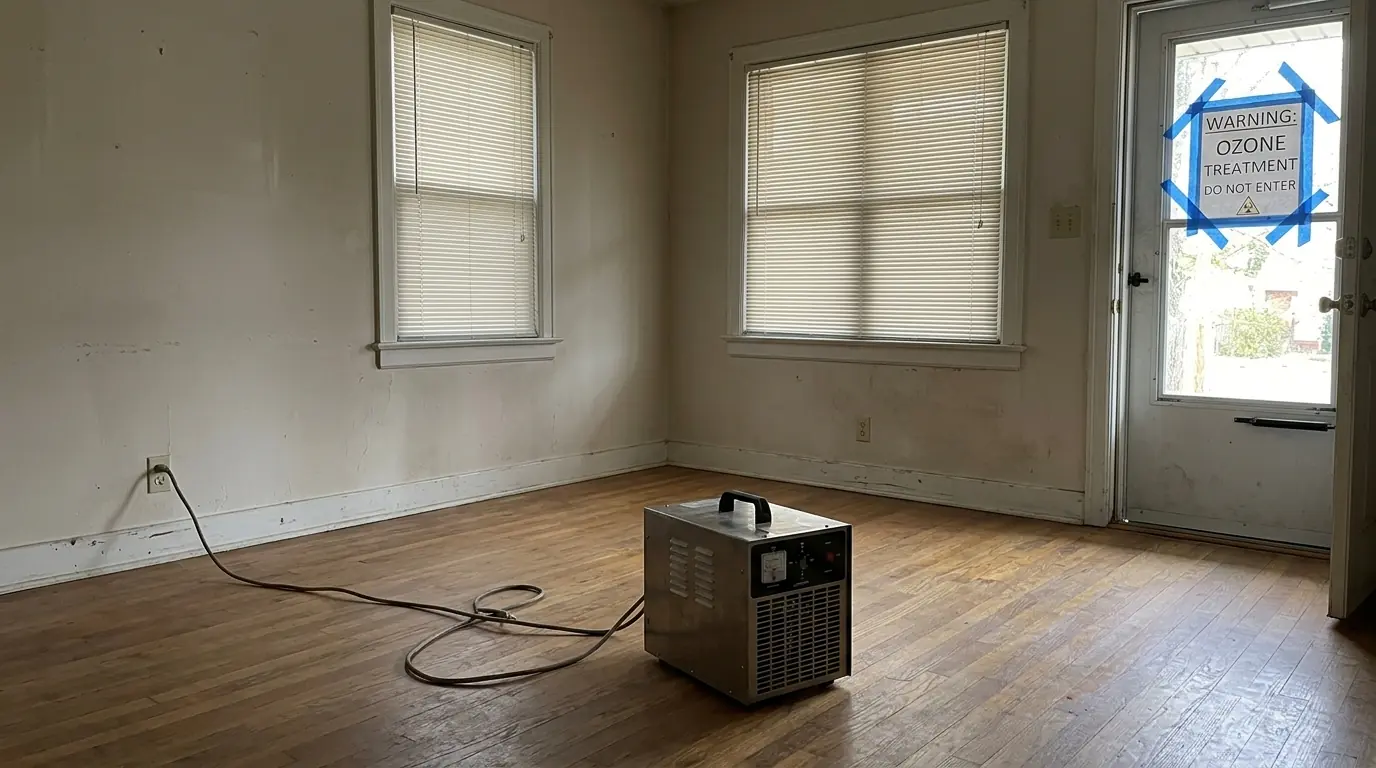
For a whole-house treatment, everyone moves out for the day, along with pets, houseplants and anything rubber or delicate we flag on the walkthrough. We shut off the furnace fan or run it in recirculation so the treatment reaches the ducts, close the house up and post warning signs on the doors.
After the run we open windows, set fans and wait until the level has dropped before anyone goes back in. We walk through with you afterward so you can check the smell room by room, and treat again only where it is still there.
Room by room treatment
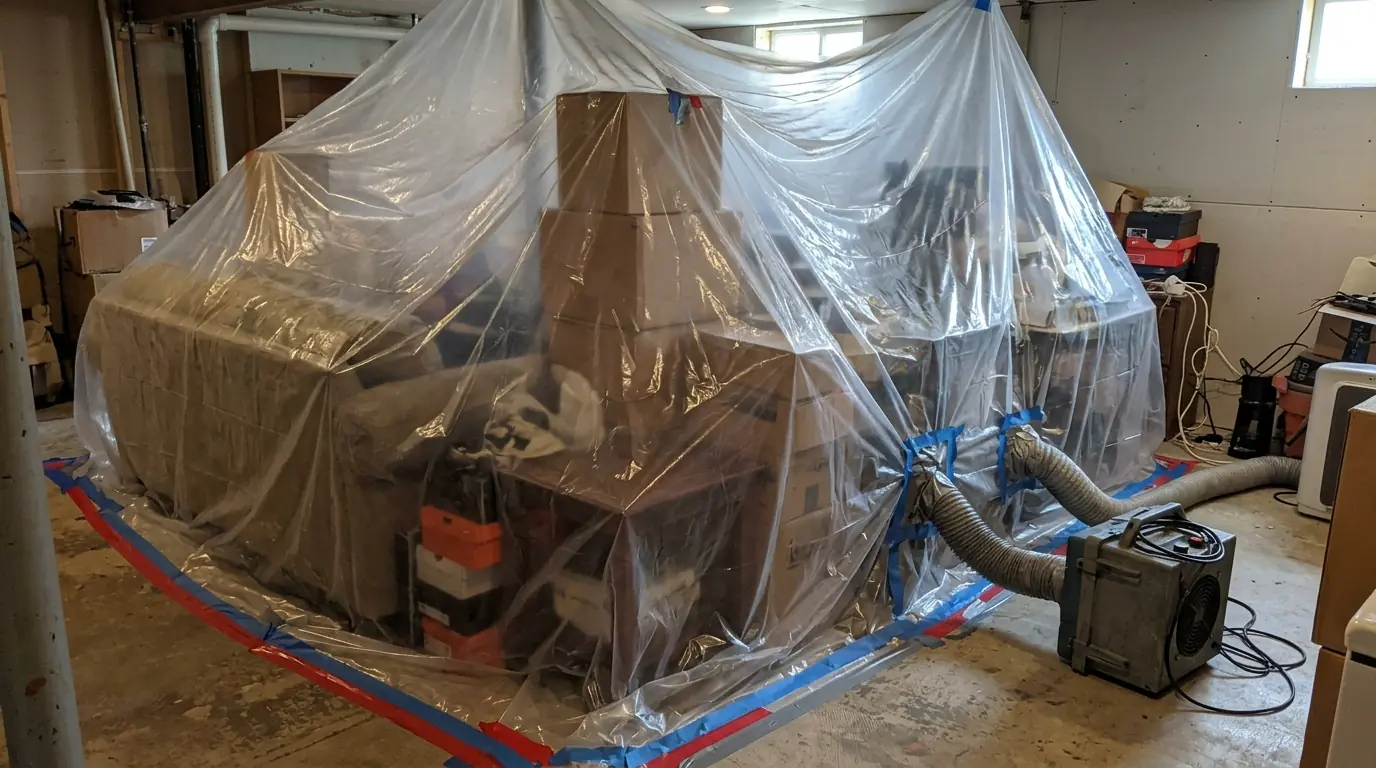
When the odor is concentrated in a few rooms, like a kitchen after a stovetop fire or a bedroom above a small electrical fire, we seal those rooms with plastic and tape and treat them on their own while the rest of the house stays in use.
Sealing has to be tight: doors, supply and return registers and any gaps around pipes. We keep the household away from the sealed area, run the treatment for a set time and ventilate the room to the outside before the plastic comes down and anyone goes back in.
Contents chamber
Books, furniture, shoes and other belongings that still smell after cleaning can go into an enclosed contents chamber, a sealed room or container where they are treated together. It is often the difference between saving a sofa and replacing it.
Items that ozone can damage, like leather, natural rubber, some artwork and fine fabrics, are pulled out and cleaned or treated with a gentler method instead. We list what went into the chamber, what came out clean and what still needs attention, so you know where each item stands.
Smell still there after the cleanup? Call and we will check whether ozone, hydroxyl or more cleaning is the right fix.
Call (313) 391-5430How an ozone treatment runs
- 01
Confirm the cleaning is done
Walls, ceilings and ducts must be clean or the odor comes back.
- 02
Clear the space
People, pets, plants and ozone-sensitive items come out.
- 03
Seal and run
Rooms or the whole house are closed and signed, and the generator runs for a set time.
- 04
Air it out
Windows open and fans run until the level has dropped.
- 05
Walk and recheck
We check each room with you and treat again only where needed.
Ozone treatment in Detroit houses and two-units
About two thirds of Detroit's housing units, 64.3%, are single detached houses, which suits whole-house ozone because one household can move out for the day and the structure can be sealed. Two-unit buildings, 6.4% of the stock, are harder: the units share walls, basements and sometimes ductwork, so we either treat both units at once with both households out, or switch to hydroxyl in the unit that stays occupied.
Ozone treatment questions
Not for people or pets while it runs. It irritates the lungs, which is why the house is empty and signed, and aired out afterward until the level drops.
Usually for the treatment and the airing afterward, often most of a day. We tell you the time before we start.
No. Ozone treats residual odor. If soot is still on walls, ceilings or in the ducts, the smell comes back.
Long or repeated runs can fade some fabrics and dry out rubber and some plastics. We remove sensitive items first.
Then we use hydroxyl, which can run with people in the house. See smoke odor removal for how we choose.
Often one after good cleaning. Heavy odor may need a second run with airing in between.
