Quick answer
Emergency board-up in Detroit covers every window, door and opening a fire or the fire department left in the house, using plywood fastened from the outside and through-bolted where security matters. It keeps weather and people out, protects what is left inside and shows your insurer the property was secured, which most policies expect after a loss.
Why board-up comes first
Firefighters break windows and force doors to get in and to vent heat and smoke. Heat cracks glass that did not break. By the time the fire is out, the house may have several open windows and a door that no longer locks.
An open house takes on rain and snow, loses heat and draws attention. Board-up closes it up the same visit, along with roof tarping and pumping out firefighting water where needed.
We photograph every opening before and after, and leave a way for you, your adjuster and our crew to get in when needed without leaving the house open.
How emergency board-up runs
- 01
Walk the house
Every opening is listed, including heat-cracked glass.
- 02
Photograph first
Openings are photographed before anything is covered.
- 03
Cut and fasten
Plywood is cut to each opening and fastened from outside where possible.
- 04
Secure an entry
One door is set up for access with a lock or hasp.
- 05
Document and check
After photos, then checks after storms or reports.
Window board-up
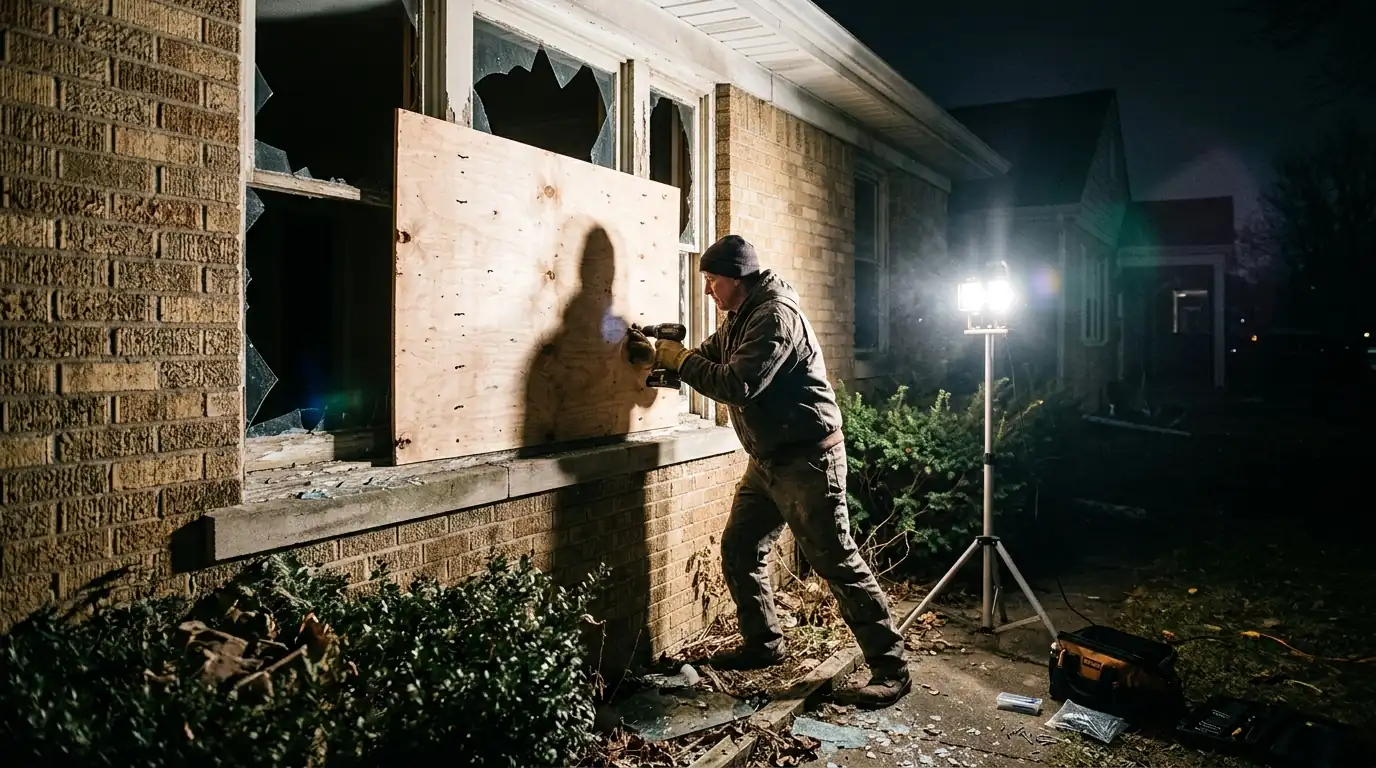
Broken and cracked windows are covered with plywood cut to the opening. On ground floors and street-facing windows we fasten from the outside with screws or through-bolts so the boards cannot simply be pried off; upper windows that are out of reach may be covered from inside.
Glass left in frames is removed or taped so it does not fall. Windows that survived are checked for heat cracks, which can fail later in cold weather. Board-up stays until replacement windows are ordered and installed, and we check it after storms.
Door and entry board-up
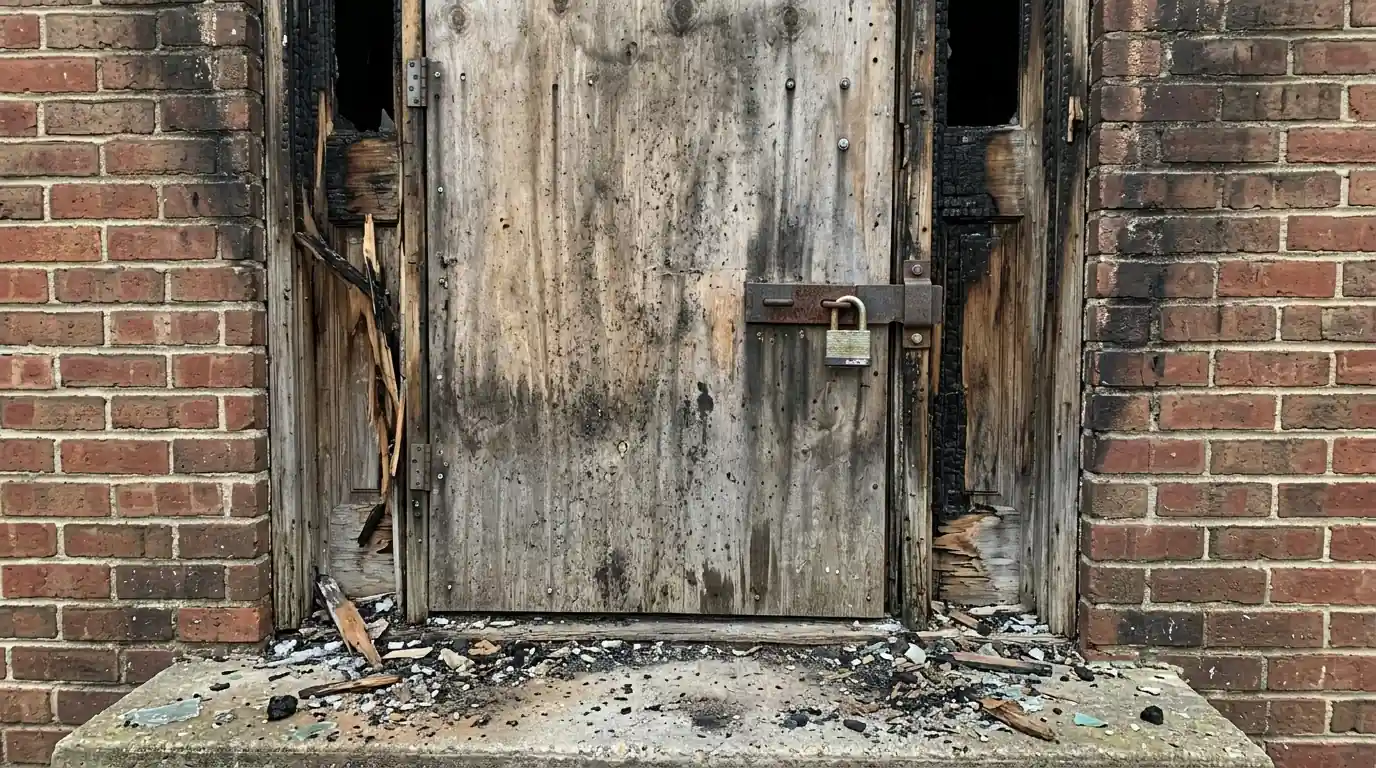
Doors forced by firefighters often have broken frames and locks. We either secure the existing door with a board and a new hasp and padlock, or cover the opening entirely and set up one secured entry for access.
Garage doors, basement doors and pet doors are checked too, since any of them can become the way in. You get the keys or the code to the secured entry, and we log who has been given access for your records and your adjuster.
Securing a vacant house
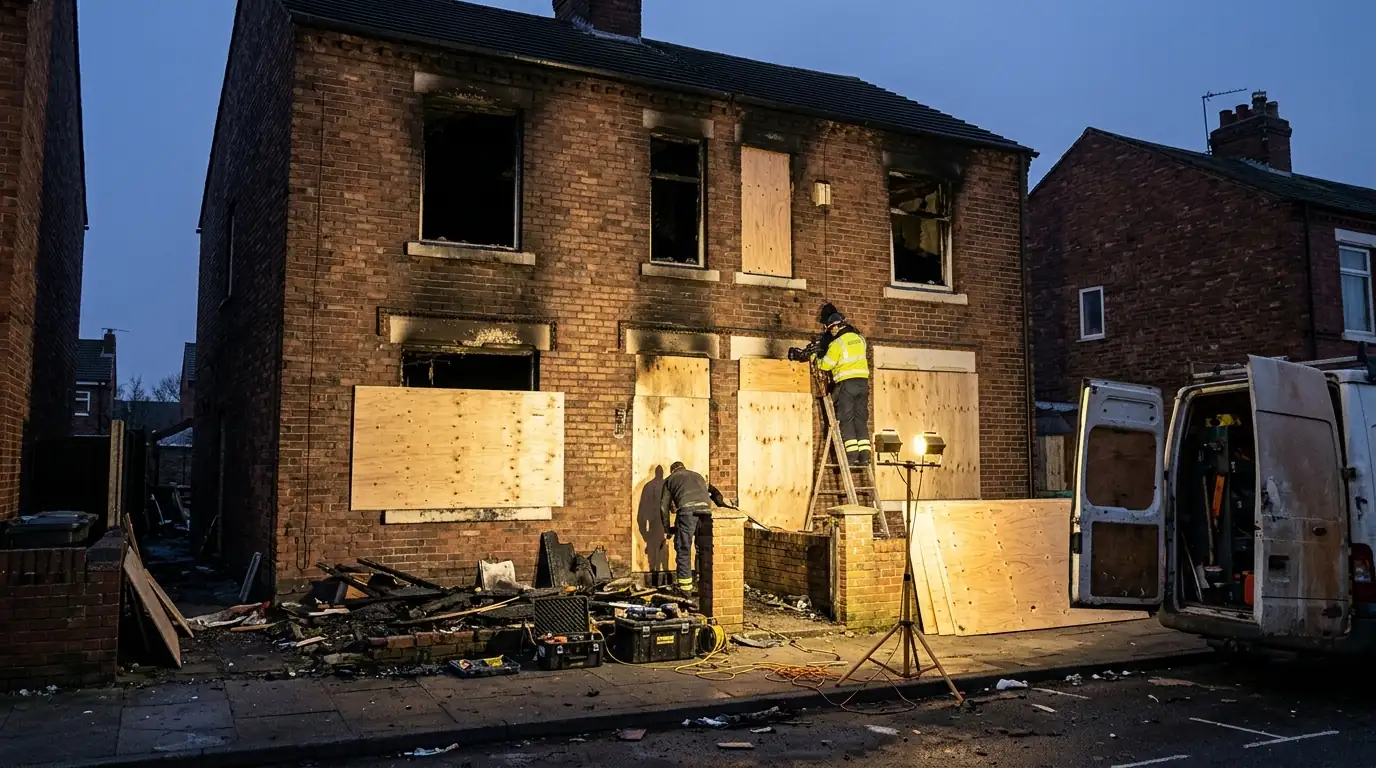
When nobody can live in the house during repairs, it needs more than covered windows. We board every ground-floor opening, secure all entries, check that utilities are safely off or on as needed, and post notices where appropriate.
In cold months, board-up goes with winterizing or temporary heat so the plumbing does not freeze. We come back to check the boards after storms and whenever you or a neighbor reports a problem, and replace anything that has been damaged. Neighbors often notice problems first, so we leave the fire and smoke line number on the secured door.
Windows broken and doors forced after the fire? Call the line now, day or night.
Call (313) 391-5430Board-up after Detroit fires
The Detroit Fire Department answered 3,237 structure fires in 2025, and 1,471 of them needed firefighting operations, which usually means broken windows, forced doors or a roof cut open to vent. Houses on Detroit's residential blocks often sit empty for weeks after a fire while the claim is sorted out. Boarding every ground-floor opening from the outside, rather than only the broken ones, is what keeps them from being stripped or damaged further in that time.
What you can do before we get there
Fine to do yourself
- Photograph every broken window and door
- Tape large cracks in glass that is still in place
- Close interior doors to slow drafts
- Remove valuables if it is safe to go in
Leave for us
- Pulling broken glass out of frames
- Climbing to upper-floor windows
- Covering a roof opening
- Securing a door with a broken frame
What emergency board-up includes
- Walkthrough of every opening
- Before photos of each window and door
- Plywood cut to each opening
- Exterior fastening on ground-floor openings
- Removal or taping of loose glass
- A secured entry with a lock or hasp
- Roof tarping where needed
- After photos and a written list for your claim
What changes the cost of emergency board-up
Board-up is priced by the number and size of openings and how securely they need to be fastened.
- Number of openingsEach window and door is measured, cut and fastened.
- Size and heightLarge windows, bay windows and upper floors take more time.
- Security levelThrough-bolting and locking entries cost more than screwed panels.
- Roof openingsTarping a ventilation cut or burned roof is added to the job.
- Return visitsChecks after storms and on vacant houses add visits.
One Midwest contractor lists 24-hour emergency board-up at about $400 to $1,200 for a typical call-out (contractor price guide). Houses with many openings or roof damage cost more. These are planning figures, not a quote.
Emergency board-up questions
Most policies expect you to protect the property from further damage, and board-up is part of that. Keep our photos and list.
You can cover a small window if it is safe. Upper floors, roof openings and broken door frames are better left to us.
Until windows and doors are replaced. We check it after storms in the meantime.
Yes, the line is answered 24/7 and board-up is part of the first visit.
It gets tarped in the same visit. See roof tarping after a fire.
We set up one secured entry and give you the key or code.
