Quick answer
Fire-damaged roof repair in Detroit replaces what the fire and the firefighters opened up: charred or cut decking, rafters that lost strength, and the shingles over them. We keep the tarp on until the new section is closed, cut back to sound wood, sister or replace weakened rafters, and reroof so the patch ties into the existing roof and passes inspection.
What has to happen before a burned roof is closed
Most fire-damaged roofs are a mix of three things: a ventilation hole cut by the fire department, decking that charred from below and rafters that burned or dried out and cracked. Each needs a different fix, and some of it is only visible from the attic side.
We work from the inside out. The attic is cleaned of soot and wet insulation first so the framing can be inspected properly. Then the roof is opened, damaged wood comes out, framing is repaired and new decking goes on before any shingles.
Where more than a section is damaged, or the rest of the roof is near the end of its life, we tell you whether a larger reroof makes more sense for you and your claim.
What changes the cost of a fire-damaged roof repair
Roof repair after a fire is priced by the area opened and the framing underneath it.
- Size of the burned or cut areaA ventilation cut is small; a burned-through section is larger.
- Rafter damageSistering or replacing rafters adds framing labor and sometimes engineering.
- Decking typeMatching old board decking takes more work than plywood.
- Layers of old roofingMultiple old layers have to come off around the repair.
- Match or larger reroofA tie-in patch costs less than reroofing a whole slope.
Patch the section or reroof the slope
| Section repair | Full slope or roof | |
|---|---|---|
| Best when | Damage is local and the rest of the roof is sound | The rest of the roof is old or already patched |
| Look | Close match, visible if shingles are discontinued | Uniform finish |
| Time | Usually days | Longer, weather dependent |
| Claim | Covers the damaged area | Depends on policy wording and matching rules |
Roof decking replacement
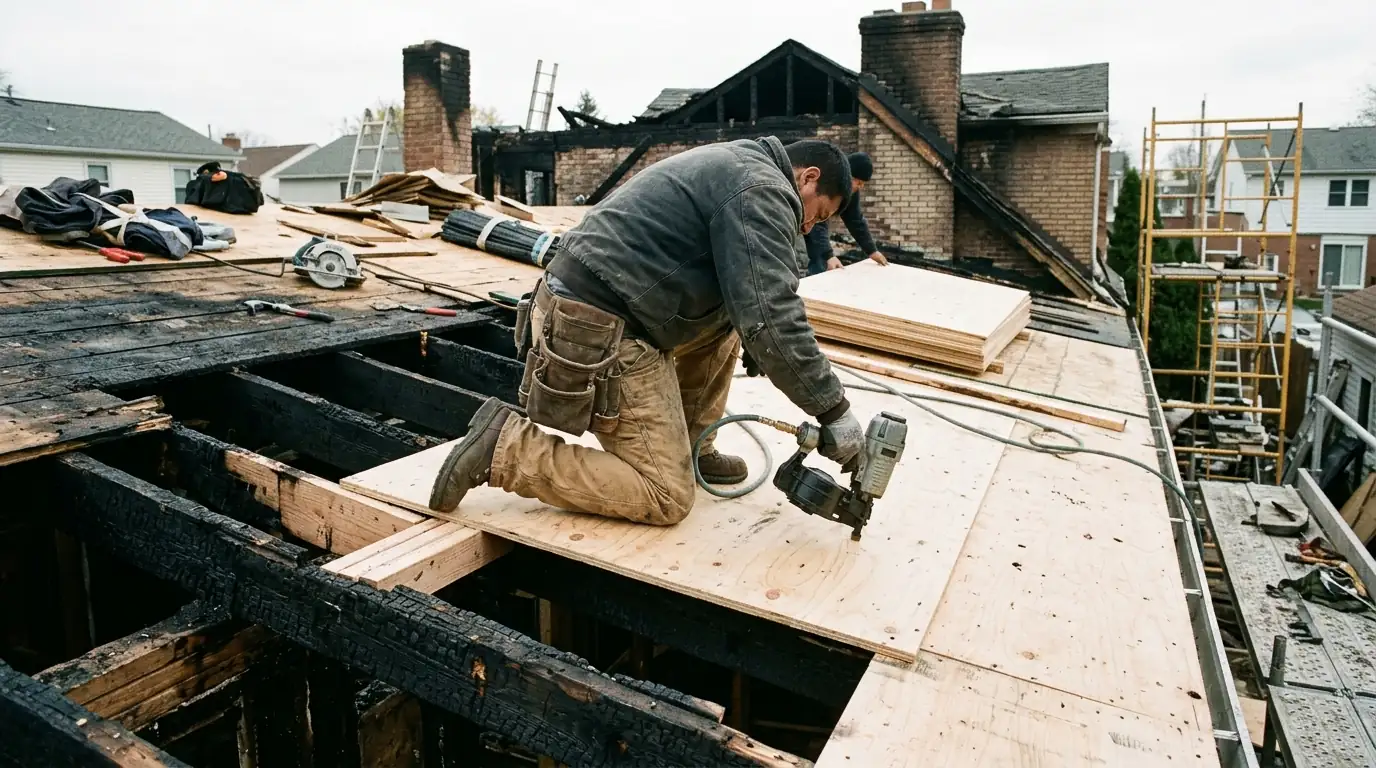
Decking that charred from below loses thickness and holding power for nails, even when it looks solid from the top. We probe it from the attic side and remove every sheet or board that is charred, delaminated or soaked, cutting back to rafters so the new decking lands on solid bearing.
Older houses often have plank board decking instead of plywood. We match thickness so the new section sits flush and the shingles lie flat across the joint, and we replace ventilation cuts with full pieces rather than small patches, which tend to sag over a Michigan winter.
Rafter repair
Rafters that are only surface-charred can often stay once they are cleaned and sealed. Rafters that lost a meaningful depth of wood, cracked from heat or were cut by firefighters need to be sistered with new lumber or replaced.
We check each rafter and the ridge board around the burned area, and note the ones that need structural repair on the scope. Where the damage reaches load-bearing members beyond ordinary rafters, a structural review and a permit come before the repair, and we build that time into the schedule rather than guessing at it on the day.
Reroofing the burned section
Once the framing and decking are sound, the section gets underlayment, ice and water shield along the eaves and valleys where it is needed, flashing and shingles woven into the existing roof. We try to match shingle color and profile, and tell you plainly when an exact match is not available.
When the undamaged part of the roof is old, brittle or already patched, a matched repair can look worse than it is worth. In that case we show you the tradeoff and what your adjuster is likely to consider before any shingles come off.
Roof opened up by the fire or the fire department? Call and we will keep it covered until it is rebuilt.
Call (313) 391-5430How a burned roof gets rebuilt
- 01
Keep it tarped
The tarp stays tight and checked until the new section is closed.
- 02
Clean and inspect the attic
Soot and wet insulation come out so the framing can be judged.
- 03
Cut back to sound wood
Charred decking and damaged rafters are removed.
- 04
Rebuild framing and decking
Rafters are sistered or replaced; new decking goes on.
- 05
Reroof and seal
Underlayment, flashing and shingles tie into the existing roof.
Old roofs and heavy snow around Detroit
About 41 percent of Southeast Michigan's housing was built before 1960, and many of those roofs still sit on board decking with several layers of shingles over it, which changes how a burned section is cut out and tied back in. Snow is the other factor: Detroit averages 14.0 inches in January, so a temporary patch or a weak rafter left over winter carries real load. We keep the tarp tight and the roof checked until the new section is fully closed.
How long the roof repair takes
A ventilation cut or a small burned section is usually closed in a day or two once the attic is cleaned and the framing is checked.
Larger losses with rafter replacement take longer, especially when a permit or structural review is required, and winter weather can push shingle work to the next dry window. The tarp protects the house in the meantime.
Fire-damaged roof questions
Ventilation cuts let heat and smoke out so firefighters can work inside safely. The hole gets tarped right away and rebuilt with the rest of the repairs.
Lightly charred rafters can often be cleaned and sealed. Rafters that lost depth, cracked or were cut need sistering or replacement.
We match color and profile as closely as available shingles allow and tell you before work starts if an exact match is not possible.
For a short time, if it is installed and checked properly. Snow load and wind make a quick permanent repair the better plan. See roof tarping after a fire.
Structural repairs to rafters usually do. We handle the permit when the scope calls for one.
It depends on the damage, your policy and matching rules. We document the roof so your adjuster can decide on the full picture.
