Quick answer
Smoke sealing and repainting in Detroit is the last layer between residual smoke and the finished room: after cleaning, we apply a shellac or oil-based stain-blocking primer to walls, ceilings and any exposed framing, then two finish coats. Skipping the sealer is the most common reason smoke stains and smell bleed back through new paint.
Why paint alone does not cover smoke
Smoke residue and the oils in it migrate through water-based paint. The yellow or brown shows through within days or weeks, and the smell comes back when the room warms up. Even well-cleaned surfaces keep a trace in the pores of plaster, drywall and wood.
A stain-blocking primer locks that trace in. Shellac-based primers block the worst stains and odor, oil-based primers work well on most smoke-stained walls, and some water-based blockers are enough for light jobs. We choose by the stain, the surface and the ventilation in the room.
Sealing also covers what you will never see: framing in opened walls and attics is primed before insulation and drywall go back, so odor cannot seep out through the new wall.
What changes the cost of sealing and repainting
Sealing and painting are priced by surface area and the primer each surface needs.
- Number of roomsEvery room smoke reached gets primed and painted, ceilings included.
- Primer typeShellac-based primer costs more than oil or water-based blockers.
- Coats neededHeavy stains may need a second primer coat.
- Framing sealingOpen walls and attics add spraying before they close.
- Trim, doors and cabinetsDetail work takes more time than open walls.
National cost guides put painting and sealing after smoke damage at about $400 to $1,600 (Angi), depending on the area and primer. These are planning figures, not a quote.
Choosing the right stain-blocking primer
| Shellac-based | Oil-based | Water-based blocker | |
|---|---|---|---|
| Smoke stain blocking | Strongest | Strong | Light stains only |
| Odor sealing | Strongest | Good | Limited |
| Fumes | Strong, needs ventilation | Strong, needs ventilation | Low |
| Best for | Heavy stains, framing, plaster | Most smoke-stained walls | Light smoke, occupied rooms |
Stain-blocking primer
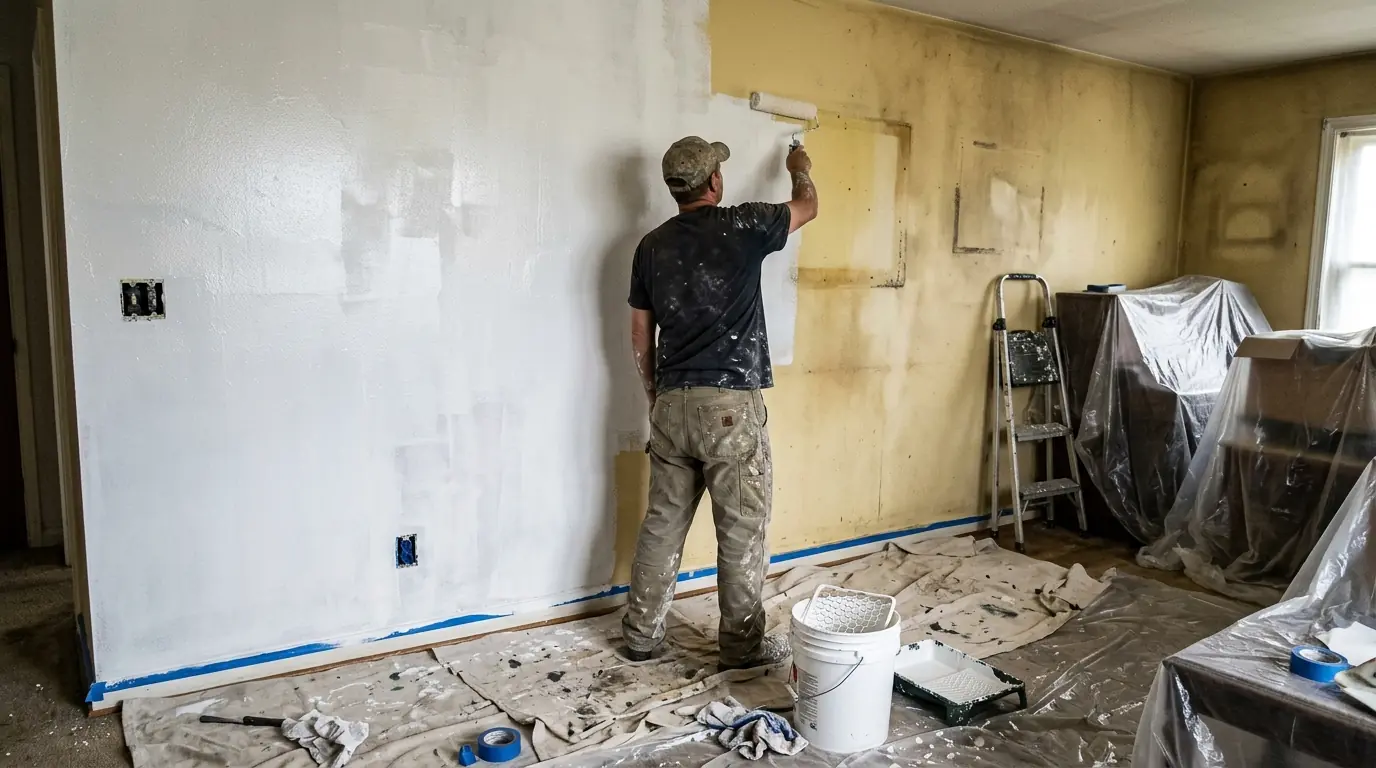
After cleaning, every smoke-affected wall and ceiling gets a full coat of stain-blocking primer, not just the visible stains. Heavy stains near the fire get shellac-based primer; lighter areas usually get an oil-based blocker.
Shellac and oil primers give off strong fumes, so rooms are ventilated and the household stays out until they dry. We check coverage by eye and by smell; a second coat goes on where the stain or odor still shows. Only then does finish paint go on.
Framing encapsulation
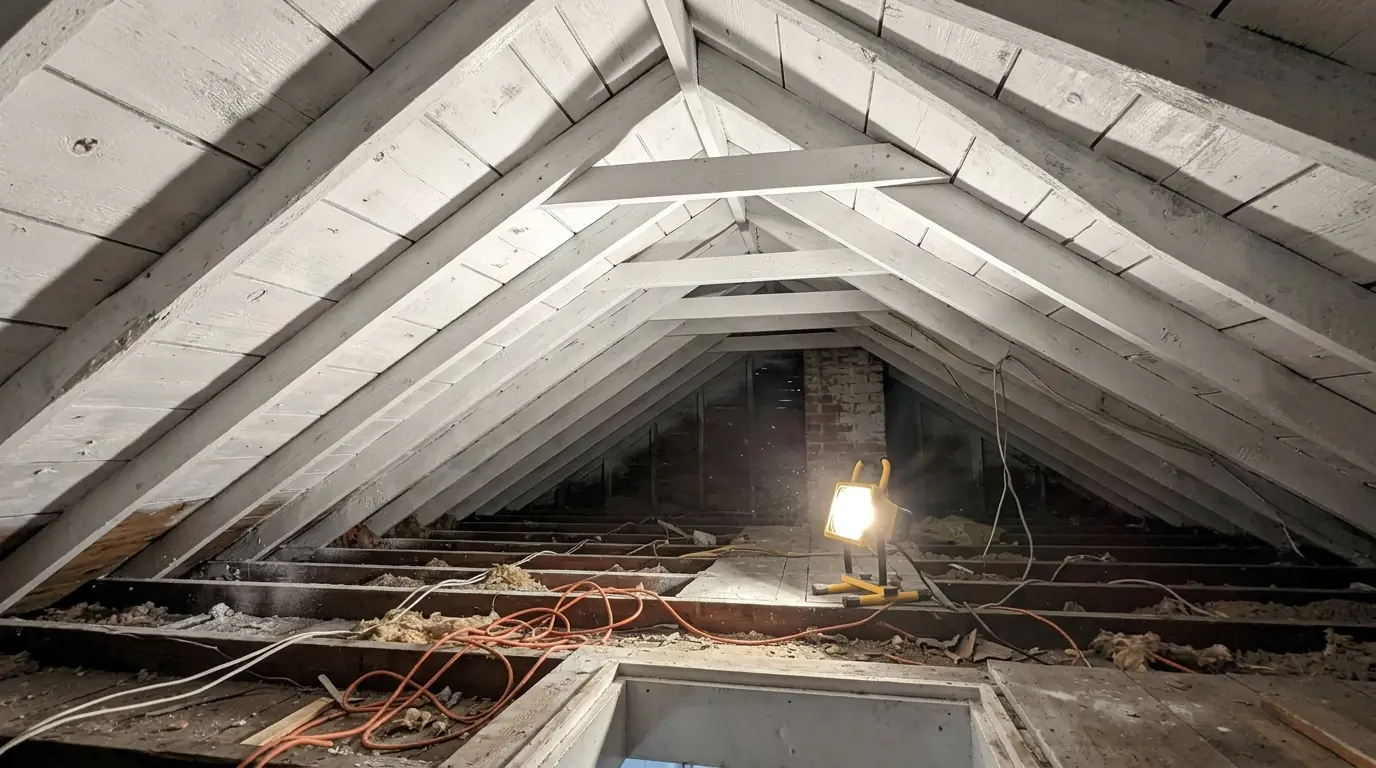
Framing that was cleaned or blasted after a fire still carries odor in the grain. Before walls and ceilings close, we spray or roll an odor-sealing primer over studs, joists, rafters and sheathing in the affected area.
This step is invisible once the house is finished, which is why it gets skipped. It is also one of the main reasons a finished house can smell of smoke on the first humid day. We photograph sealed framing for your records and your adjuster.
Full interior repaint
Painting only the damaged wall leaves a visible difference in color and sheen, because the rest of the room aged with the smoke. We repaint whole rooms, ceilings included, so each room finishes evenly.
Trim, doors and cabinets in the smoke path are cleaned, primed where stained and painted to match. We confirm colors with you before painting, and match existing colors where you want the house to look the way it did. Floors, fixtures and furniture that stay in the room are masked and covered before any primer or paint goes on.
Stains or smell coming back through new paint? Call and we will seal it properly.
Call (313) 391-5430What sealing and repainting includes
- Test patch to choose the primer
- Masking of floors, fixtures and trim
- Odor-sealing primer on exposed framing
- Stain-blocking primer on every affected wall
- Stain-blocking primer on ceilings
- Second primer coat where needed
- Two finish coats on whole rooms
- Trim, doors and cabinets primed and painted
How sealing and repainting runs
- 01
Confirm cleaning is done
Surfaces must be cleaned first; primer does not stick to soot.
- 02
Test and choose primer
A test patch shows which blocker the stain and surface need.
- 03
Seal framing
Open framing is primed before insulation and drywall go back.
- 04
Prime walls and ceilings
Full coverage, with a second coat where stain or odor shows.
- 05
Paint to finish
Two finish coats on whole rooms, trim and doors to match.
Sealing old plaster in houses around Detroit
Most of the housing in Hamtramck and Grosse Pointe Farms was built before 1939, and walls from that era are usually plaster, often with many layers of old paint on top. Plaster takes smoke deeper into its surface than drywall does, and old oil-based paint layers react differently to cleaners and primers. We test a patch before sealing a whole room, and use shellac-based primer on plaster that shows bleed-through after cleaning.
Smoke sealing and painting questions
Water-based paint does not block smoke residue. The wall needs a stain-blocking primer before finish paint.
It has strong fumes while it dries, so rooms are ventilated and people stay out until it is dry. Once cured, it is inert.
Yes. Exposed framing in the fire area is primed before insulation and drywall go back. See soda and dry ice blasting for how it is cleaned first.
Yes. We can match existing colors or work from your choices, and confirm them before painting.
We paint whole rooms. A single fresh wall stands out against walls that aged with the smoke.
No. Primer does not bond properly over soot. Cleaning comes first.
