Quick answer
Clothing and textile smoke cleaning in Detroit sorts every item by fabric and damage, then cleans it with a process matched to it: wet cleaning with odor-neutralizing detergents for washables, dry cleaning or specialty cleaning for wool, silk and structured garments, and ozone or a sealed deodorizing room for items that still smell after cleaning. Scorched, melted or heavily stained items are listed for your claim.
Why a regular wash does not remove smoke
Smoke particles are fine and oily, and they settle deep into fibers. A regular wash with household detergent often leaves the smell behind and can set soot stains, especially on light fabrics and synthetics.
Professional smoke cleaning uses detergents and additives made to break down smoke residue, and follows up with deodorizing where needed. Garments that cannot be washed go through dry cleaning or specialty processes instead.
Clothing is also something people need right away. We can clean a set of essentials first so the household has clothes while the rest is processed.
What changes the cost of textile cleaning
Textile cleaning is priced by volume and by how much specialty cleaning is needed.
- VolumeA few bags of clothes cost less than a whole household.
- Fabric typeWool, silk, leather and down cost more to clean than cotton.
- Smoke levelHeavy odor may need extra cycles and deodorizing.
- UpholsteryFurniture cleaning is priced per piece.
- Rush itemsEssentials cleaned first may need a separate run.
National cost guides put furniture and textile deodorizing at about $200 to $1,000 (HomeAdvisor). Whole-household textile jobs are priced from the inventory. These are planning figures, not a quote.
How different textiles are cleaned
| Item | Usual process | Often replaced when |
|---|---|---|
| Cotton and synthetics | Wet cleaning with smoke detergent | Melted or scorched |
| Wool, silk, suits | Dry cleaning or specialty wet cleaning | Burned or heat-shrunk |
| Down and feather | Specialty cleaning | Heavy smoke through the fill |
| Upholstery | On-site or facility cleaning by fiber code | Heat damage or deep staining |
What you can wash yourself and what to send to us
Fine to wash yourself
- Lightly smoky cotton clothing
- Sheets and towels from closed closets
- Items you need tonight, with a strong detergent
- Anything you photographed first
Send to us
- Wool, silk and dry-clean-only items
- Down comforters and pillows
- Heavily sooted or wet clothing
- Upholstered furniture
Clothing
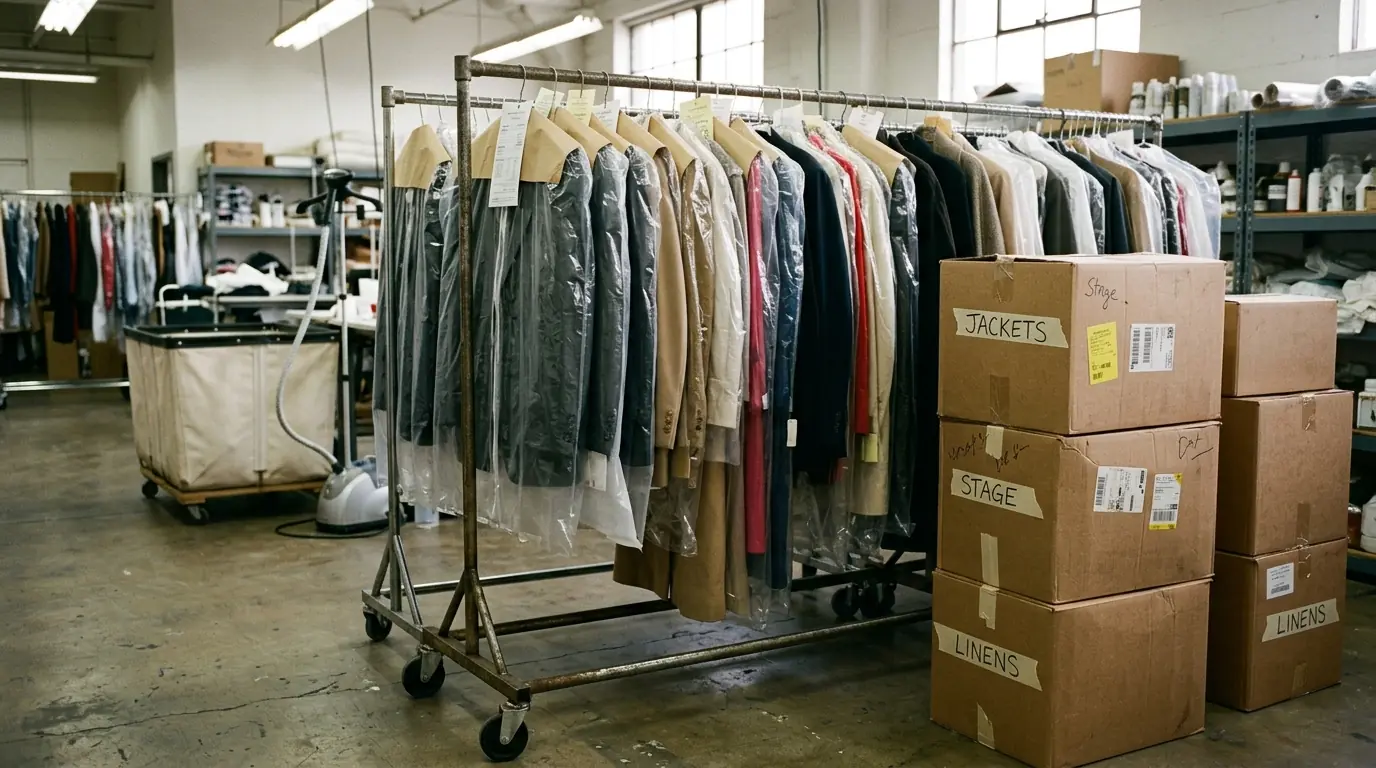
Everyday washables are cleaned with smoke-specific detergents, often in more than one cycle, then dried and checked for odor. Wool, silk, suits, coats and other dry-clean-only items go to dry cleaning or wet cleaning processes designed for delicate fabrics.
Leather jackets, shoes and bags are cleaned and conditioned by hand. We ask what you need first, work clothes, school clothes, winter coats, and return those items within days while the rest of the wardrobe is processed. Children's clothing and school uniforms are usually near the top of that list.
Bedding and drapes
Sheets, blankets and pillowcases wash well with smoke detergents. Comforters and pillows with synthetic fill can often be cleaned; feather and down items need specialty cleaning, and pillows that took heavy smoke are usually cheaper to replace.
Drapes and curtains are taken down, measured and labeled by window so they go back where they came from. Lined and heavy drapes are dry cleaned; sheers and cotton panels are usually wet cleaned. Blinds and shades are handled with the hard goods.
Upholstered furniture
Sofas, chairs and headboards cannot go in a washer, so they are cleaned on site or at our facility. Loose soot is vacuumed with HEPA equipment, then the fabric is cleaned with a method matched to the fiber code on the tag.
Cushions with removable covers get the covers cleaned and the foam deodorized. Where odor is deep in the padding, a sealed deodorizing room or ozone chamber finishes the job. Pieces with heat damage or deep staining are listed with photos.
Need clean clothes after the fire? Call and we will clean your essentials first.
Call (313) 391-5430How textile cleaning runs
- 01
Inventory and sort
Items are logged by room and sorted by fabric and damage.
- 02
Essentials first
Clothing you need right away is cleaned first.
- 03
Clean by fabric
Wet cleaning, dry cleaning or specialty cleaning for each item.
- 04
Deodorize
Items that still smell are treated in a sealed room.
- 05
Return
Clothing returned folded or on hangers, labeled by room.
Winter clothing and heavy textiles in Detroit homes
Detroit's normal January high is 32.3F with lows around 19.2F, so most households here keep closets of wool coats, down jackets, boots and heavy bedding that sit through a fire in the off season. Those are also the fabrics that hold smoke longest and need the most careful cleaning. We check hall closets, basement storage bins and cedar chests, since stored winter textiles are easy to overlook until the cold weather comes back.
Clothing and textile cleaning questions
Usually, with smoke-specific detergents and sometimes more than one cycle. Heavy odor may need deodorizing after washing.
Light smoke on cotton is fine to try. Send wool, silk, down and heavily sooted items to us so stains do not set.
Yes. Tell us what you need and we clean those items first.
They are cleaned and conditioned by hand.
Often, if there is no heat damage. We tell you which pieces are worth it.
Hard goods go through contents cleaning.
