Quick answer
Dryer and laundry fire cleanup covers the burned dryer and vent, the laundry room walls and ceiling, the clothing and linens that took smoke, and the rest of the house the smoke reached. The vent run is opened and checked because lint fires can travel inside it, and basements are dried when firefighting water collected there.
How dryer fires start and spread
Lint is fine, dry fiber that ignites easily. It builds up inside the dryer and along the vent duct, especially with long runs, crushed foil ducts or vents that end under a deck or through a basement wall.
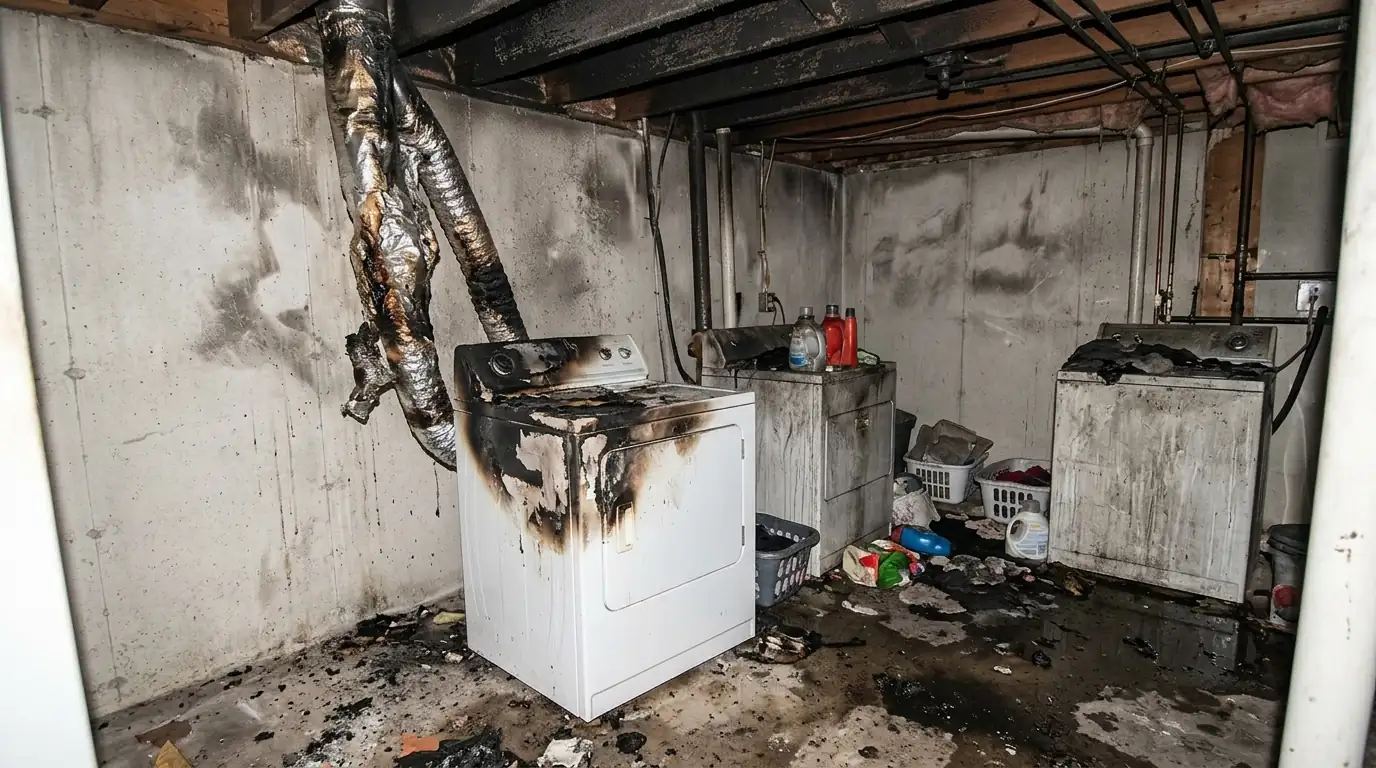
A dryer fire often begins inside the drum or the duct, then breaks out into the laundry room. Plastic laundry baskets, detergent bottles and piles of clothes nearby add oily, heavy smoke.
Even a fire confined to the dryer leaves fine soot through the laundry room and up the stairs, and a lint fire inside a hidden duct can scorch framing behind the wall.
Signs a dryer fire did more damage than it looks
Burning smell from a wall
The vent duct inside the wall may have burned.
Smoke smell when the furnace runs
The return air pulled smoke from the laundry area.
Damp basement floor or walls
Firefighting water soaked into the basement.
Smoky clothes in other rooms
Smoke traveled beyond the laundry room.
Scorched joists above the dryer
Heat reached the floor framing overhead.
How a dryer fire cleanup runs
- 01
Make it safe
Power and gas to the dryer shut off; burned appliance removed.
- 02
Check the vent run
Walls or ceilings opened where the duct may have burned.
- 03
Remove water
Basement pumped out and dried if firefighting water collected.
- 04
Clean and deodorize
Laundry room, stairs and affected rooms cleaned; clothing packed out.
- 05
Repair
Framing, drywall and a new rigid vent run installed.
Lint and dryer vent fires
A fire inside the vent duct is easy to miss: the dryer looks scorched, but the real damage is inside the wall or ceiling where the duct runs. We open the run where needed, check the framing and joists around it, and remove crushed or foil ducting that was part of the problem.
Soot inside the duct and along its path is cleaned or the damaged sections are removed. Any replacement vent is noted in the scope as rigid metal with a short, direct run outside, and the exterior hood is checked for blockage from lint or nests.
Basement laundry rooms
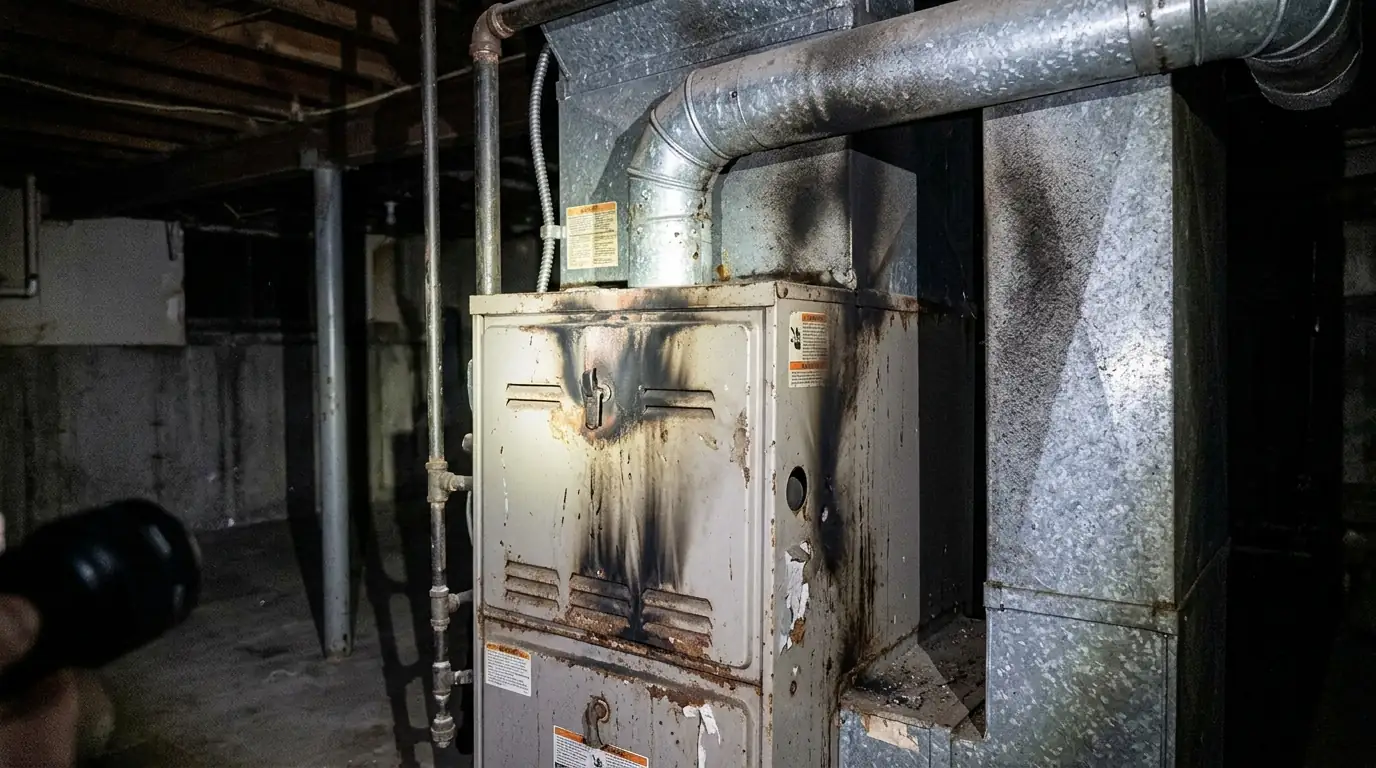
In many older Detroit-area homes, the washer and dryer sit in the basement next to the furnace and water heater. A dryer fire there sends smoke up the stairs and into the furnace's return air, spreading it through the whole house.
Firefighting water stays in the basement, soaking the floor, the lower walls and stored belongings. We pump out standing water, dry the space with dehumidifiers, clean the soot from joists and walls, and have the furnace and ductwork checked before the heat runs again.
Clothing and linens near the dryer
Laundry rooms are full of fabric: clothes in the dryer, baskets of clean and dirty laundry, towels and linens on shelves. Items that burned are listed and photographed for the claim, and those that only took smoke can usually be cleaned.
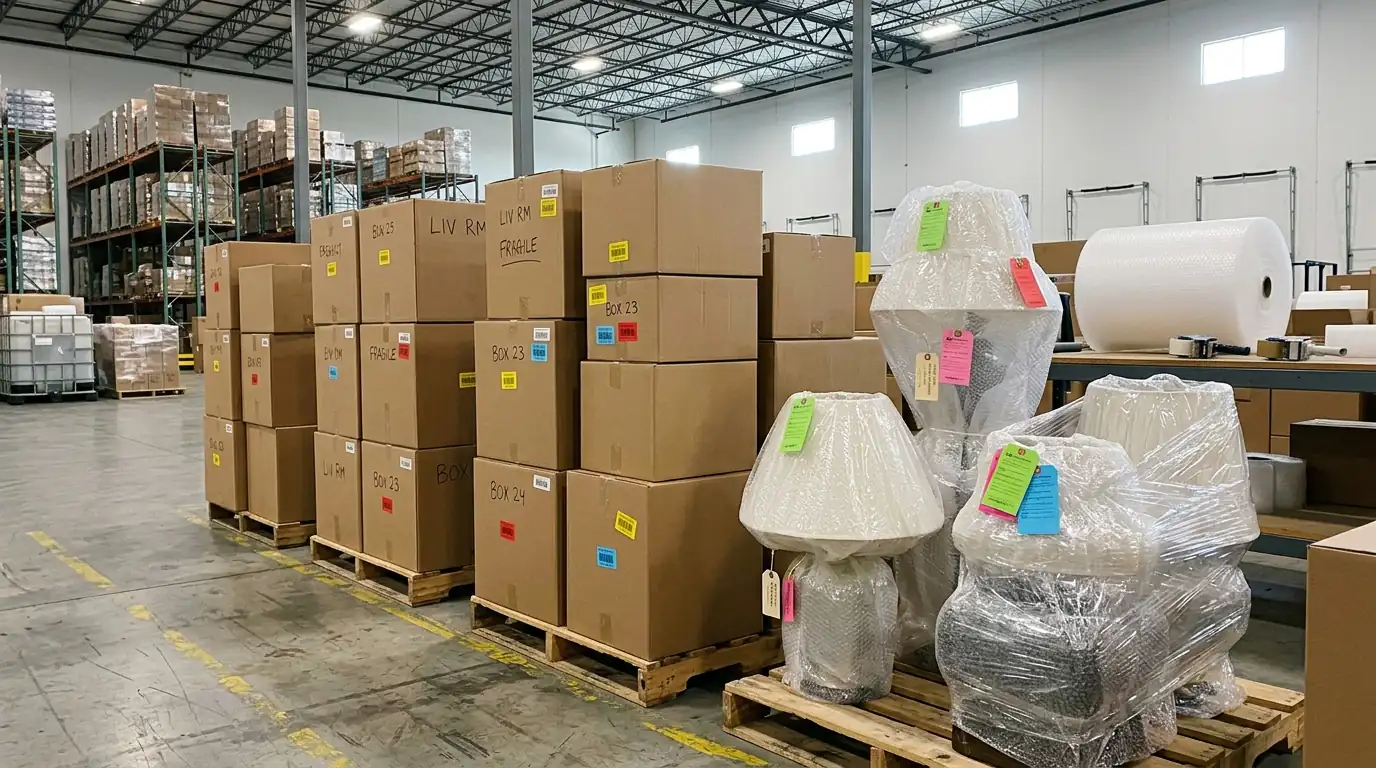
Smoke-affected clothing is packed out and cleaned with deodorizing processes rather than washed at home, where the smell often survives a normal cycle. Bedding and clothing stored elsewhere in the house are checked as well when smoke traveled through it.
Dryer or laundry room fire? Call the line and we will check the vent and the rest of the house.
Call (313) 391-5430How long a dryer fire cleanup takes
A fire confined to the dryer is usually cleaned in two to three days, plus the time to replace the vent.
When the fire burned the room, smoke went through the furnace or the basement needs drying, plan on one to two weeks before repairs are finished.
Dryer fires and Michigan winters
U.S. Fire Administration data put residential clothes dryer fires at about 2,900 a year, with failure to clean the leading factor at 34 percent and the most fires in January. In Michigan, winter means heavier loads, more drying and vents blocked by snow at the outside hood. Combined with basement laundries in older Detroit-area homes, that makes a winter dryer fire one of the jobs we plan for every year, along with drying the basement afterwards.
What changes the cost of dryer fire cleanup
Dryer fire cleanup depends on whether the fire stayed in the appliance and where the laundry room is.
- Confined or spreadA fire inside the dryer versus one that burned the room.
- Vent run damageOpening walls or ceilings to check and replace the duct.
- Basement waterPumping out and drying after firefighting.
- Smoke spreadWhether the furnace carried smoke through the house.
- ContentsClothing and linens cleaned or replaced.
National figures put smoke damage cleanup at about $425 to $1,800, or $3.50 to $7.00 per square foot (Yelp). Repairs to walls, framing and the vent are priced separately. These are planning figures, not a quote.
Dryer and laundry fire questions
Usually, as sudden fire damage. Policies may question a fire caused by long-term neglect, so document what happened.
Lint fires can travel inside the vent duct, scorching framing you cannot see.
Burned items are a loss; clothing that only took smoke can usually be cleaned. See clothing and textile smoke cleaning.
Rigid metal duct with the shortest direct run to the outside, not foil or plastic.
Not until the furnace and ducts have been checked for smoke and soot.
Yes. See water removal after firefighting.
