Quick answer
Electronics cleaning after a fire in Detroit starts with one rule: do not power anything on that sat in smoke. Soot is acidic and conductive, so it can short circuits and corrode contacts. We remove electronics from the smoke path, clean the residue off cases, vents and boards where practical, and list anything not worth cleaning, with serial numbers, for your insurer.
Why smoky electronics need cleaning before they are switched on
Smoke carries fine particles that settle inside vents, on circuit boards and on connectors. Some of that residue is acidic, especially from burning plastics and wire insulation, and it keeps working on metal contacts over the following days and weeks.
Powering a device on while it is coated can short it, and heat from normal operation speeds the corrosion. That is why the first step is to unplug, move items out of the smoke path and wait for cleaning.
Not everything is worth cleaning. We look at value, age and how heavily the item was exposed, and tell you which items to clean and which to list for replacement.
What changes the cost of electronics cleaning
Electronics cleaning is priced per item and by how much of it has to be opened up.
- Number of itemsA few TVs and a computer cost less than a whole house of devices.
- Opening the caseCleaning inside a device takes more time than cleaning the outside.
- Soot typeOily or plastic-heavy smoke residue takes more work to remove.
- Replace or cleanLow-value or heavily exposed items are listed instead of cleaned.
- Data recoveryHandled separately by a data recovery service if a drive fails.
What to do and what to avoid with smoky electronics
Do this
- Unplug everything that was in the smoke
- Move devices to a clean, dry room
- Photograph each item and its serial number
- Back up data from a working phone before cleaning
Avoid this
- Turning devices on to test them
- Wiping screens with household cleaners
- Charging devices with heat-exposed batteries
- Throwing items away before they are listed
TVs and computers
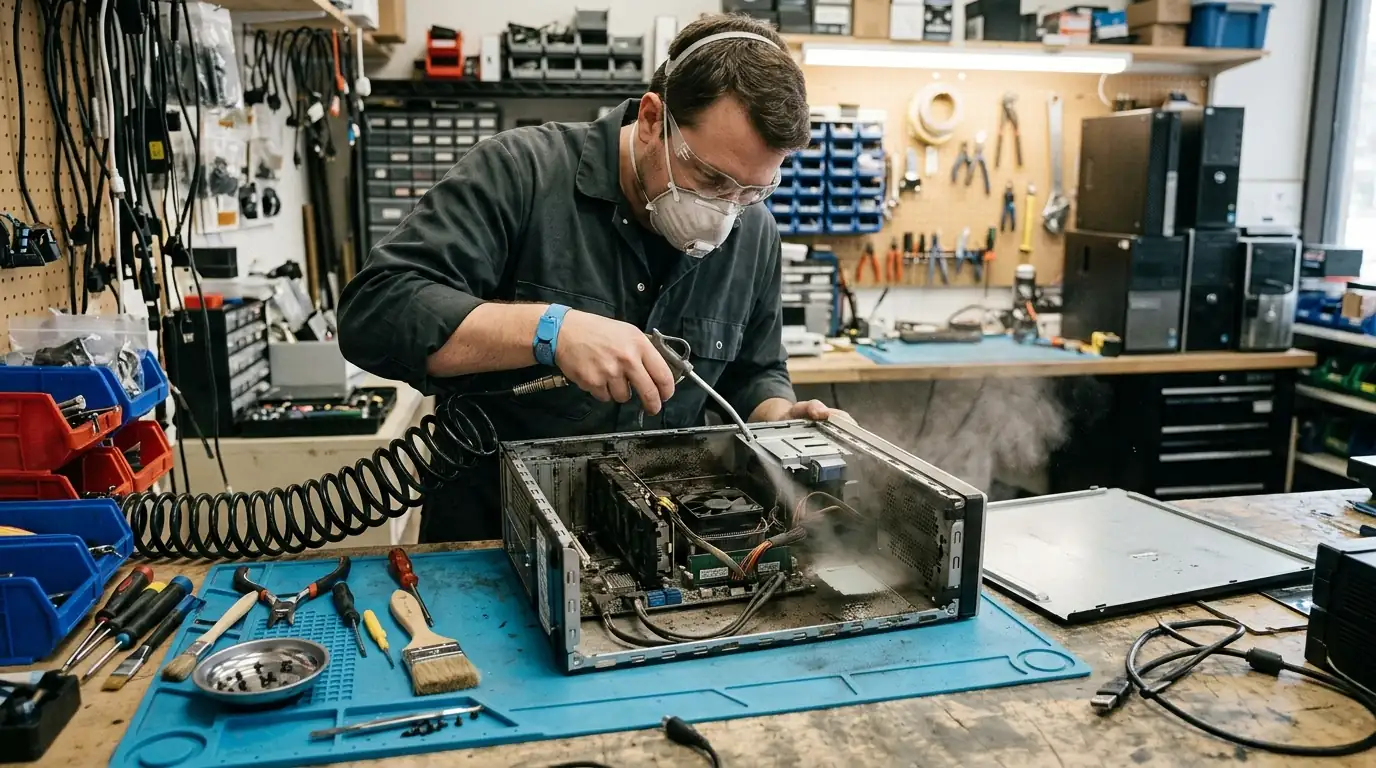
TVs, computers, monitors, game consoles and routers are opened where practical so internal dust and soot can be removed with low-pressure air and cleaners made for electronics. Screens are cleaned with screen-safe products, never the degreasers used on walls.
Laptops and desktops with important files are a priority. If one will not start after cleaning, the drive can often still be recovered by a data recovery service, so we set those aside rather than listing them straight away. Items that were close to the heat and show warped cases or melted ports go on the loss list.
Kitchen and laundry appliances
Refrigerators, ranges, microwaves, dishwashers, washers and dryers are cleaned on the outside, and their vents, condenser coils and control panels are cleaned where soot settled. Refrigerators that lost power get emptied and deodorized, since spoiled food adds its own smell to the smoke.
Appliances that were in the burned room, show heat damage on panels or wiring, or have control boards exposed to heavy residue are usually listed for replacement. We note brand, model and serial numbers, which adjusters ask for.
Small electronics
Phones, tablets, speakers, cameras, chargers and small kitchen appliances are cleaned by hand. Many clean well; some, like cheap chargers and power strips that sat near the fire, cost less to replace than to clean safely.
Anything with a rechargeable battery that was exposed to heat is checked for swelling or damage before cleaning, since damaged lithium batteries are a fire risk of their own. Those are set aside and listed rather than charged. Remotes, keyboards and mice are cleaned with the devices they belong to, so everything that goes back to a room works together.
Electronics sat in the smoke? Keep them unplugged and call; we will tell you what is worth cleaning.
Call (313) 391-5430What electronics cleaning includes
- Removal from the smoke path
- Photo and serial number log for each item
- Exterior cleaning of cases and screens
- Vent, port and connector cleaning
- Internal cleaning where practical
- Battery check on heat-exposed devices
- Appliance coil and control panel cleaning
- Loss list for items not worth cleaning
How electronics cleaning runs
- 01
Unplug and remove
Devices come out of the smoke path and stay unplugged.
- 02
Photograph and log
Brand, model, serial number and condition recorded for each item.
- 03
Decide clean or replace
Value, age and exposure decide which items get cleaned.
- 04
Clean
Cases, vents, screens and, where practical, internals are cleaned.
- 05
Return or list
Cleaned items go back; the rest go on the loss list.
Electronics after electrical fires in Detroit
Electrical fires are the top cause of accidental residential fires in Detroit, according to the city's fire department, and those fires produce the plastic-heavy, acidic smoke that is hardest on electronics. When the fire started at an outlet, a power strip or an appliance cord, the devices plugged in nearby are usually the most exposed. We pull those out first and keep them unplugged until they are cleaned or listed.
Electronics cleaning questions
Please do not. Soot is conductive and acidic; powering a coated device can short it. Wait until it is cleaned.
Often, if they were outside the burned room. We clean LG, Samsung, Whirlpool, GE Appliances and other brands the same way, and list any with heat damage.
If a computer does not start after cleaning, a data recovery service can often recover the drive. We set those aside.
When cleaning costs more than the item is worth, or it was too close to the heat, replacement makes more sense.
Yes. Damaged lithium batteries can catch fire. We set them aside and list them rather than charging them.
Yes. See contents cleaning after smoke.
