Quick answer
Hardwood floor restoration after a fire in Detroit depends on what hit the floor: smoke staining on a sound floor is usually sanded out and refinished, boards cupped by firefighting water are dried first and often flatten enough to sand, and charred boards are cut out and replaced by weaving matching boards into the existing floor. Sanding a wet floor too early leaves it crowned later.
Refinish, dry or replace: reading the floor first
Hardwood takes three kinds of damage in a fire. Smoke and soot settle on the finish and work into open grain. Firefighting water soaks the boards and the subfloor, making the boards cup. Heat and flame char the surface or burn through.
Each needs a different fix, and the order matters. Water comes out first, then the floor is given time to settle, then it is sanded and finished. Sanding before the wood is dry is the most common mistake, and it leaves the boards crowned once they finish drying.
We read moisture in the boards and subfloor, check how deep any char goes, and tell you whether the floor can be refinished, repaired or needs replacing.
What changes the cost of hardwood floor restoration
Floor work is priced by area and by how much of the floor needs more than a refinish.
- Square footageSanding and finishing are priced by the area.
- DryingWater-cupped floors need drying mats and equipment time.
- Board replacementWeaving in new boards is detailed hand work.
- MatchingOld widths or species may need special ordering or salvage.
- Stain and finishCustom stain matching and extra coats add time.
Refinish, repair or replace
| Refinish | Repair and refinish | Replace | |
|---|---|---|---|
| When | Smoke on a dry, sound floor | Some boards charred or ruined | Most boards burned, split or moldy |
| What happens | Clean, sand, seal and finish | Weave in new boards, then refinish | New flooring over repaired subfloor |
| Keeps original floor | Yes | Mostly | No |
| Time | Days | About a week or more | Longer, with ordering |
What to do and not do with a wet or smoky floor
Helpful
- Keep foot traffic off smoky floors
- Photograph cupped or stained areas
- Pull up wet area rugs so the floor can breathe
- Let us read moisture before any decision
Avoid
- Sanding a floor that is still wet
- Mopping soot with water
- Covering a wet floor with plastic
- Nailing down lifted boards before they dry
Smoke-stained oak
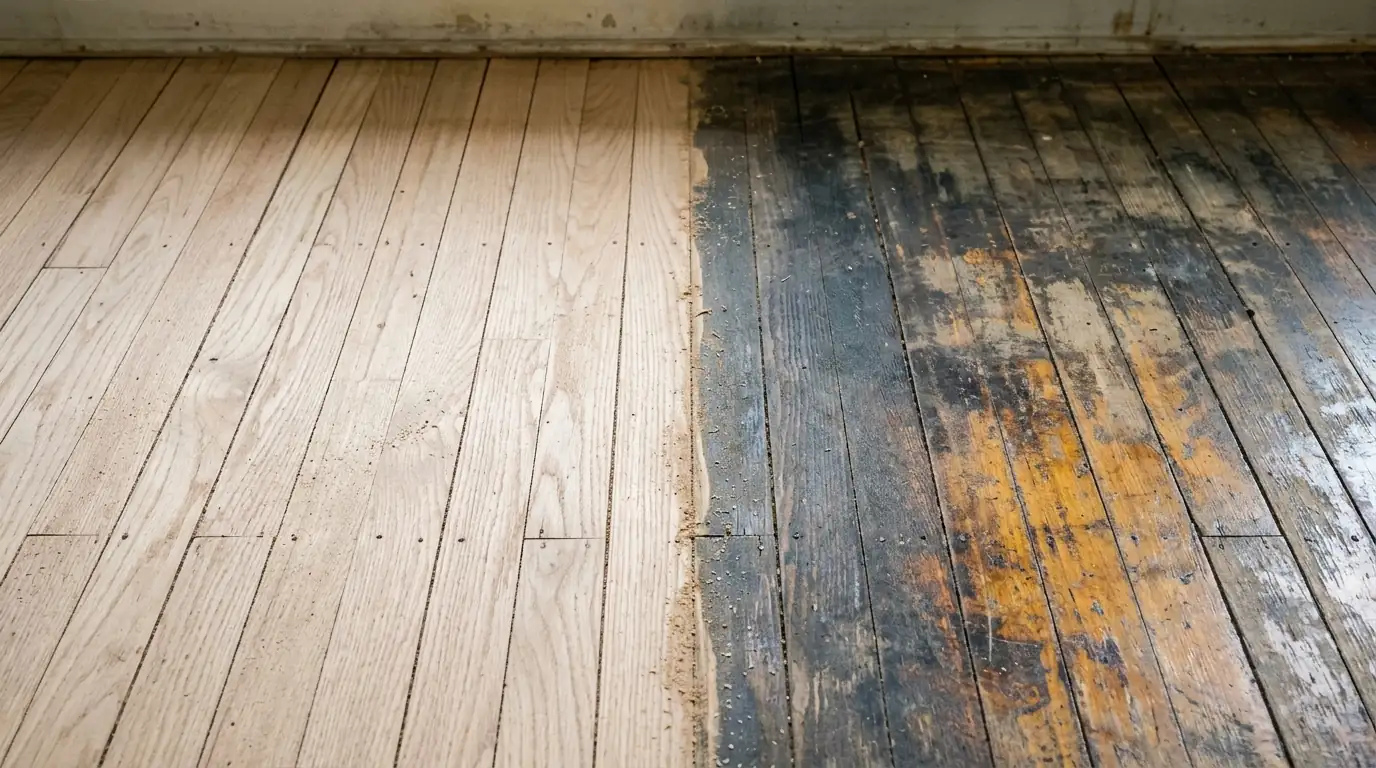
Smoke sits mostly on and in the finish. We clean the floor with a wood-safe cleaner first; sometimes that and a new topcoat are enough. When the stain has gone into the wood, a full sand removes it, since solid oak strip flooring has enough wear layer to be sanded several times over its life.
Gaps between boards collect soot, so we vacuum and clean them before sanding. After sanding, a sealer goes down before stain and finish to lock in any residual odor in the wood, and we match stain color to the rooms that were not affected.
Water-cupped boards
Boards soaked from below or above swell and cup, with edges higher than the centers. We dry them in place with drying mats that pull moisture out of the wood and subfloor, plus dehumidifiers and air movement, and track readings until they reach normal levels.
Many floors flatten enough during drying to be sanded and refinished. Boards that stay badly cupped, split or show mold on the underside are replaced. Waiting for the readings instead of a date on the calendar is what keeps the floor flat afterward.
Board replacement and weaving
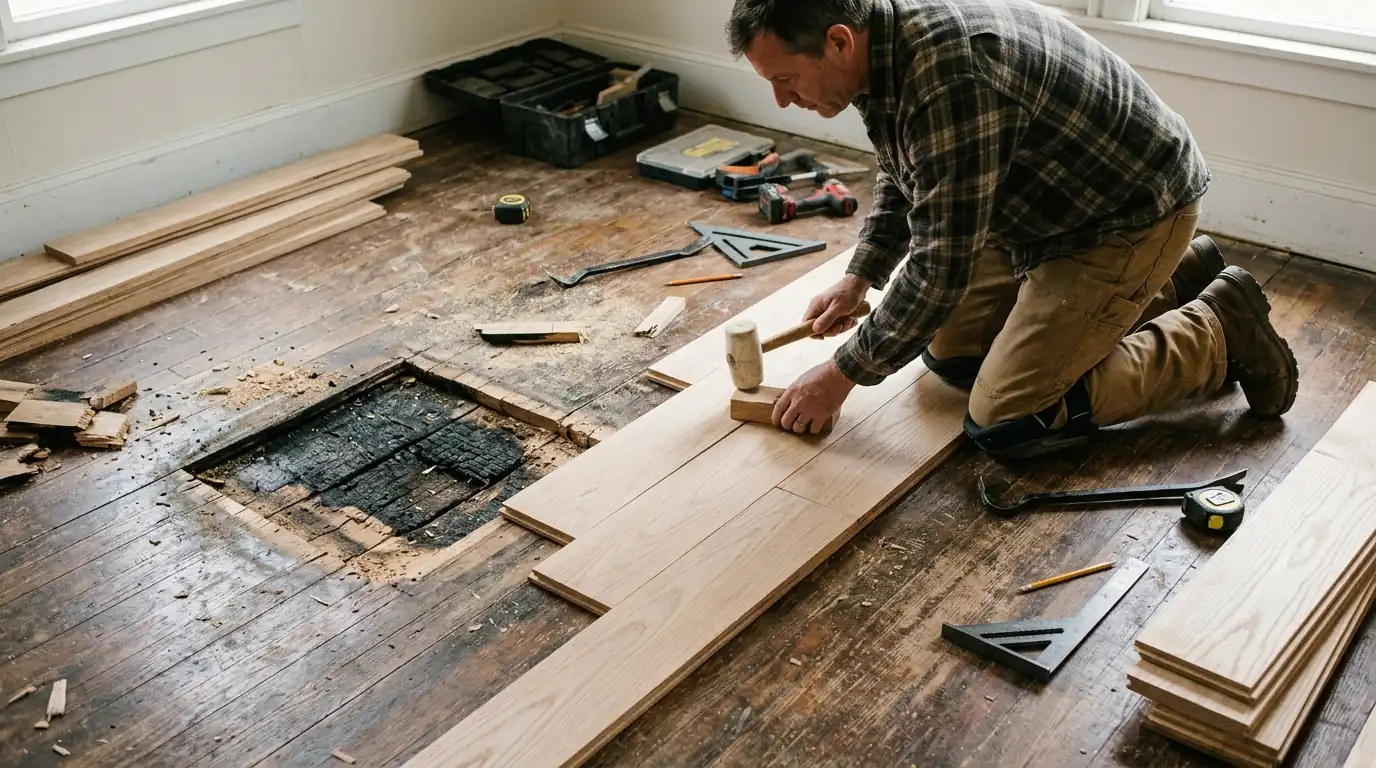
Where boards are charred or ruined, we cut them out and weave in new boards of the same species, width and thickness, staggering the joints so the patch does not show as a square. Salvaged boards from closets or under cabinets are sometimes the best match for old floors.
The whole room is then sanded and finished together so old and new boards take the same color. When a matching species or width is not available, we tell you before anything is removed so you can choose between a patch and a larger replacement.
Floors cupped or stained after the fire? Call and we will read the moisture before anyone sands.
Call (313) 391-5430How hardwood floor restoration runs
- 01
Read the floor
Moisture readings, char depth and finish condition checked.
- 02
Dry what is wet
Drying mats and dehumidifiers until readings are normal.
- 03
Replace what is ruined
Charred or split boards woven out and replaced.
- 04
Sand and seal
Full sand, then a sealer to lock in residual odor.
- 05
Stain and finish
Color matched to the rest of the house, then topcoats.
Original hardwood in older houses around Detroit
Most of the housing in Hamtramck and in Grosse Pointe Farms was built before 1939, and houses from that era commonly have original oak or maple strip floors, often hidden under carpet added later. Those floors are usually worth saving after a fire. Matching them is the harder part: old boards can be narrower or a different species than modern stock, so we check widths and look for boards we can salvage from closets before ordering new wood.
Hardwood floor restoration questions
Usually. Solid hardwood can be sanded and refinished, and a sealer locks in any residual odor.
Many do once they are dried properly. Boards that stay badly cupped are replaced.
Often several days to a couple of weeks, depending on how wet the boards and subfloor are. We go by readings.
In most cases, by species, width and stain. Salvaged boards help on older floors.
They usually cannot be sanded much, if at all, and are more often replaced after a fire.
See carpet and rug smoke cleaning; the hardwood underneath is checked too.
