Quick answer
Fire-damaged framing repair in Detroit starts by probing each charred joist, stud and rafter to measure how much sound wood is left. Members with only surface char are cleaned and sealed; members that lost strength are sistered with new lumber or replaced. Repairs to beams, bearing walls and other parts of the load path get an engineer's design and a permit before work starts.
How fire weakens framing
Wood chars from the outside in. The charred layer has almost no strength, and the wood just beneath it is weakened by heat. A joist that looks black but solid may have lost a meaningful share of its depth.
Probing tells the real story. We push an awl or probe into each charred member to find the depth of the char, check for cracks and sagging, and mark each piece as clean-and-seal, sister or replace.
Firefighting water adds its own damage: wet framing has to dry before it is sealed or closed in, or it shrinks, twists and grows mold.
What drives the cost of framing repair
Framing repair is priced by the number of members and whether the load path is involved.
- Number of membersHow many joists, studs and rafters need sistering or replacing.
- Load path workBeams, posts and bearing walls need engineering and permits.
- AccessWorking from open framing is faster than through finished surfaces.
- ShoringTemporary support during structural repairs.
- Lumber matchingOlder dimensions may need custom-sized lumber.
Clean and seal, sister or replace
| Clean and seal | Sister | Replace | |
|---|---|---|---|
| When | Surface char only | Lost depth, still straight | Cracked, sagging or burned through |
| What happens | Blast, then seal | New member fastened alongside | Old member removed, new one installed |
| Engineering | No | Sometimes | Often, if load-bearing |
| Disruption | Low | Moderate | Highest, needs shoring |
Charred joists
Floor and ceiling joists above a fire usually take the most heat. Where the char is shallow, the joist is cleaned by soda or dry ice blasting and sealed. Where the char is deep, the joist is sistered with a full-length new member fastened alongside, or replaced if it has cracked or sagged.
Subfloor over a charred joist is checked too; it is often replaced along with the joist repair. Before sistering, we check that the new member can bear at both ends, since a sister that stops short does not carry the load.
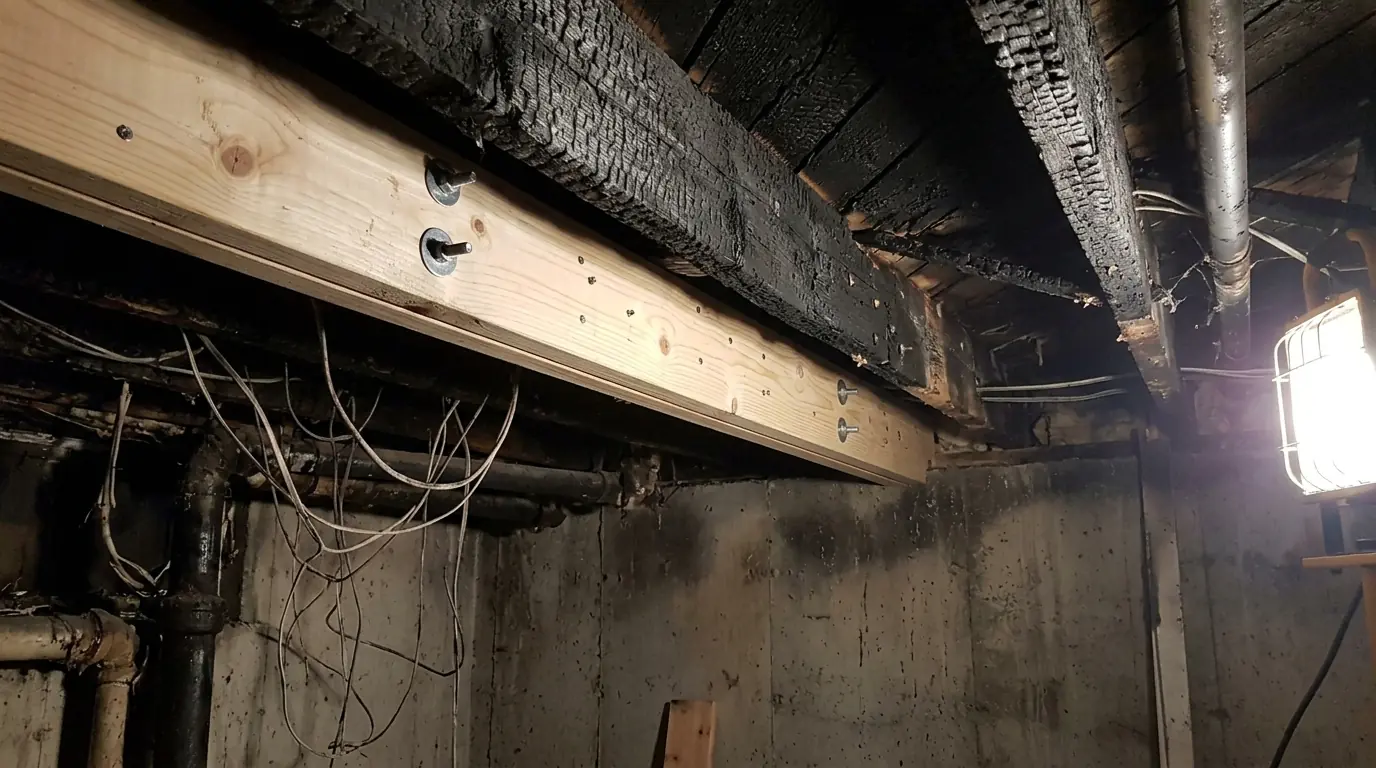
Sistering studs
Wall studs near a fire are probed the same way. Lightly charred studs are cleaned and sealed. Studs that lost depth are sistered with new studs fastened along their length, or replaced where the wall can be temporarily supported.
Top and bottom plates are checked too, since a burned plate weakens every stud that sits on it. Exterior wall studs also get a look at the sheathing behind them, which may need replacing from outside before the wall is closed and insulated.
Load path repairs
Beams, headers, bearing walls, posts and the connections between them carry the weight of the house down to the foundation. When fire damages any part of that load path, the repair is designed by a structural engineer and done under a building permit.
We shore the structure with temporary supports while the work is done, follow the engineer's design and schedule the inspections. The engineer's letter and the permit sign-off go to you and your insurer as part of the record.
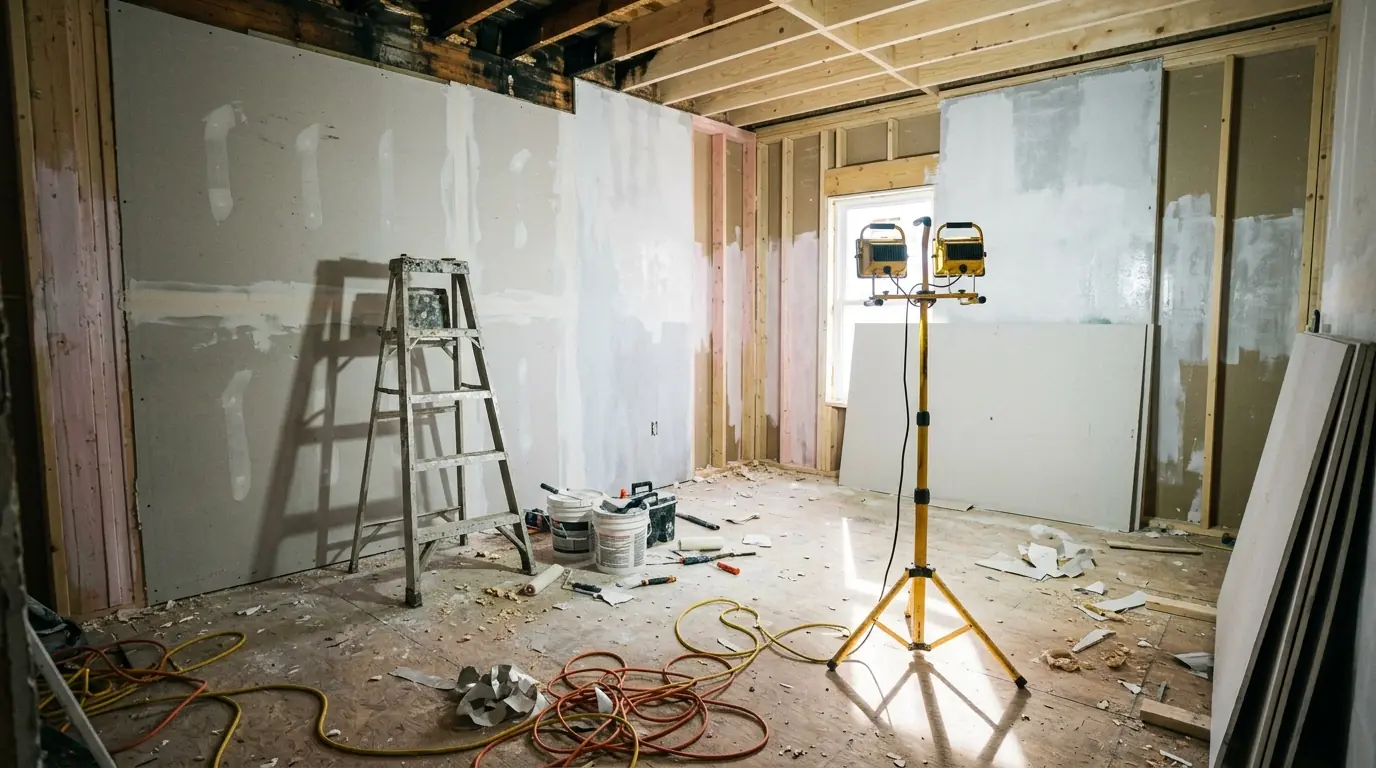
Charred framing after the fire? Call and we will probe it before anything is closed in.
Call (313) 391-5430How framing repair runs
- 01
Probe and mark
Every charred member probed and marked clean, sister or replace.
- 02
Dry
Wet framing dried to normal readings before repair.
- 03
Engineer and permit
Load-path repairs designed and permitted.
- 04
Shore and repair
Temporary supports, then sistering or replacement.
- 05
Clean, seal and inspect
Remaining char cleaned, framing sealed, inspection before closing.
Framing in older houses from Detroit to Flint
In Flint, the median home was built in 1954 and nearly a third of homes date from the 1950s, with Detroit's housing older still. Framing from those decades is often full-dimension or older-cut lumber that does not match modern sizes, which matters when sistering: the new member has to be shimmed or ripped to fit and fastened properly. We measure existing framing before ordering lumber so the repair matches.
How long framing repairs take
A few sistered joists or studs can be done in a day or two once the framing is dry and accessible.
Load-path repairs take longer because of engineering, permits, shoring and inspections, usually a few weeks before the area can be closed in.
Fire-damaged framing questions
No. Surface char can be cleaned and sealed. Members that lost too much depth are sistered or replaced.
Fastening a new full-length member alongside a damaged one so the pair carries the load.
When the damage reaches beams, posts, bearing walls or other parts of the load path.
Yes, and we schedule the inspections.
By soda or dry ice blasting. See soda and dry ice blasting.
No. It is dried first, or it shrinks, twists and can grow mold.
