Quick answer
Attic fire and smoke cleanup in Detroit removes burned, soaked and smoke-saturated insulation with a vacuum system, cleans or soda blasts charred rafters and roof sheathing, seals the framing with an odor-blocking primer and reinsulates. Smoke collects in attics even when the fire was on a lower floor, and leaving it there means odor that drops through ceiling fixtures for years.
Why attics hold smoke long after the fire
Hot smoke rises until it hits the roof deck, and in most houses it reaches the attic through ceiling fixtures, attic hatches, plumbing chases and gaps around chimneys. Insulation acts like a filter and holds the soot and the smell.
An attic fire adds charred rafters and sheathing, and firefighting water soaks the insulation and ceilings below. Wet insulation loses its value and can grow mold.
Cleaning an attic means removing the insulation, not just covering it. Once it is out, the framing can be judged, cleaned or blasted, sealed and reinsulated.
Signs smoke is still in the attic
Smoke smell from ceiling fixtures
Odor coming down through lights or fans usually starts in the attic.
Smell stronger upstairs
Upper floors smelling worse than the fire room points upward.
Stains on ceilings under the attic
Water stains mean firefighting water or a roof leak soaked the insulation.
Gray insulation
Insulation that looks gray or dark has filtered smoke.
Odor on hot days
Heat in the attic drives odor out of residue on framing and insulation.
How attic cleanup runs
- 01
Check and test
Structure checked, suspect insulation tested before it is disturbed.
- 02
Remove insulation
Vacuumed out and bagged outside the house.
- 03
Clean and repair framing
Char and soot removed; weak rafters and sheathing repaired.
- 04
Seal
Odor-blocking primer on all framing and the underside of the deck.
- 05
Reinsulate and close
New insulation, sealed penetrations and a final odor check.
Insulation removal
Loose-fill and batt insulation that took smoke or water comes out with a high-powered insulation vacuum that bags it outside the house, so it does not get dragged through finished rooms. Areas of old vermiculite are tested first, since some vermiculite insulation contains asbestos.
With the insulation out, we can see the ceiling drywall or plaster from above, find wet spots and check wiring that runs through the attic. New insulation goes in only after the framing is clean, dry and sealed.
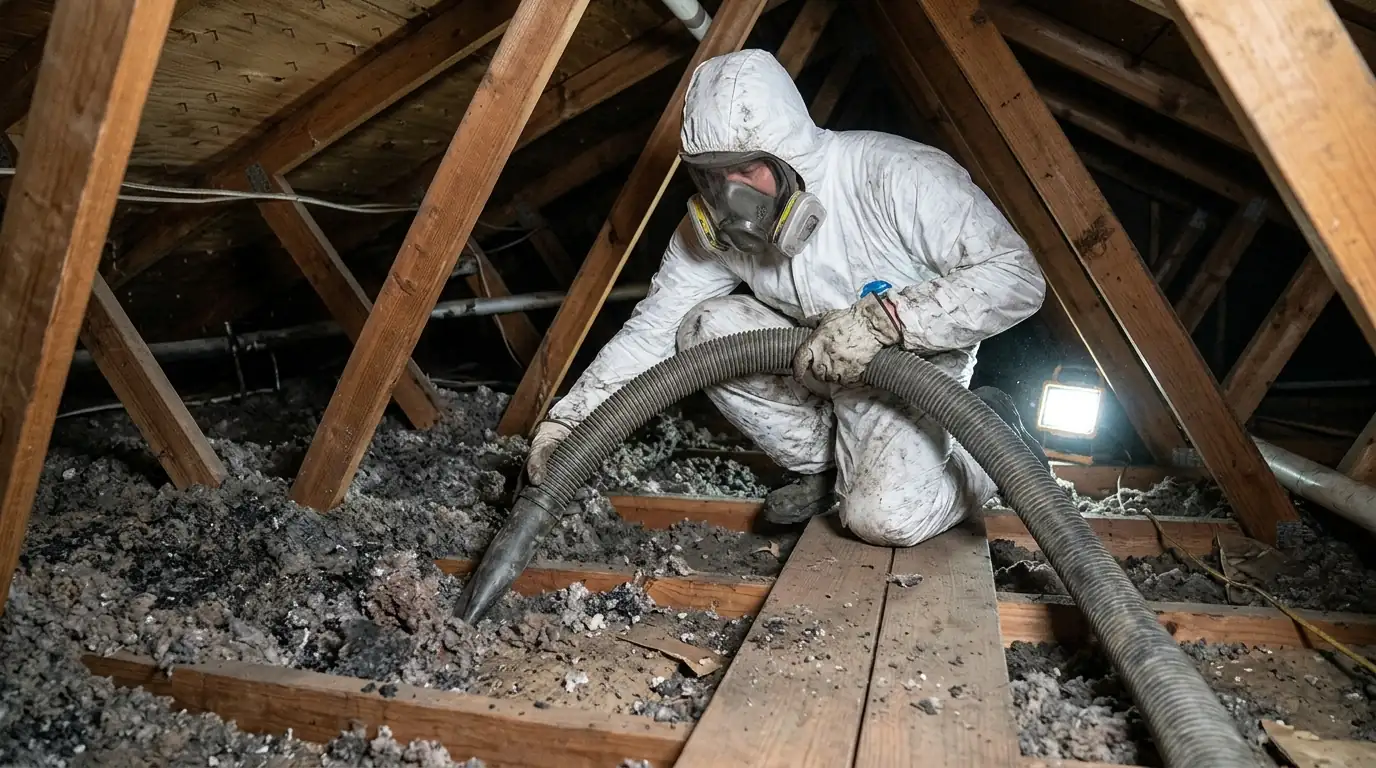
Charred rafters and sheathing
Rafters and roof sheathing near an attic fire are probed to see how deep the char goes. Surface char is soda or dry ice blasted off; rafters that lost structural depth are sistered or replaced, and burned sheathing is replaced from the roof side along with the shingles.
Even framing that did not burn is usually coated in soot. It is cleaned and then sealed with an odor-blocking primer before new insulation goes in, which is what stops smoke odor from coming back through the ceilings.
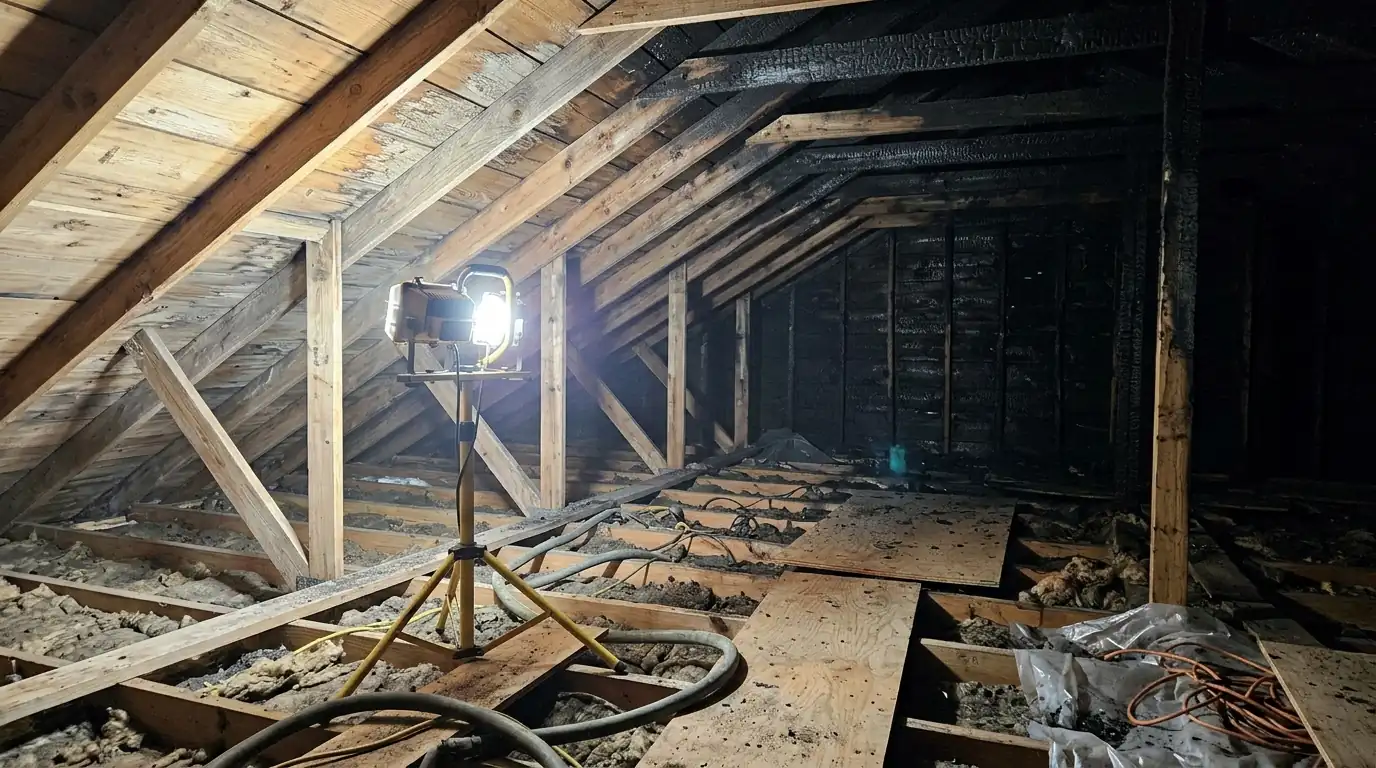
Smoke in the attic from a lower floor
When a fire starts in a kitchen or bedroom, smoke often finds its way up through ceiling light fixtures, bathroom fans, attic hatches and plumbing chases. The attic can end up with heavy soot on the underside of the roof deck while the rooms in between look only lightly affected.
We check the attic on every fire job for this reason. Cleaning it, replacing smoky insulation and sealing the gaps around fixtures and chases is often what finally clears a smell that cleaning the rooms did not.
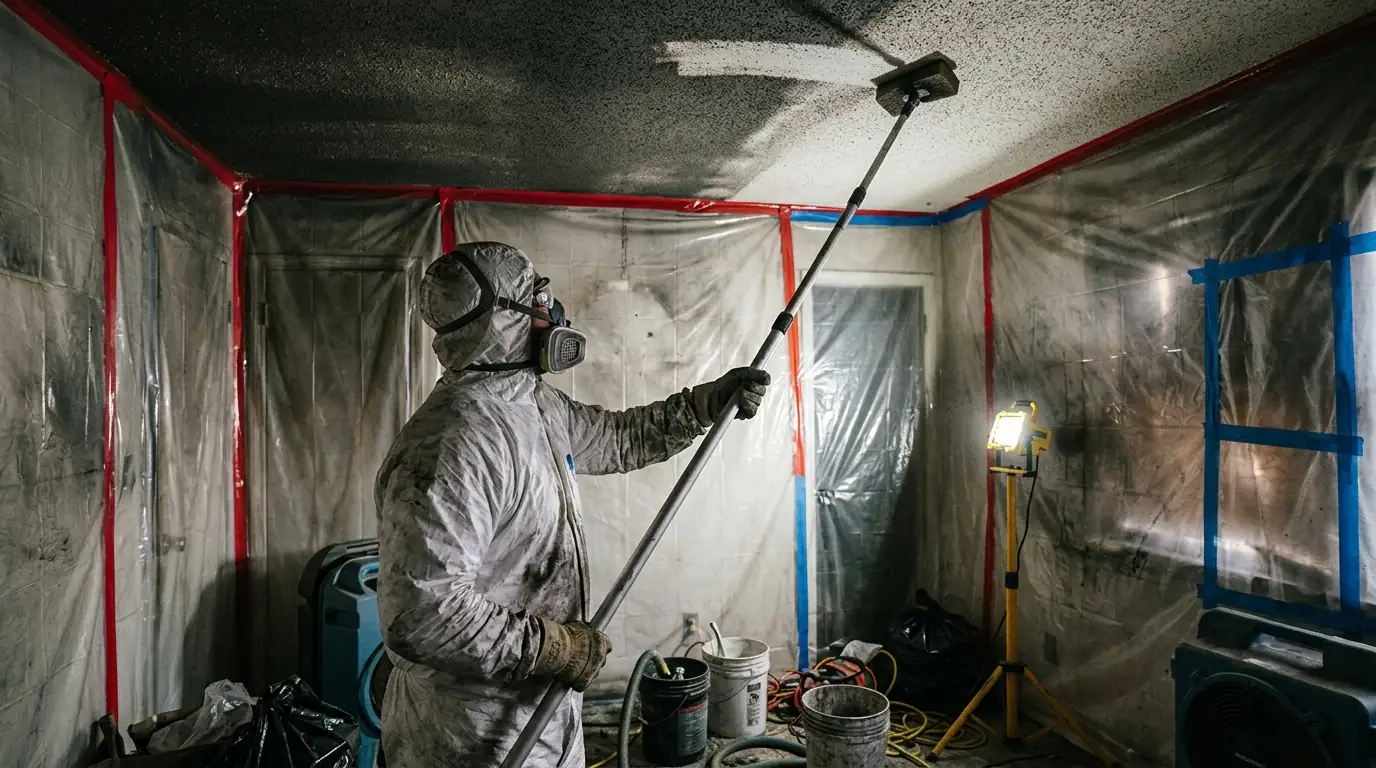
Smell coming down through the ceilings? Call and we will check the attic.
Call (313) 391-5430Attics in Detroit's older houses
About 41 percent of Southeast Michigan's homes were built before 1960, and Detroit's average home dates to 1939. Attics in houses that old often have several layers of insulation added over the decades, open chases from the basement to the attic and knob-and-tube or older wiring running through them. Those open paths carry smoke straight up from lower floors, which is why we check and clean the attic on nearly every Detroit fire job.
What to leave alone in the attic
Fine to do
- Keep the attic hatch closed
- Note where odor is strongest upstairs
- Photograph ceiling stains below the attic
- Stay off ceilings that are wet or sagging
Leave for us
- Pulling or bagging insulation
- Disturbing old vermiculite
- Walking on charred or wet ceiling joists
- Covering smoky insulation with new insulation
What changes the cost of attic cleanup
Attic cleanup is priced by area, insulation volume and how much framing needs work.
- Attic sizeMore square feet of insulation and framing to handle.
- Insulation type and depthDeep loose fill takes longer to remove than batts.
- TestingVermiculite or other suspect materials are tested first.
- Framing repairSistering or replacing rafters and sheathing.
- Sealing and reinsulatingPrimer on all framing and new insulation to the right depth.
National cost guides put fire damage restoration at about $4 to $7 per square foot of affected area (Angi). Structural repair and new insulation are priced by the job. These are planning figures, not a quote.
Attic fire and smoke cleanup questions
Smoke rises through fixtures and chases and collects in the attic. Leaving it there means odor that keeps coming back.
No. It is removed and replaced after the framing is cleaned and sealed.
It is tested before removal, since some vermiculite contains asbestos.
Only if they lost structural depth. Surface char is blasted off and the wood sealed.
With an insulation vacuum that bags it outside, so it is not carried through the house.
Burned decking and shingles are replaced; see fire-damaged roof repair.
