Quick answer
Contents cleaning after smoke damage in Detroit sorts every item into clean, restore or replace, then cleans each material its own way: ultrasonic tanks for hard goods, dry sponging and wood-safe cleaners for furniture, and hand or machine washing for dishes. Anything that cannot come back is photographed and listed for the insurance claim instead of thrown out.
Clean, restore or replace, item by item
Smoke residue sits on the surface of most hard items. Glass, ceramics, metal, sealed wood and most plastics clean up well if the soot is removed before it etches or discolors. Porous and heat-damaged items are harder, and some are not worth the cost.
The decision is made item by item, with you. We photograph everything, sort it and explain which items are cheaper to clean and which the policy should replace. Nothing is thrown away until it is documented.
Cleaning happens either in the house, for lighter jobs, or at our facility after a contents pack-out when the house needs heavy work.
What changes the cost of contents cleaning
Contents are priced by volume and by how much hand work each item needs.
- How much there isA few rooms of belongings cost less than a whole house.
- Soot typeOily soot from a kitchen or furnace fire takes more work than dry soot.
- MaterialsHand cleaning delicate items costs more than tank cleaning hard goods.
- Water damage tooWet items need drying before they can be cleaned.
- On site or at our facilityHeavy jobs include packing, transport and storage.
National cost guides put furniture and textile deodorizing at $200 to $1,000 (HomeAdvisor). Whole-house contents jobs are priced from the inventory. These are planning figures, not a quote.
When cleaning beats replacing
| Item | Usually cleaned | Usually replaced |
|---|---|---|
| Glass, ceramics, metal | Yes, cleans well | Only if cracked or etched |
| Solid wood furniture | Yes, with a finish refresh | If warped or deeply charred |
| Plastics | If near no heat | If warped, softened or melted |
| Food and opened toiletries | No | Always |
What you can wash yourself and what to leave to us
Fine to do yourself
- Washing dishes that were in closed cabinets
- Laundering clothing with light smoke odor
- Airing out books and papers in a dry room
- Photographing everything before you clean it
Leave for us
- Furniture with soot on the finish
- Electronics and small appliances
- Items coated in oily kitchen or furnace soot
- Anything wet as well as smoky
Hard goods
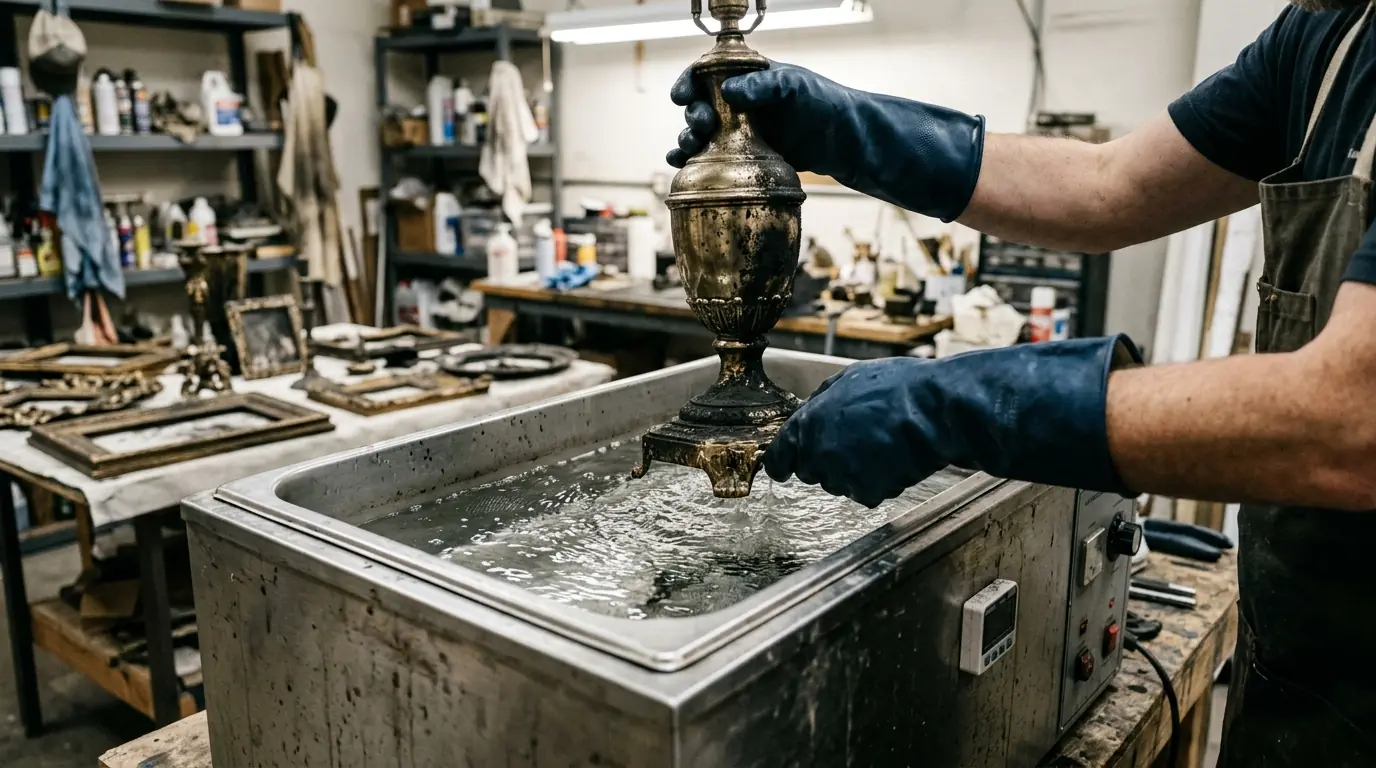
Lamps, picture frames, decor, tools, toys and small hard items are the bulk of most households. Many go through an ultrasonic tank, which uses cavitation in a cleaning solution to lift soot from crevices that hand cleaning misses, then get rinsed and dried.
Items with electronics, paper labels or finishes that cannot go in water get hand cleaned instead. Plastics that were close to the heat and have warped or softened usually go on the loss list rather than the cleaning table.
Wood furniture
Wood furniture is dry sponged first to lift loose soot without grinding it into the finish, then cleaned with a wood-safe cleaner and, if needed, a light finish refresher. Drawers come out and the insides are cleaned too, since smoke settles in every cavity.
Veneer that lifted from heat or water, and finishes that clouded, can often be repaired by a furniture restorer. We tell you which pieces are worth that and which the policy should replace, based on the value of the piece and what the repair would cost. Upholstered pieces are handled with the textiles.
Dishes and kitchenware
Dishes, glassware, pots and utensils that were in closed cabinets often need only washing. Items that sat open near a kitchen fire get degreased and washed, and anything with food contact that was in heat or heavy smoke is checked more closely.
Food, spices and anything opened in the kitchen go on the loss list; so do plastic containers that warped. We pack cleaned kitchenware by cabinet so it goes straight back into clean cabinets when the kitchen is finished, and we flag any pan whose nonstick coating blistered in the heat, since that goes on the loss list too.
Worried about what can be saved? Call and we will sort it with you before anything is thrown out.
Call (313) 391-5430How contents cleaning runs
- 01
Photograph and sort
Every item is photographed and sorted into clean, restore or replace.
- 02
Remove what cannot stay
Food, charred and melted items go on the loss list.
- 03
Clean by material
Ultrasonic, hand cleaning, wood-safe cleaning or washing, item by item.
- 04
Deodorize
Items that still smell after cleaning are treated in a sealed room.
- 05
Pack and return
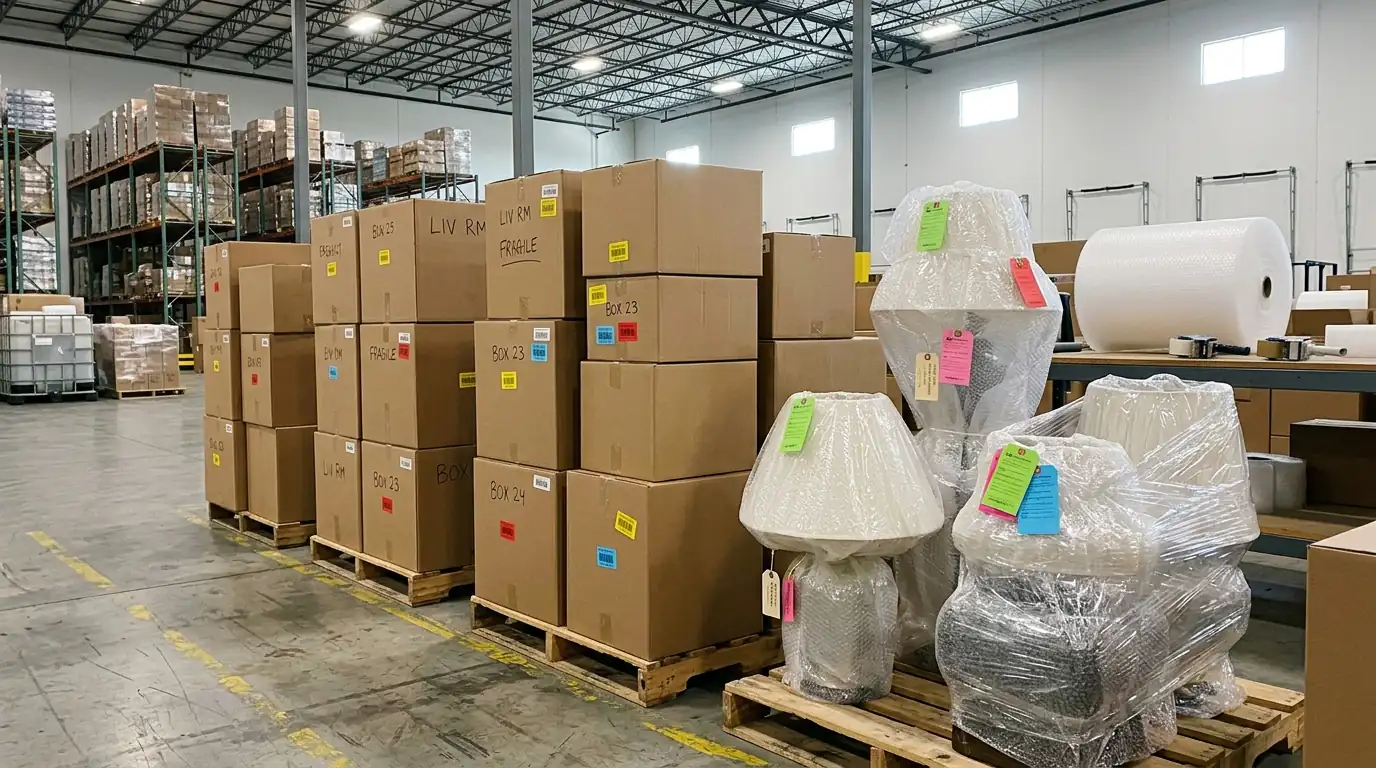
Cleaned items are packed by room and returned when the house is ready.
Belongings stored in Detroit basements
Homes on Cliff Street near our service office include 1941 brick bungalows with partly finished basements, and houses like these usually keep a lot of belongings downstairs: holiday boxes, tools, furniture and family papers. After a fire those basements take the firefighting water that runs down from above, so contents there are often wet and smoky at once. We pull them out early, since wet items need drying before cleaning, and boxes soaked through tend to fail when lifted.
Contents cleaning questions
Not before they are photographed. Many items clean well, and anything thrown out undocumented is hard to claim.
Usually, once the soot is cleaned off and the piece is deodorized. Upholstery is handled separately; see clothing and textile smoke cleaning.
Dishes from closed cabinets usually just need washing. Items left open near the fire should be cleaned properly, and warped plastics should go.
Both. Light jobs are cleaned in the house; heavy jobs are packed out and cleaned while the house is repaired.
They need their own process. See document and photo restoration.
You do, with your adjuster. We give you the photos and our recommendation for each item.
