Quick answer
Exterior smoke and soot cleaning removes residue from brick, stone, vinyl and wood siding, windows, gutters and soffits after a fire in or near the building. Each material gets its own method, from dry sponging and low-pressure washing with detergents to masonry cleaners, and heat-damaged materials that cannot be cleaned are listed for repair.
Why outside soot needs its own approach
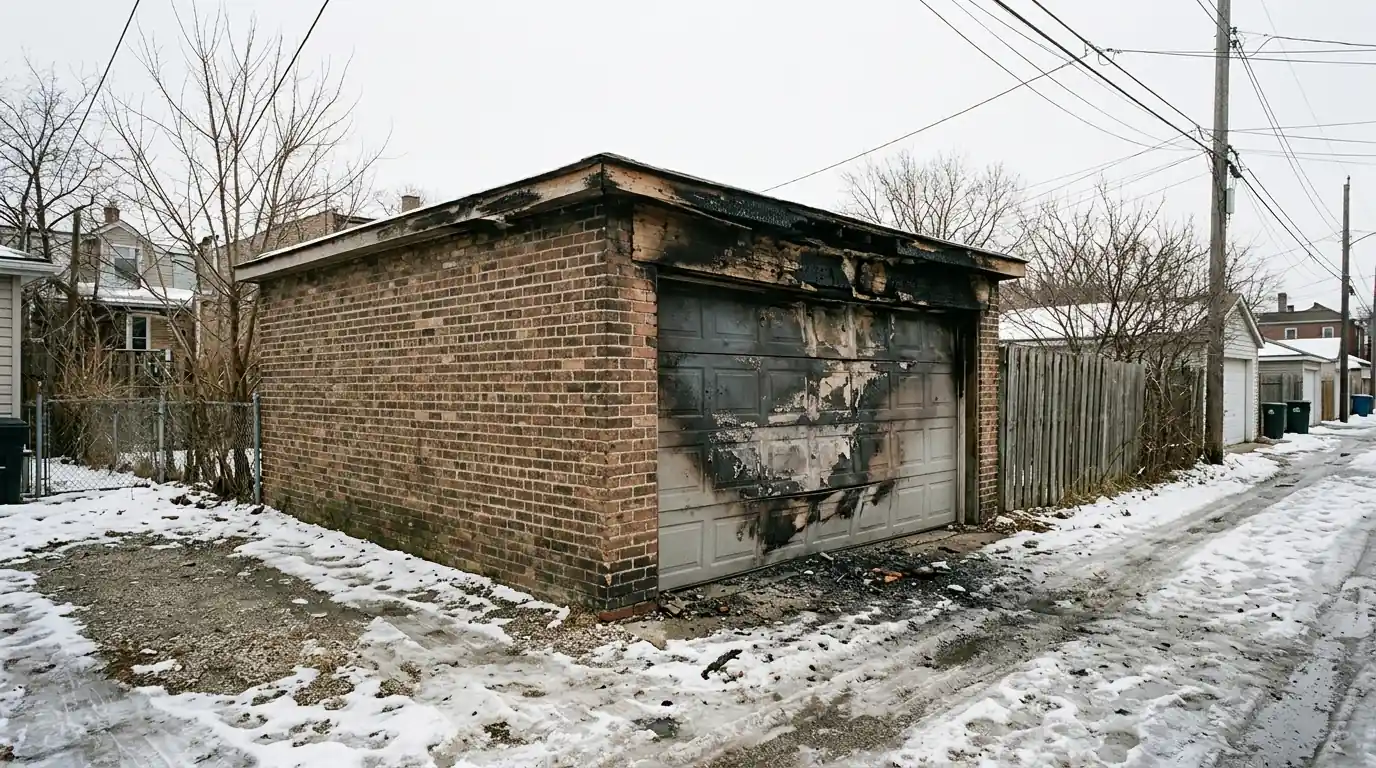
Smoke leaving a burning room through windows and vents stains the brick or siding above them in dark plumes. A fire in a garage or a house next door can coat a whole side of a building with fine soot and heat film.
Soot is oily and acidic. Left on the outside, rain and sun bake it into porous brick and painted surfaces, and on aluminum and vinyl it can etch or discolor.
High-pressure washing is the common mistake: it pushes soot into mortar and brick pores and can force water behind siding, so the right cleaner and pressure for each material matter.
What changes the cost of exterior soot cleaning
Exterior cleaning depends on how much of the building is stained and what it is made of.
- Area affectedOne wall above a window or a whole side of the house.
- MaterialBrick and stone take longer than vinyl; older soft brick needs gentler cleaners.
- Height and accessSecond-story walls may need ladders or a lift.
- Heat damageWarped siding, cracked glass and spalled brick need repair, not cleaning.
- How long it satSoot cleaned within days comes off far more easily than soot left for months.
National figures put smoke damage cleanup at about $425 to $1,800, or $3.50 to $7.00 per square foot (Yelp). Siding, window and masonry repairs are priced separately. These are planning figures, not a quote.
Brick and masonry
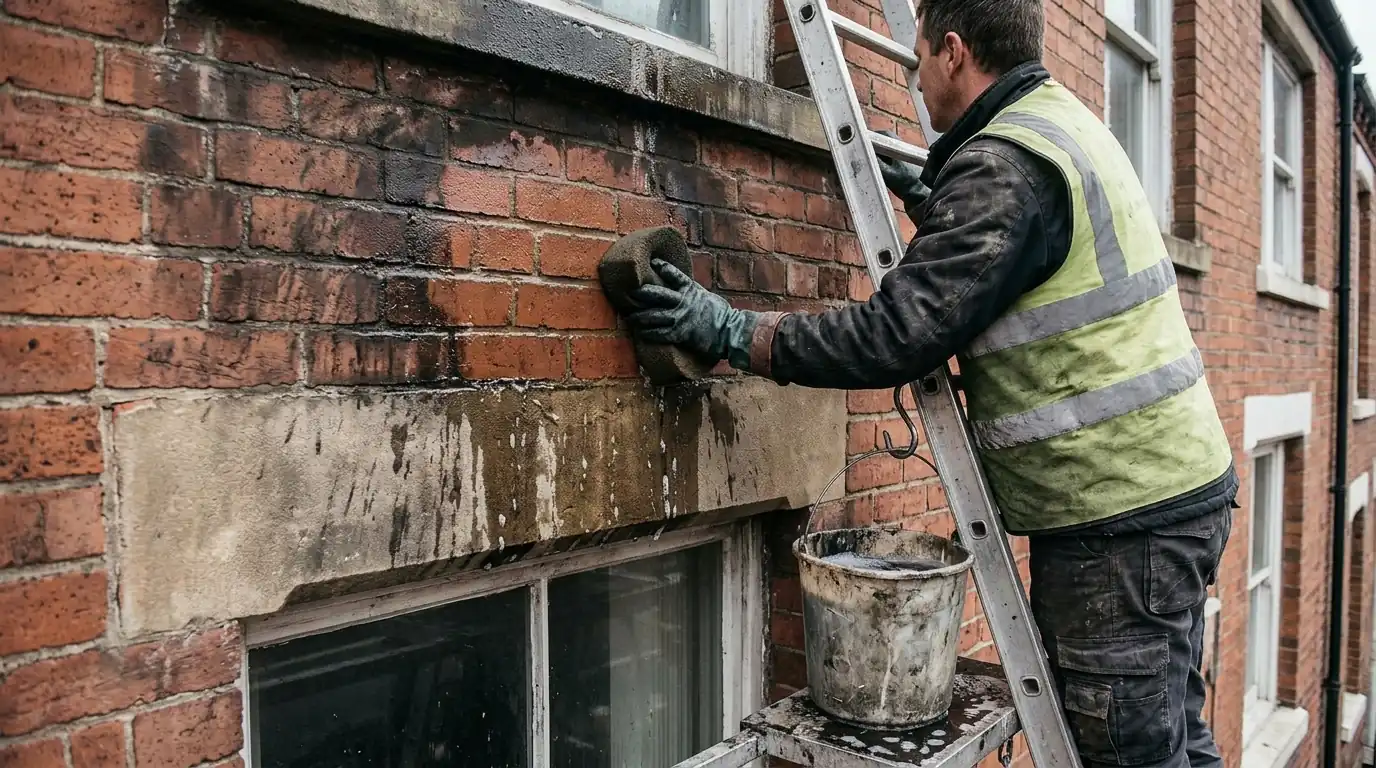
Brick, block and stone are porous, so soot works into the surface and the mortar joints. We start with dry soot sponges to lift loose residue, then use masonry-safe cleaners and low-pressure rinsing, working from the bottom up to avoid streaks.
Older soft brick and lime mortar, common on prewar homes, need gentler cleaners than modern brick. Heat can also spall brick faces or crack mortar near a window where flames came out; we note those areas so tuckpointing or brick replacement can be scoped with the rest of the repairs.
Vinyl and wood siding
Vinyl siding cleans well when the soot is fresh and the panels were not heated past their softening point. We use detergent cleaners at low pressure and soft brushes, working panel by panel so dirty water does not run behind lower courses.
Panels that sagged, rippled or changed color from heat cannot be restored and are replaced in matching runs. Painted wood siding and trim are cleaned, then checked for blistered or charred paint that needs scraping, priming and repainting before the next season of weather gets into the wood.
Windows, gutters and soffits
Soot on window glass is oily and acidic, and if it sits too long it can etch the surface. We clean glass, frames and screens early in the job, and check seals on double-pane units for fogging caused by heat.
Gutters, downspouts and aluminum soffits collect soot and ash and can discolor. Soffit vents are also where smoke enters the attic, so we look inside while we are cleaning outside. Light fixtures, house numbers and mailboxes on the affected walls are cleaned or listed for replacement.
Soot on the outside of your house? Call the line and we will clean it the right way for each surface.
Call (313) 391-5430How an exterior soot cleaning job runs
- 01
Survey the outside
Every affected wall, window and gutter photographed and measured.
- 02
Dry cleaning first
Loose soot lifted with dry sponges before any water is used.
- 03
Wash by material
Masonry, siding and glass each cleaned with the right product and pressure.
- 04
Rinse and inspect
Surfaces checked in daylight for streaks and missed residue.
- 05
List repairs
Heat-damaged siding, glass and brick scoped for repair.
Brick ranches and postwar siding around Detroit
Macomb County alone has close to 340,000 homes on assessor records, and the typical one was built in 1972: a brick front on a ranch or colonial, with aluminum or vinyl siding on the sides and back. The older city and inner-ring houses around Detroit add soft prewar brick and painted wood. On all of them, exterior soot after a fire usually means plumes above the windows and a film on the wall that faced the fire. Cleaning brick and siding correctly in one visit, and listing what heat ruined, keeps the outside repairs from dragging on after the inside is finished.
How long exterior cleaning takes
Cleaning the soot on one or two walls usually takes a day or two.
A whole building, a two-story wall or a job with siding and window repairs runs longer, and weather can push outdoor work back a day or two.
Signs the outside of your house needs cleaning
Dark plumes above windows
Smoke left the house through these openings and stained the wall.
Gray film on one side
Fine soot from a nearby fire coated the wall facing it.
Hazy or greasy window glass
Oily soot on the outside of the glass.
Black streaks below gutters
Rain is washing soot out of the gutters down the wall.
Discolored soffits
Smoke rose along the eaves and may have entered the attic.
Exterior soot cleaning questions
High pressure tends to drive soot deeper into brick and mortar. Dry sponging and low-pressure cleaning work better.
No. Siding that warped or rippled from heat needs replacing; clean, flat panels can be washed.
It can etch glass if left too long, which is why windows are cleaned early.
Usually, yes, when the soot came from a covered fire, including one next door.
Yes. See smoke damage from a neighbor's fire.
Yes, with ladders or a lift, depending on height and access.
