Quick answer
Garage fire cleanup in Detroit starts with making the structure safe and removing fuel, chemical containers and burned material, then cleaning the heavy, oily soot left by plastics, tires and fuel. When the garage is attached, the shared wall, the door into the house, the attic above and the heating system are checked and cleaned, since smoke from a garage fire moves into living space quickly.
Why garage fires are different
A bedroom fire burns mostly wood, fabric and furniture. A garage fire burns gasoline, oil, paint, solvents, lawn equipment, tires and sometimes a car. The smoke is thicker and oilier, the residue is harder to clean and the smell is stronger.
Detached garages are simpler to deal with, because the damage stays in one building, though the house siding and windows nearby can still be affected. Attached garages share a wall, an attic and sometimes ductwork with the house.
Hazardous leftovers need care: damaged fuel cans, pressurized containers and chemicals are removed and disposed of properly before cleanup starts.
Signs a garage fire reached the house
Fuel or plastic smell inside
A chemical or fuel smell in rooms next to the garage means residue got in.
Soot around the connecting door
Dark marks around the door frame show smoke pushed through.
Smoke smell from ceilings above the garage
Smoke rose into the attic space over the garage and the house.
Odor when the furnace runs
Ductwork through or near the garage pulled smoke into the system.
Film on windows facing the garage
Soot on the windows closest to a detached garage fire.
How a garage fire cleanup runs
- 01
Secure the garage
Board-up or fencing, and a structural check before anyone works inside.
- 02
Remove hazards
Fuel, chemicals and damaged batteries removed and disposed of properly.
- 03
Clear debris
Burned contents photographed, listed and hauled away.
- 04
Clean garage and house side
Degreasing inside the garage; residue cleaned in the house where it reached.
- 05
Deodorize and repair
Odor treatment, then repairs or rebuild of the garage.
Detached garage fires
A detached garage is often a complete or partial loss. We secure it with fencing or board-up, remove burned contents and debris, and decide with you and your adjuster whether the structure is repaired or taken down.
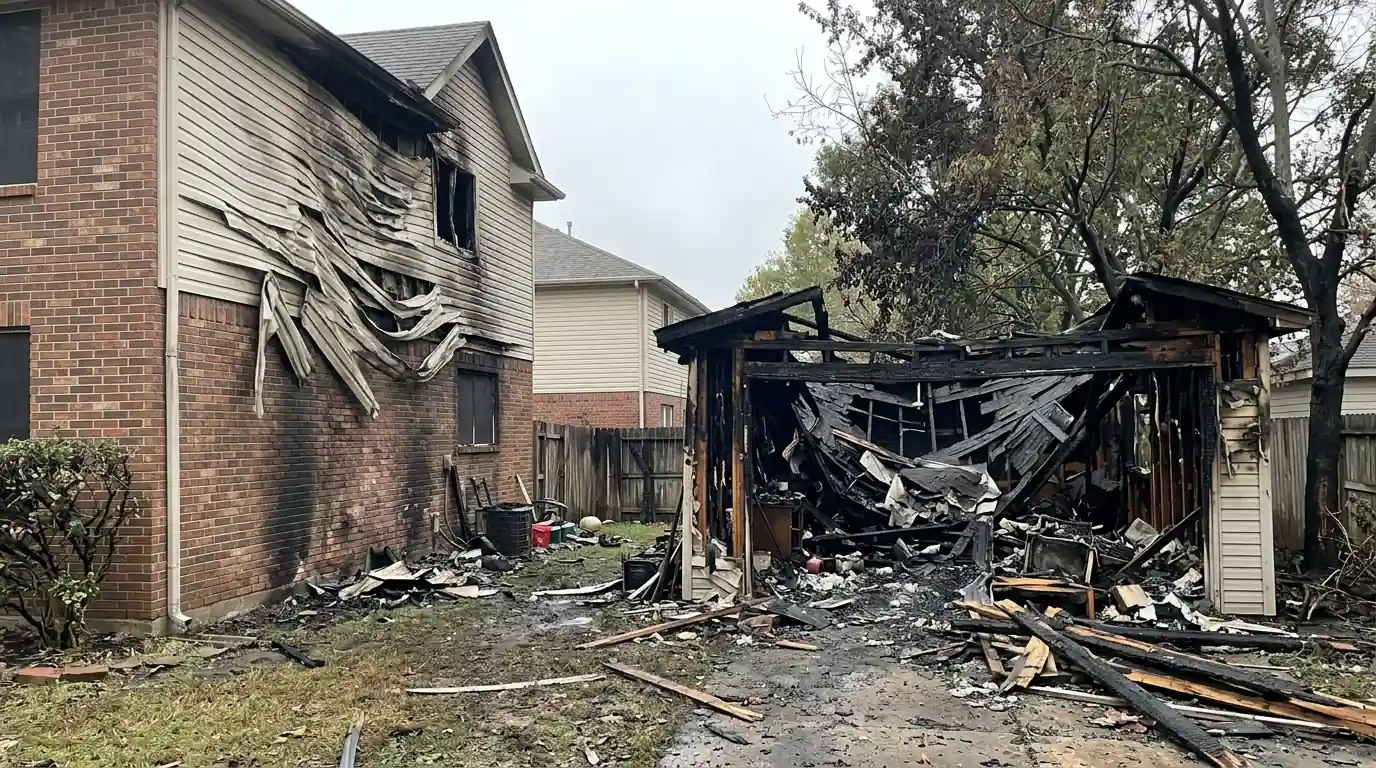
Heat and smoke from a detached garage fire can still reach the house: melted vinyl siding, cracked windows and soot on the side of the house facing the garage. We check that side of the house and any fences or sheds nearby, and include them in the scope and the photo record.
Smoke into an attached house
With an attached garage, smoke gets into the house through the connecting door, gaps in the shared wall, the attic space above and any ductwork that runs through the garage. Rooms next to the garage and above it usually take the most.
We check the fire-rated wall and door between garage and house, open the attic, and test rooms for residue outward from the garage. The heating system is shut down until its ducts and air handler are cleaned, since a return near the garage can pull smoke through the whole house.
Fuel and chemical residue
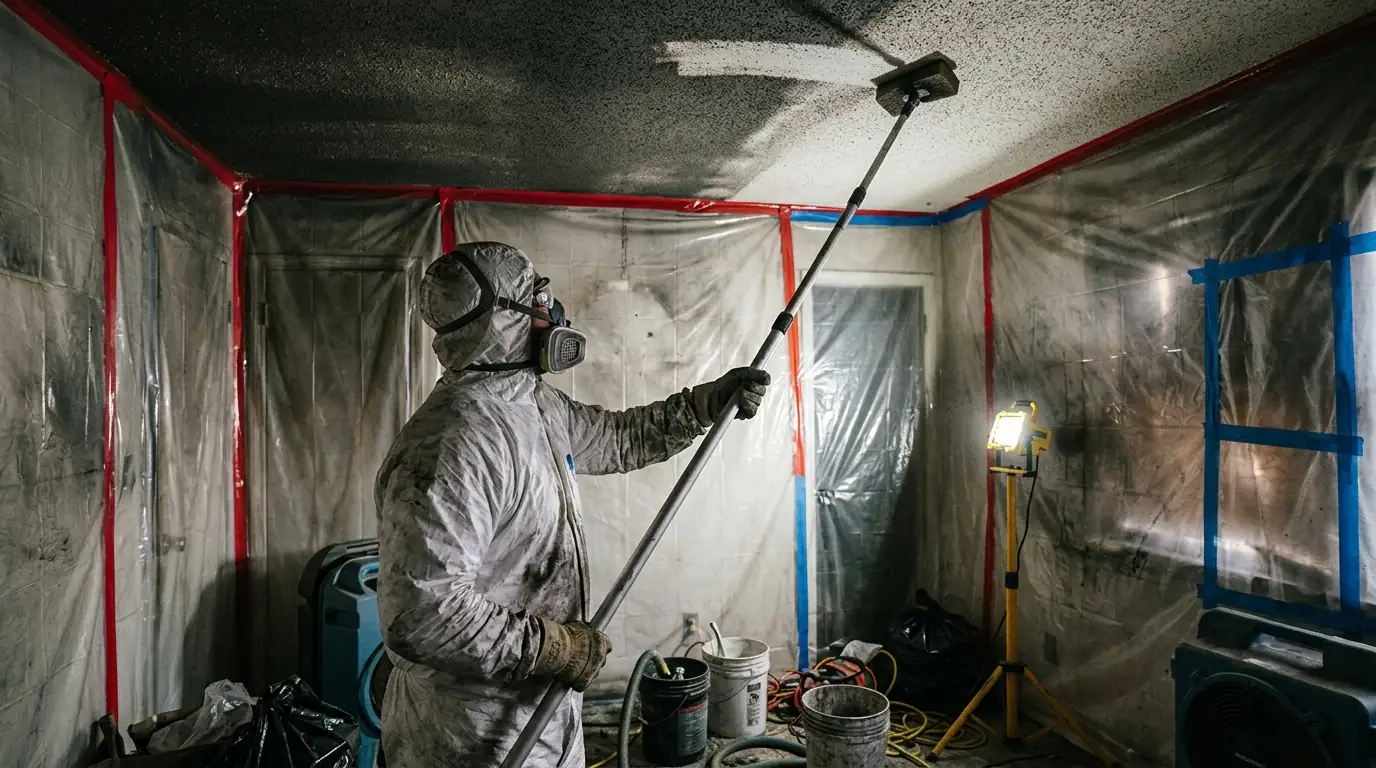
Oily residue from fuel, oil, tires and plastics needs strong degreasers and often several passes; ordinary cleaners just spread it. Concrete floors may stay stained and can be cleaned, sealed or, where heat damaged them, repaired.
Contents in a garage fire are often a loss: tools with melted handles, damaged power equipment, chemical containers and stored items near the fire. We list everything with photos for your claim, and clean what is worth saving, like hand tools and metal shelving.
Garage fire? Call the line; we will secure it and check whether smoke reached the house.
Call (313) 391-5430How long a garage fire cleanup takes
A small garage fire with no spread into the house can often be cleaned in days once hazardous contents are removed.
When smoke reached the house, or the garage needs structural repair or rebuilding, the job runs longer, often weeks, because of permits, materials and cleaning the rooms next to it.
Attached garages in the suburbs around Detroit
Outside the city of Detroit, the median home across the seven-county region was built between 1972 and 1991, and many houses from those years in Oakland, Macomb and Livingston counties have attached garages with rooms or a laundry beside them. That is where garage fire smoke causes the most damage inside the house. In the city itself, garages behind older houses are more often detached, and the job there is usually about the garage and the side of the house facing it.
What changes the cost of garage fire cleanup
Garage fire cleanup depends on whether the garage is attached and how much of it burned.
- Attached or detachedAttached garages usually mean cleaning parts of the house too.
- How much burnedA small fire at a workbench is very different from a structure loss.
- Hazardous contentsFuel, chemicals and damaged batteries need careful removal and disposal.
- Repair or rebuildBurned framing, roof and doors may be repaired or the garage rebuilt.
- House-side damageSiding, windows and rooms near the garage add to the scope.
National figures put smoke damage cleanup at about $425 to $1,800, or $3.50 to $7.00 per square foot (Yelp). Structural repair or rebuilding of the garage is priced separately. These are planning figures, not a quote.
Garage fire cleanup questions
Attached garages are usually covered as part of the house; detached garages under other structures coverage. Check your policy for limits.
They are removed carefully and disposed of properly before cleanup starts.
Vehicles are covered by auto insurance. Call your auto insurer about the car; we handle the garage and house.
Heat and smoke can reach the siding, windows and nearby rooms. We check that side of the house.
Yes, repairs or a rebuild can follow the cleanup. See fire damage reconstruction.
Not until the ductwork is checked, if the garage is attached. It can spread smoke through the house.
