Quick answer
Mold remediation after a fire in Detroit starts with containment: the affected area is sealed with plastic and kept under negative air with HEPA filtration so spores do not spread. Moldy drywall, insulation and carpet are removed, framing and subfloor are cleaned and treated, and the area is dried to normal moisture levels before anything is rebuilt. Clearance checks confirm the area is clean.
Why mold follows so many fires
Firefighting soaks ceilings, walls, floors and basements. In a house with the power off, windows boarded and no heat, that water sits. Mold can start growing on wet drywall, wood and insulation within a couple of days.
Mold after a fire is often hidden: behind basement wall paneling, under subfloors, inside wall cavities that were never opened. It shows up as a musty smell under the smoke odor, or as spotting once finishes are removed.
Remediation and drying go together. Removing mold without fixing the moisture only buys time, so we treat both.
What changes the cost of mold remediation
Mold remediation is priced by the area affected and how much material has to be removed.
- Area affectedA corner of a basement costs less than a whole floor.
- Materials removedDrywall, insulation, carpet and subfloor that cannot be cleaned.
- ContainmentSealing and negative air for the size of the area.
- DryingEquipment and time to bring framing down to normal levels.
- Clearance testingThird-party testing, if you or your insurer want it.
Basement mold
Basements take the most water in most fires and dry the slowest. Finished basement walls hide wet insulation and framing behind drywall or paneling; carpet and pad hold water against the slab.
We cut out wet and moldy wall materials to above the wet line, remove carpet and pad, clean the framing and slab, and set dehumidifiers to bring the space down to normal levels. Belongings stored on the basement floor are moved out and sorted early so they do not add to the mold load.
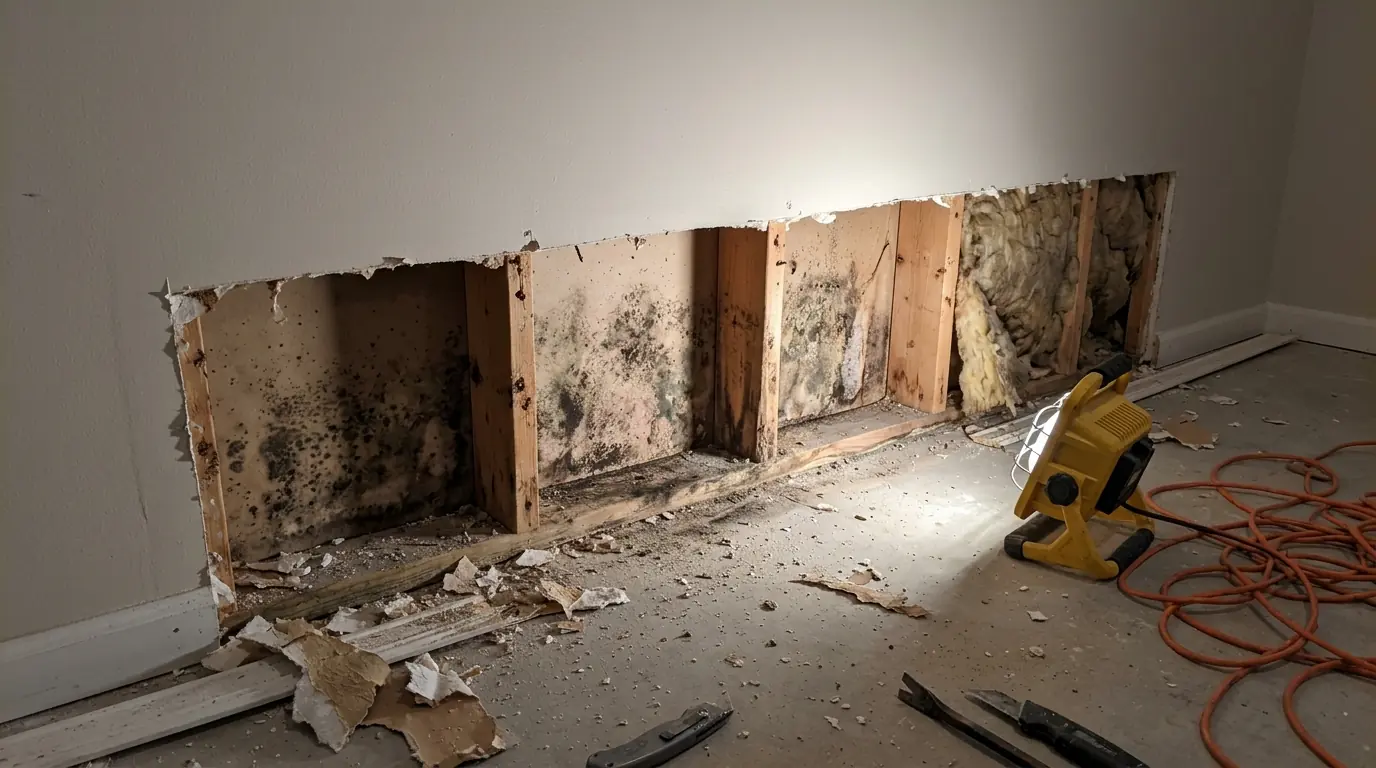
Wet framing and subfloor
Studs, joists and subfloor that stayed wet can grow mold on the surface. Where the wood is still sound, we HEPA vacuum it, clean it, treat it and dry it, then seal it before walls and floors are closed.
Subfloor that has delaminated or rotted is replaced. Moisture readings on the framing decide when an area is ready to close, not the schedule, since closing a wall over damp wood is how mold comes back. Where framing touches a damp foundation wall, we check both sides of the sill plate, since that is where mold hides longest in older basements.
Containment and clearance
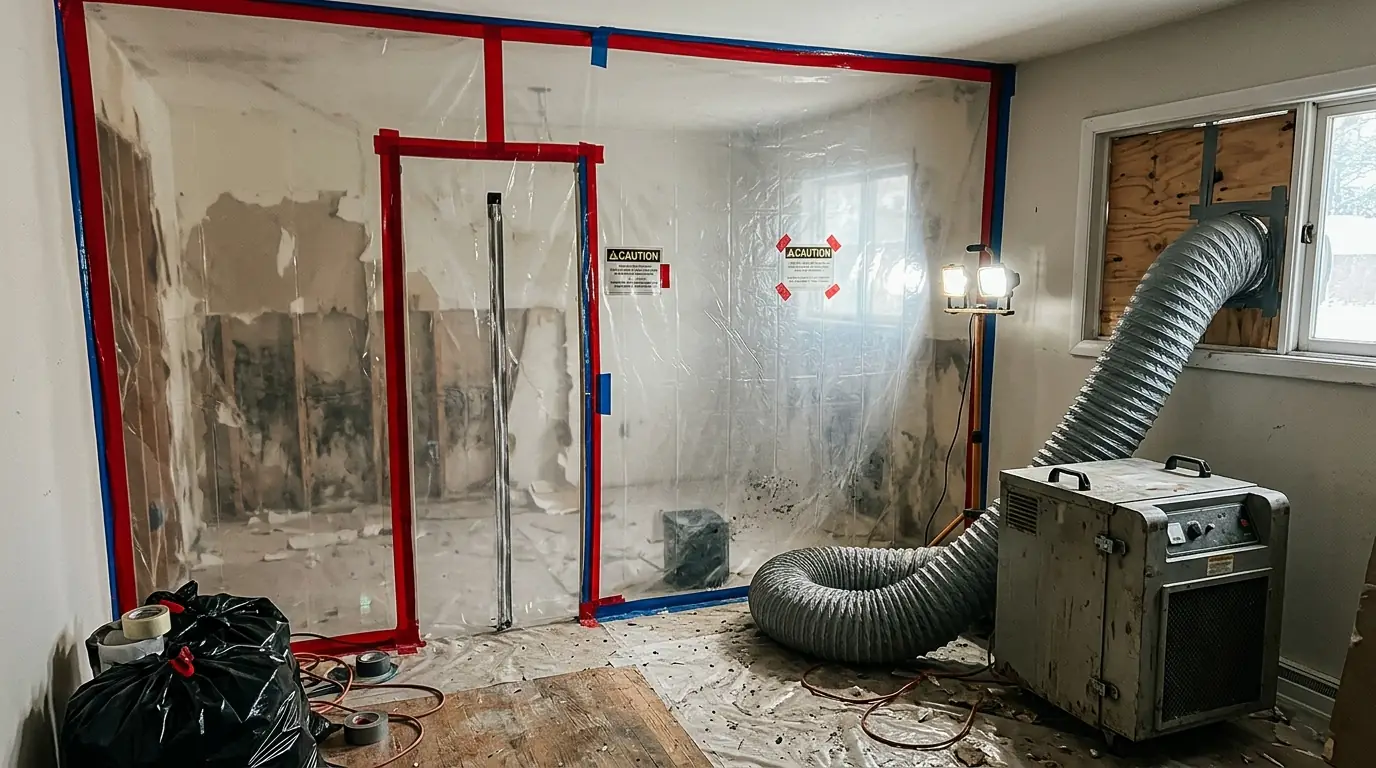
Before disturbing mold, we seal the work area with plastic sheeting, zipper doors and taped seams, and run negative air through HEPA filters so air flows into the work area rather than out into the rest of the house.
When the removal and cleaning are done, the area is HEPA vacuumed and wiped, and then checked visually and with moisture readings. Where you or your insurer want independent confirmation, a third-party clearance test can be arranged before containment comes down.
Musty smell showing up after the fire? Call and we will check for mold before it spreads.
Call (313) 391-5430What mold remediation after a fire includes
- Moisture mapping of affected areas
- Plastic containment with zipper doors
- HEPA negative air during the work
- Removal of moldy drywall, insulation and carpet
- HEPA vacuuming and cleaning of framing
- Treatment of cleaned surfaces
- Drying to normal moisture readings
- Clearance checks before rebuilding
How mold remediation runs
- 01
Inspect and map
Moisture readings and visual checks find where mold is and where it could be.
- 02
Contain
Plastic sealing and HEPA negative air around the work area.
- 03
Remove
Moldy porous materials cut out and bagged.
- 04
Clean, treat and dry
Framing and subfloor cleaned, treated and dried.
- 05
Check and rebuild
Clearance checks, then sealing and rebuilding.
Mold after fires in Detroit's older basements
About 80 percent of Detroit's housing was built before 1960, and most of those houses have full basements with block or poured walls that stay cool and damp even in summer. Firefighting water that reaches those basements dries slowly on its own, especially when the power is off and the house is closed up. That is why drying the basement is part of our first visit, and why we check basement walls behind paneling for mold on every fire job.
Signs mold is growing after a fire
A musty smell under the smoke odor
An earthy or musty note that grows over days points to mold, not just smoke.
Spotting on walls or baseboards
Black, green or white spots on damp drywall or trim.
Walls that stay damp
Walls that still feel cool and damp days after the fire.
Soft or lifting flooring
Flooring over a subfloor that stayed wet.
Stains spreading after the fire
Water stains that keep growing mean moisture is still there.
Mold after a fire: questions
On wet materials, within a couple of days. Fast drying is the best prevention.
Heat may kill mold in the burned area, but firefighting water spreads moisture to rooms the fire never reached.
Usually not. Porous materials with mold growth are removed; framing can often be cleaned and treated.
Mold in a contained work area should not spread, but people with breathing problems should ask their doctor, and heavy growth may mean staying elsewhere.
We inspect and measure moisture; third-party clearance testing can be arranged when you or your insurer want it.
Fast drying after the fire. See water removal after firefighting.
