Quick answer
Emergency fire damage restoration in Detroit is everything that happens once the fire department releases the house: board-up of broken windows and doors, tarping any roof opening, pumping out firefighting water, stabilizing soot on metal and glass, and photographing the loss for your insurer. It stops further damage the first night so the cleanup and rebuild start from a stable house.
What has to happen the first night
A fire leaves a house open, wet and full of acidic soot. Each of those gets worse by the hour: weather and people get in through open windows, water spreads into walls and floors, and soot starts etching glass and corroding metal.
The emergency visit deals with all three together. We close the house, get the water out and start drying, and clean corrosive residue off the surfaces that are damaged fastest. Everything is photographed before and after.
This is also when you get a plan: what can wait until morning, where the household should stay, and what the next steps are with the cleanup, the claim and the rebuild.
How the first visit runs
- 01
Answer and triage
We ask what happened, confirm everyone is safe and get a crew started.
- 02
Wait for release
No one goes in until the fire department releases the house.
- 03
Walk, photograph and plan
Safety check, photos of every room and a plan with you.
- 04
Secure and pump out
Board-up, tarping, water out and drying started.
- 05
Stabilize and document
Soot off metal and glass, electronics pulled, everything photographed.
After-hours fire response
Most house fires do not happen during business hours. The line is answered 24/7 by people who can tell you what to do right now and get a crew started. We ask what burned, whether anyone is hurt, whether the power and gas are off and whether the fire department is still there.
If the house cannot be closed up safely until daylight, we tell you how to secure what you can, where to stay and what to bring, and set the first visit for when the work can be done safely.
Walkthrough once the fire department releases the house
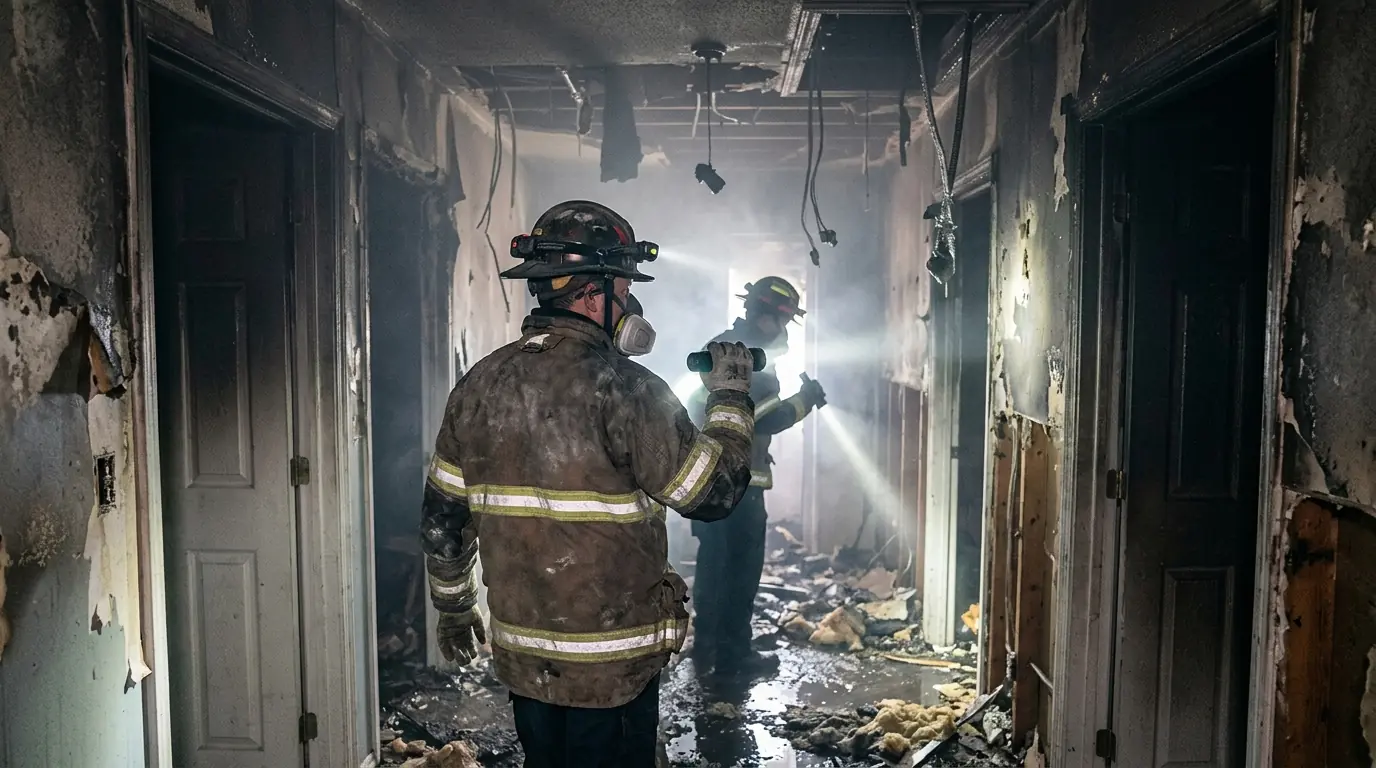
We only go inside once the fire department has released the property and confirmed there are no hot spots. The first walkthrough checks what is safe: ceilings that took water, stairs and floors, and whether the power and gas are off.
Then we walk the house with you, room by room, photographing damage before anything is moved and noting what needs to happen tonight versus later. If there is anything you need from inside, medicine, documents, glasses, we help you get it out safely.
Stabilizing the house the first night
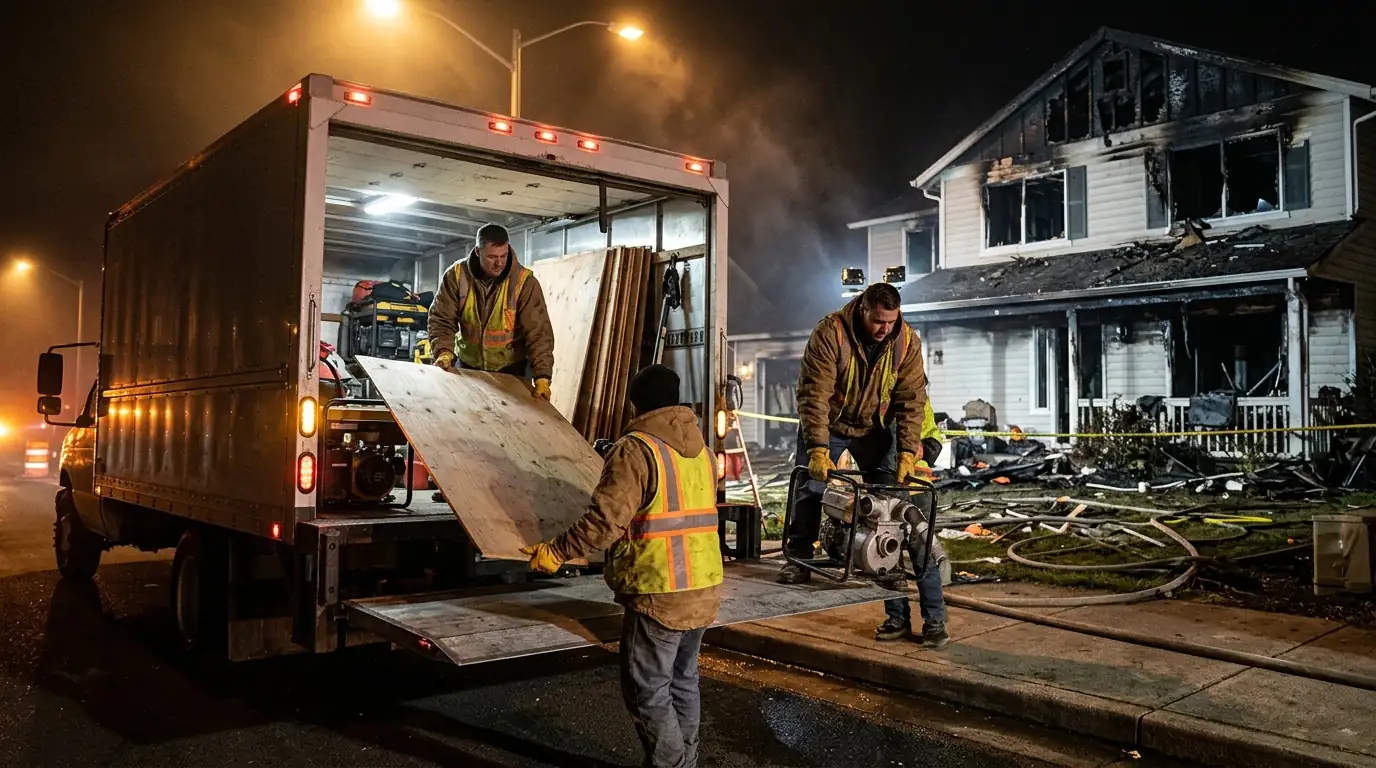
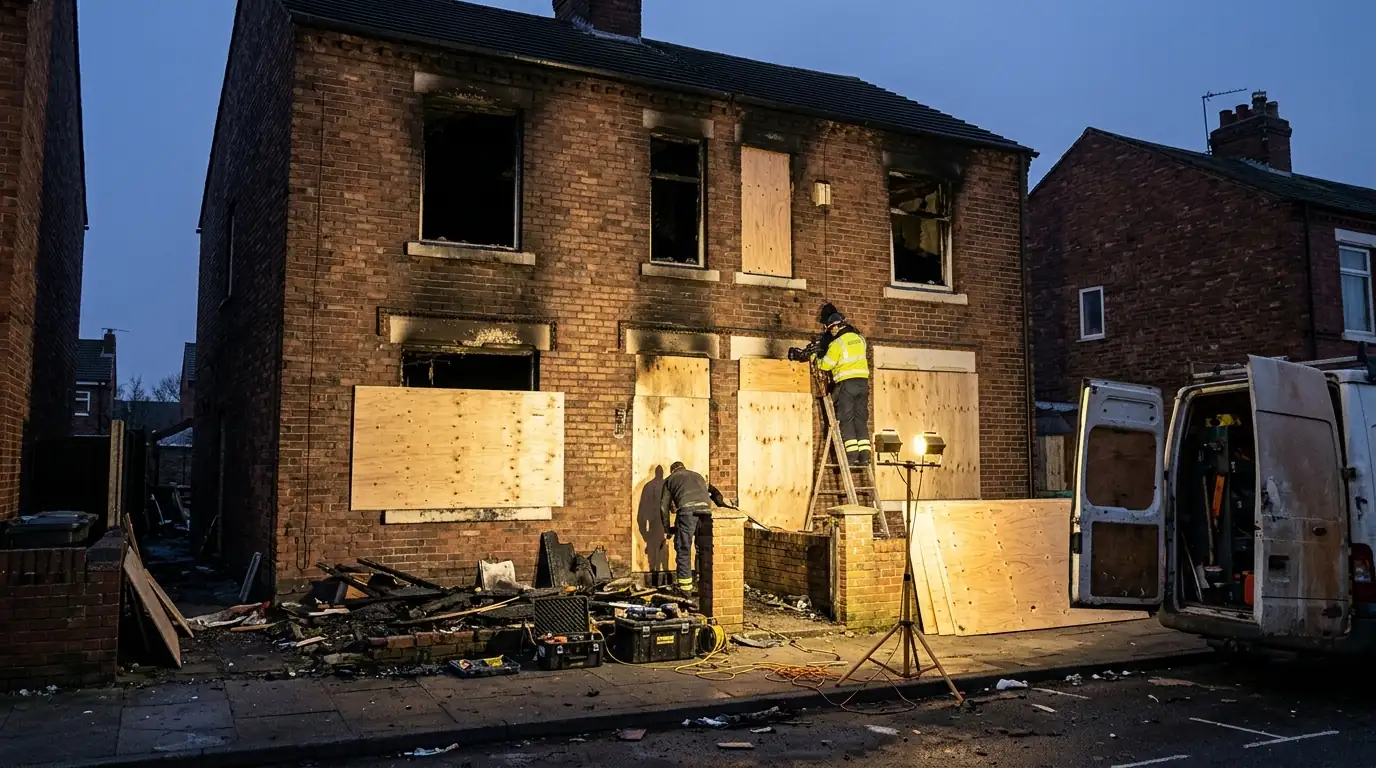
Windows and doors are boarded, roof openings tarped, standing water pumped out and drying equipment set where the power allows. In cold weather, we drain the plumbing or set temporary heat so pipes do not freeze.
We also wipe corrosive soot off chrome, brass, appliance fronts and glass, pull electronics out of the smoke path and pack anything you need to take with you. By the time we leave, the house is closed, drying and documented, and you know what happens next and who to call.
Fire tonight? Call the line now; board-up and water removal are part of the first visit.
Call (313) 391-5430Fire losses in Detroit
Detroit's structure fires have come down a long way, from 4,741 in 2014 to 2,154 by the end of 2022, but that still means thousands of households a year dealing with the night after a fire. Most of those fires are in older houses, which take water and smoke through open cavities and plaster walls. The first night is where the difference is made: a house that is closed up, pumped out and stabilized that night needs far less tear-out later.
What to do while you wait for us
Do this
- Stay out until the fire department says it is safe
- Call your insurer to open the claim
- Take photos from outside and from doorways
- Keep receipts for anything you buy tonight
Leave this for us
- Turning on power or gas
- Walking under wet or sagging ceilings
- Wiping soot off walls and furniture
- Throwing away damaged belongings
What the emergency visit covers
- Safety walkthrough after the fire department releases the house
- Photos of every room before anything moves
- Board-up of windows and doors
- Tarping of roof openings
- Pumping out firefighting water
- Drying equipment where power allows
- Soot stabilized on metal, glass and electronics
- Winterizing or temporary heat in cold weather
What drives the cost of emergency fire damage restoration
The emergency phase is a small part of most fire claims, and it keeps the rest from growing.
- Openings to secureNumber of windows, doors and roof openings to board and tarp.
- Water volumeHow much firefighting water has to be pumped and dried.
- Temporary heat or winterizingNeeded when the house will sit cold.
- Soot stabilizationHow many surfaces need early cleaning to stop corrosion.
- Size of the lossThe rest of the job depends on how far fire and smoke spread.
National cost guides put whole fire damage restoration projects between $3,083 and $52,031, averaging about $27,477 (Angi); the emergency visit is a small part of that. These are planning figures, not a quote.
Emergency fire damage questions
As soon as the fire department releases the house. The line is answered 24/7 to get the first visit moving.
Call both. Your insurer opens the claim; we secure the house and document it, and most policies expect you to protect the property.
Usually not if the power or gas is off, smoke is heavy or ceilings are wet. We help you decide during the walkthrough.
Medicine, IDs, phones and chargers, glasses, a few days of clothes and anything irreplaceable you can reach safely.
Yes, from the first night through cleanup and rebuild. See fire damage reconstruction.
It depends on openings, water and the house. It is usually part of the fire claim.
