Quick answer
Furnace puff-back cleanup in Detroit removes the oily, sticky soot a misfiring furnace blows through the house: it is cleaned from walls, ceilings, furniture and belongings by hand with degreasing cleaners, and from the ductwork, blower and registers so it does not keep circulating. The furnace stays off until an HVAC technician repairs the ignition or burner problem that caused the puff-back.
What a puff-back does to a house
In a normal start, fuel ignites smoothly in the burner. In a puff-back, unburned fuel or vapor collects in the combustion chamber and then ignites at once, pushing soot out of the furnace, through the ducts and out of every register. One bad start can coat a whole house.
Puff-back soot is oily and fine. It smears when wiped, clings to walls and ceilings in streaks called soot webs, settles on every horizontal surface and gets into fabrics. The smell is a heavy fuel-oil or burnt odor.
The first rule is to keep the furnace off. Running it again blows more soot through the house. The cleanup covers rooms, ducts and the furnace cabinet; the burner repair belongs to an HVAC technician.
Signs of a furnace puff-back
A bang or boom when the furnace started
A loud start often means fuel ignited all at once.
A fuel or burnt smell
An oily, burnt odor after the heat came on.
Black streaks around registers
Soot blown out of the supply vents onto ceilings and walls.
Gray film on furniture
A greasy film that smears when you wipe it.
Soot webs in corners
Dark strands in ceiling corners are soot clinging to cobwebs and static.
How a puff-back cleanup runs
- 01
Keep the furnace off
No restart until the technician has repaired it.
- 02
Map the soot
Every room is checked, including closets and the basement.
- 03
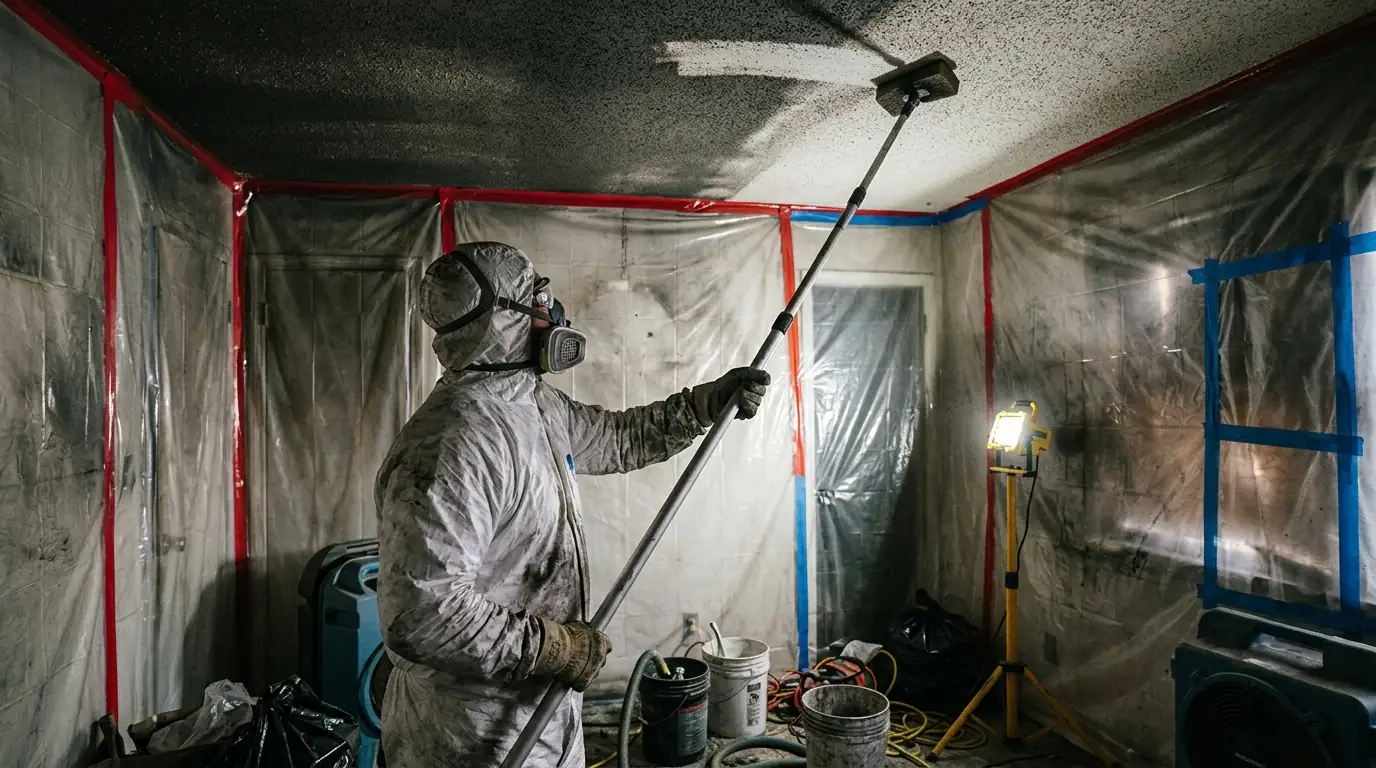
Clean rooms top to bottom
Ceilings, walls, fixtures and floors with degreasing cleaners.
- 04
Clean the system
Ducts, blower, coil, cabinet and registers under negative air.
- 05
Contents and odor
Belongings cleaned, odor treated, house checked with you.
Oil burner puff-back
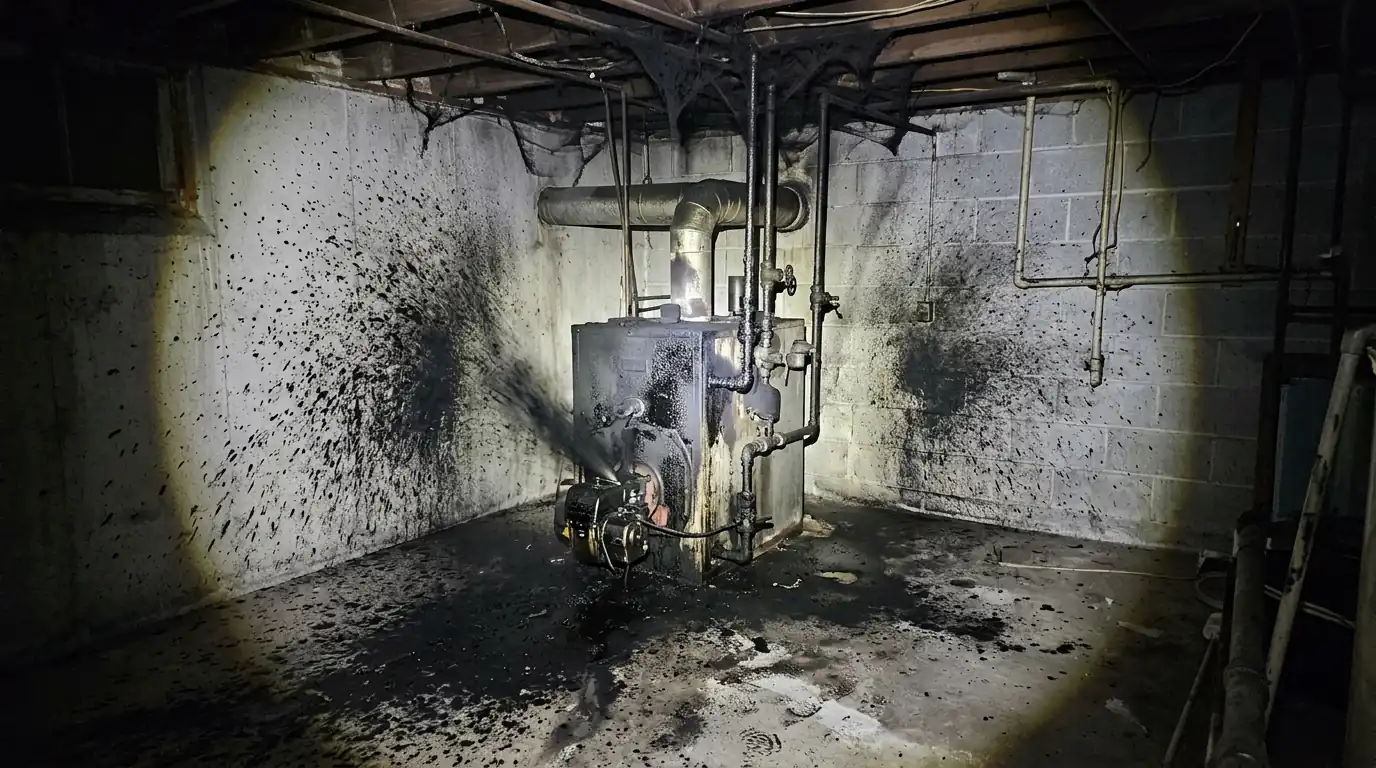
Oil furnaces and boilers are the most common source of puff-backs, usually from a dirty nozzle, a failing ignition system or poor draft that lets oil vapor build up before it lights. The soot from oil is especially heavy and greasy.
We clean the basement around the unit first, since that takes the heaviest coating, then work through the house. Oil soot needs degreasing cleaners and often two passes; dry sponging alone leaves streaks. The oil service company or HVAC technician cleans and repairs the burner itself before it is restarted.
Gas furnace delayed ignition
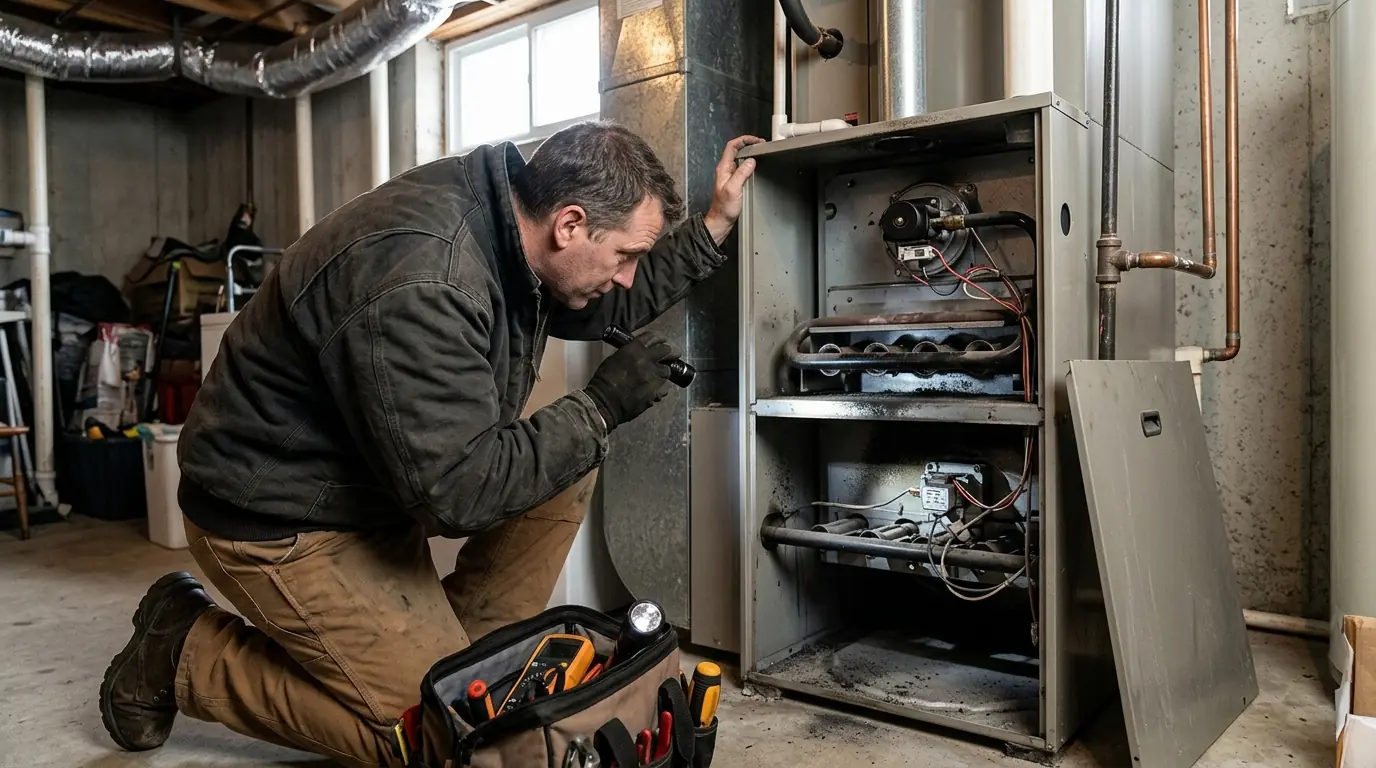
Gas furnaces can puff back too, when ignition is delayed and gas collects before it lights, often from a dirty or failing igniter, burner or flame sensor. The soot is usually lighter than oil soot but still spreads through the duct system.
Delayed ignition can also crack heat exchangers or damage the vent, so the technician's inspection matters for safety, not only for the furnace. We wait for that inspection before running the blower, and clean the cabinet interior once the technician has finished their work.
Soot pushed through the ducts
The blower carries puff-back soot into the supply ducts and out of every register, so the ducts are coated even in rooms that look fine. Registers often show dark smudges on the ceiling or wall around them.
We clean the supply and return ducts under negative air, remove and clean the blower wheel, clean the evaporator coil and wash every register and grille. Without this step, the house gets coated again the first time the furnace runs after repair. A new filter goes in last, after the system is clean, so it is not loaded with soot on day one.
Furnace boomed and blew soot through the house? Keep it off and call the line now.
Call (313) 391-5430Puff-backs in a long Michigan heating season
Furnaces work hard here. Flint's normal January low is 16.0F, colder than Detroit's, and heating systems across the area run from October into April. Most puff-backs happen in that stretch, often on the first cold start of the season or after a long run on a burner that needed service. A system that has not been serviced before winter is the one we see most often, from the Grand Blanc side of our area down into Detroit.
What to do right after a puff-back
Do this
- Turn the furnace off at the thermostat and switch
- Call your HVAC or oil service company
- Photograph the rooms and registers
- Open windows if it is safe and not freezing
Avoid this
- Restarting the furnace to see if it works
- Wiping walls with water or household cleaners
- Running a vacuum without a HEPA filter
- Washing soot-covered clothes with other laundry
What changes the cost of puff-back cleanup
Puff-back cleanup depends on how far the soot spread and what it landed on.
- How many roomsA basement-only puff-back is far smaller than a whole-house coating.
- Oil or gas sootOily oil-burner soot takes more passes to clean.
- DuctworkDucts, blower, coil and registers are cleaned as a separate scope.
- ContentsFurniture, clothing and belongings that caught the soot.
- Odor treatmentFuel odor may need deodorizing after cleaning.
National cost guides list duct cleaning after smoke at about $150 to $800 (Angi). Room and contents cleaning are priced from the walkthrough. These are planning figures, not a quote.
Furnace puff-back questions
Fuel or vapor collecting in the combustion chamber and igniting all at once, usually from a dirty nozzle, failing igniter or poor draft.
Not until an HVAC technician has inspected and repaired it. Running it can cause another puff-back and spreads more soot.
Many homeowners policies cover sudden puff-back damage. Check your policy and keep photos and the technician's report.
Yes, with degreasing cleaners and hand work. Water or household cleaners smear it.
All the common ones, including Carrier, Trane, Lennox, Goodman, Rheem and York. The technician repairs the burner; we clean the soot.
They are always part of a puff-back job. See air duct and HVAC smoke cleaning.
