Quick answer
Electrical fire cleanup in Detroit comes after an electrician makes the circuit safe, and it should start within days because burnt wire insulation leaves an acidic, chloride-heavy soot that pits metal and damages electronics. We clean metal and electronics first, then the walls and ceilings the smoke reached, then treat the odor, which is sharper and more chemical than wood smoke.
Why a small electrical fire needs more than a wipe-down
Most electrical fires in houses start at an outlet, a switch, a fixture, an extension cord or the panel. The flames may be out in seconds, but the plastic jacketing on the wire burns into a fine, oily smoke that clings to everything nearby and drifts through the room.
That residue is corrosive. Chrome, brass, stainless steel and the contacts inside electronics start to discolor and pit if it sits, so the order of the cleanup matters more here than after an ordinary wood-smoke fire.
We do not repair wiring. The electrician makes the circuit safe and finds the cause; we clean up the smoke and soot, open and close walls as needed, and get the room back to normal.
Signs the smoke spread past the burned outlet
A sharp chemical smell in other rooms
Plastic smoke has a distinct smell. If you notice it upstairs or down the hall, the residue is there too.
A gray haze on windows and mirrors
Wipe a window in the next room. A gray film means the smoke reached it.
Dull or spotted fixtures
Faucets and door hardware that lost their shine after the fire are showing early corrosion.
Electronics near the source acting up
Screens, routers and chargers in the smoke path can fail later as residue corrodes their contacts.
Shadows around outlets and vents
Dark marks around other outlets or registers show where air pulled the smoke through the walls.
How an electrical fire cleanup runs
- 01
Confirm the circuit is safe
We start once the electrician or fire department has made the circuit safe.
- 02
Protect metal and electronics
Metal gets cleaned and neutralized first; electronics come out of the smoke path.
- 03
Map the residue
We test rooms outward from the source to see how far the smoke went.
- 04
Clean, open and seal
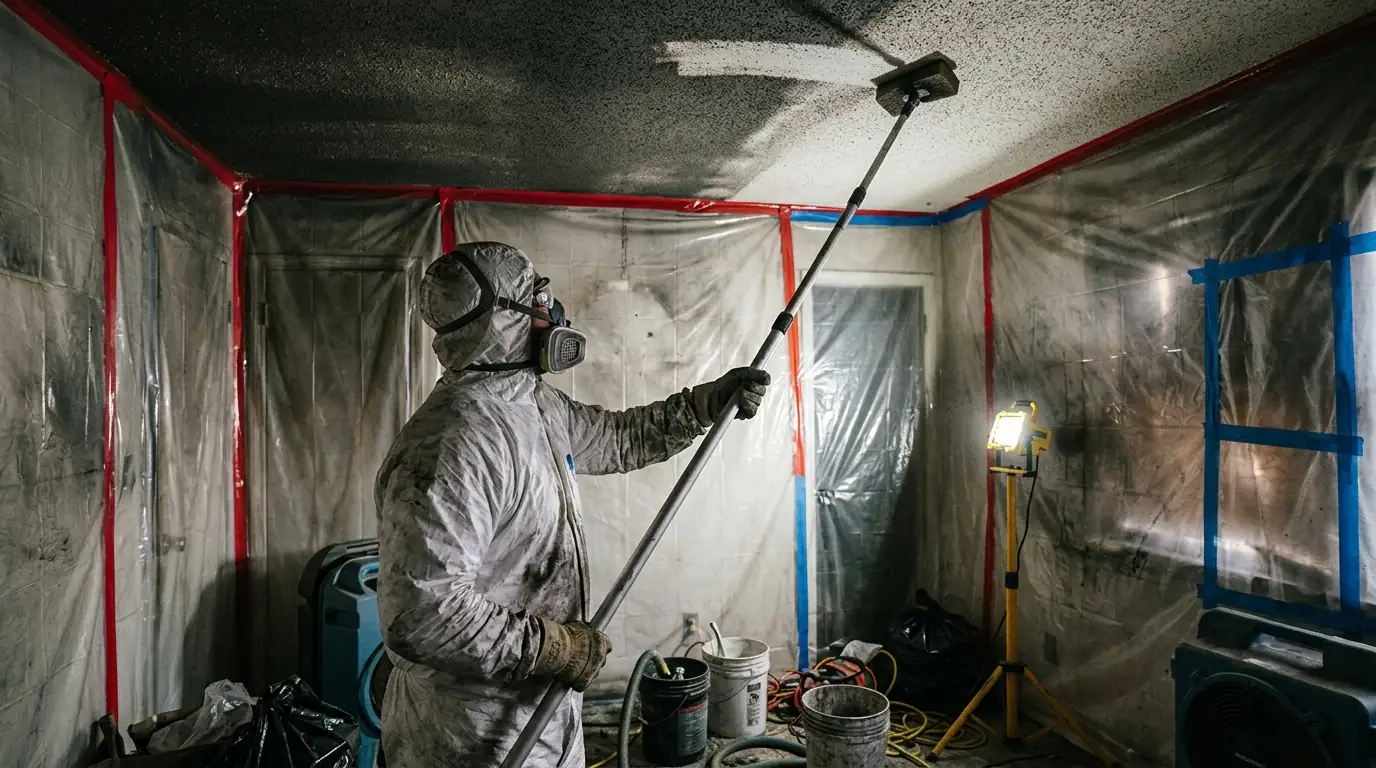
Walls and ceilings get cleaned; burned wall cavities are opened, cleaned and sealed.
- 05
Deodorize and close up
Odor treatment, then patching and paint once the repair is inspected.
Wire insulation residue
Burnt PVC wire jacketing leaves a gray to black film with a sharp chemical smell that is different from wood smoke. It smears easily, so dry sponging comes first, followed by an alkaline cleaner that neutralizes the acidic residue rather than just moving it around.
We work outward from the source until the surfaces test clean, which is often two or three rooms further than people expect, and we wear respirators because the smoke from burning plastic is not something to breathe while scrubbing.
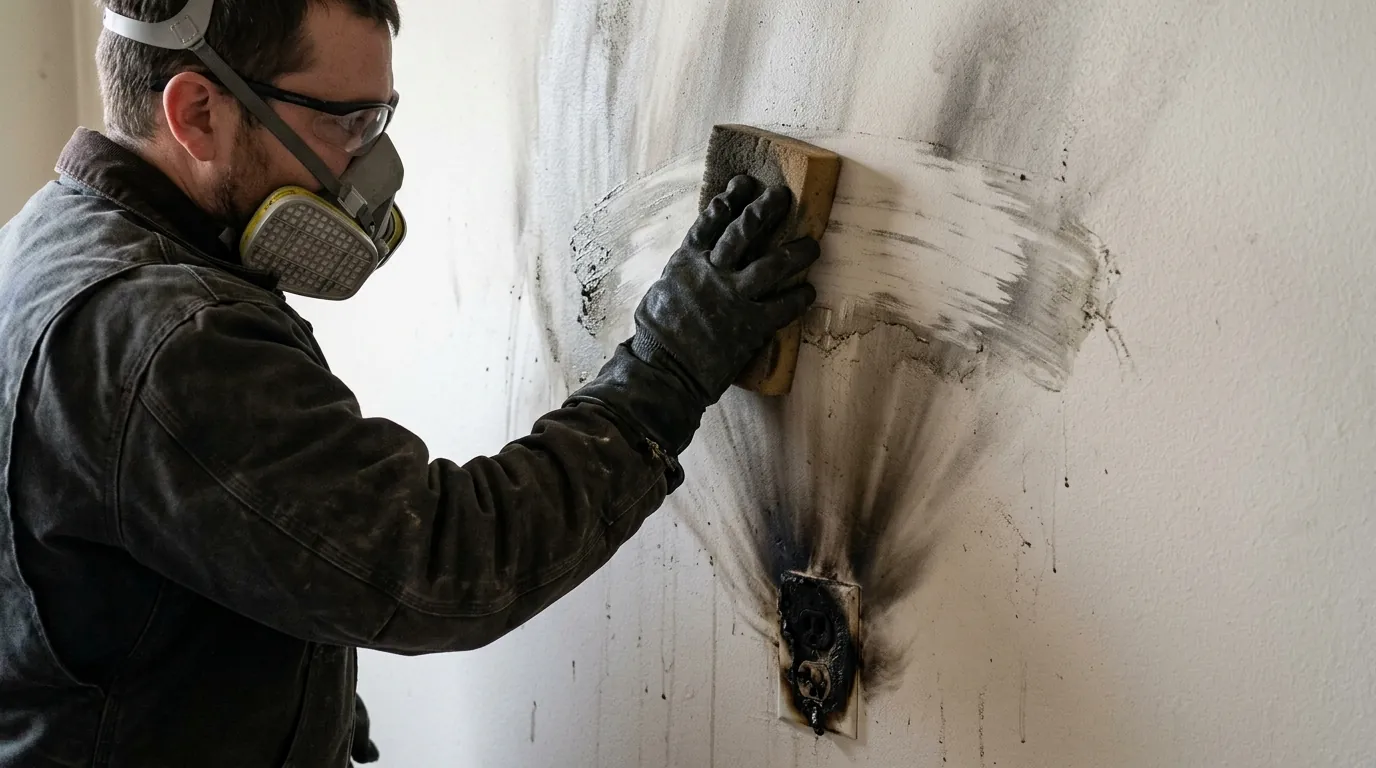
Panel and outlet area
When the fire started at the panel or inside a wall box, the soot is also inside the wall cavity. With the electrician's go-ahead we open the drywall or plaster around the burned box, remove charred insulation and wood, and clean or seal the framing before the wall is closed.
The panel itself and any damaged wiring belong to the electrician. We coordinate the order so the wall is open when they need it and closed once the repair and the inspection are done.
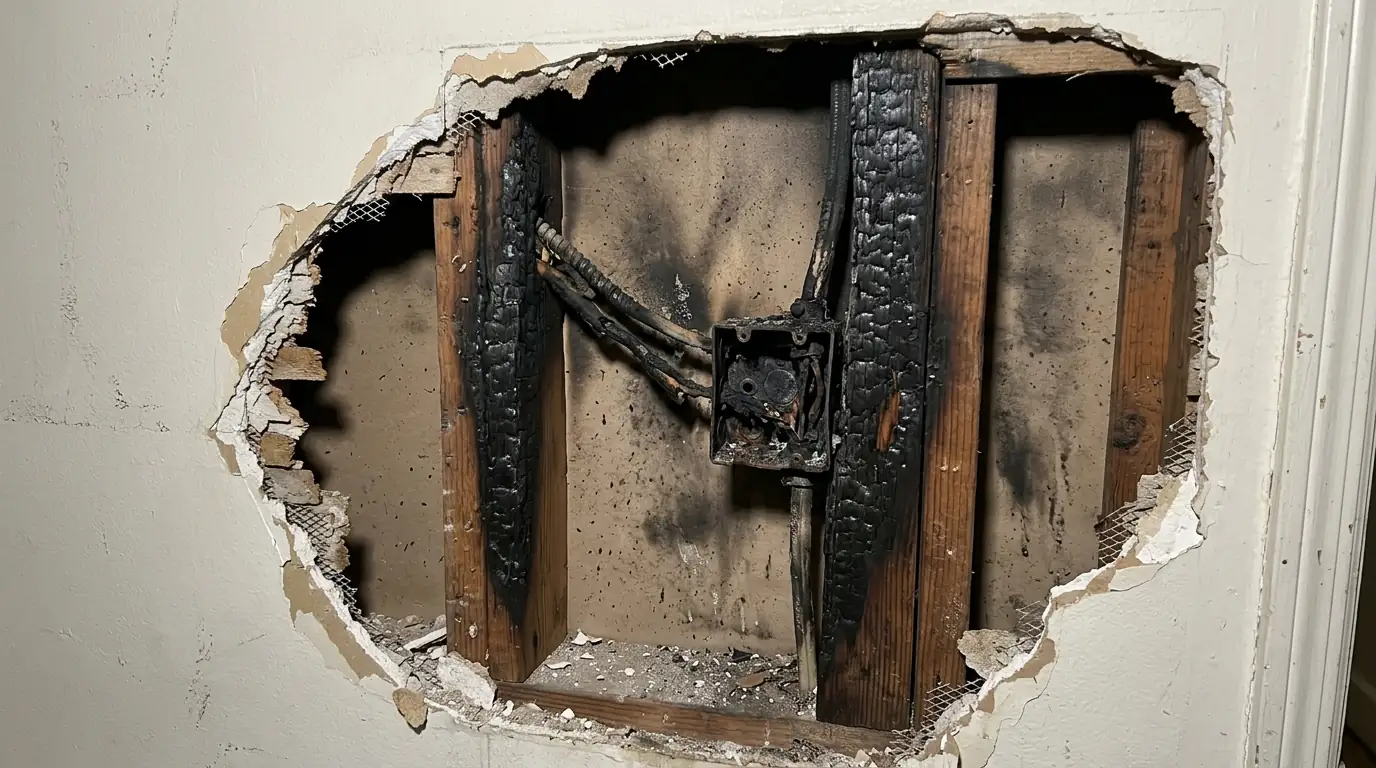
Corrosion on metal surfaces
Faucets, door hardware, appliance fronts, light fixtures and outlet covers are the first things to show damage. Within days, bright metal dulls and then spots; left longer, the pitting does not polish out.
We clean and neutralize metal surfaces on the first visit, even before the full cleanup starts, and we pull electronics that were in the smoke path so they can be cleaned separately. Items that are already pitted get photographed and listed for your insurer as replacement items.
Had an outlet or panel fire? Call the line, 24/7, and we will line up the cleanup around the electrician's repair.
Call (313) 391-5430Electrical fires in Detroit's older houses
The Detroit Fire Department names electrical fires as the top cause of accidental residential fires in the city, and the housing explains a lot of it: the median Detroit home was built in 1947, so many still run a mix of original circuits, later additions and extension cords doing work a wall outlet should do. In those houses the smoke from a burned box often travels through old plaster cavities, so we check the rooms above and beside the source, not only the wall where it started.
What to leave alone until the circuit is safe
Safe to do yourself
- Keep the breaker off until an electrician checks it
- Open windows to air the room out
- Photograph the burned area before anything is moved
- Keep children and pets out of the room
Leave for the electrician and us
- Opening the wall or removing the burned device
- Scrubbing soot with water, which smears it
- Plugging electronics back in to test them
- Painting over a scorch mark
What drives the cost of electrical fire cleanup
Electrical fires are usually small in area, so the bill depends on how far the smoke traveled and what it reached.
- How many rooms the smoke reachedOne room is a small job; smoke that followed the air to other floors multiplies it.
- Wall openingA fire inside a wall box means opening, cleaning and closing the wall.
- Electronics and appliancesItems in the smoke path need separate cleaning or replacement.
- Metal corrosionFixtures already pitted become replacement items.
- Odor treatmentPlastic smoke odor usually needs a deodorizing step after cleaning.
National cost guides put smoke damage cleaning at about $200 to $1,200 per room (Angi). The electrician's repair is separate. These are planning figures, not a quote.
Electrical fire cleanup questions
No. An electrician repairs the circuit and finds the cause. We clean the smoke and soot, open and close walls, and coordinate the order of work with the electrician.
It comes mostly from burning plastic wire insulation rather than wood, so it smells sharper and more chemical, and the residue is more acidic.
Within days of the fire, once the circuit is safe. The residue starts corroding metal and electronics quickly, so we clean those surfaces on the first visit.
Often, if they are cleaned before corrosion sets in. Anything that was powered on in heavy smoke should be checked before it is used again. See our page on electronics cleaning after a fire.
Rarely. Plastic smoke odor stays in porous surfaces until the residue is cleaned off and the room is deodorized.
Often yes, once the circuit is off and the room is closed up, but that depends on how far the smoke spread and whether anyone in the house has breathing problems. Ask the fire department or electrician if you are unsure.
