Quick answer
Thermal fogging in Detroit is an odor treatment used after smoke cleaning: a fogger heats a deodorizing solution into particles small enough to travel through the same gaps and cavities smoke did, where it neutralizes odor on contact. The house is empty during treatment and ventilated afterward, and fogging works best on residual odor once visible soot has been cleaned.
Why fog reaches places cleaning cannot
Hot smoke moves under pressure through outlets, around trim, into wall cavities, up chases and into closets. Some of that residue cannot be reached without opening walls.
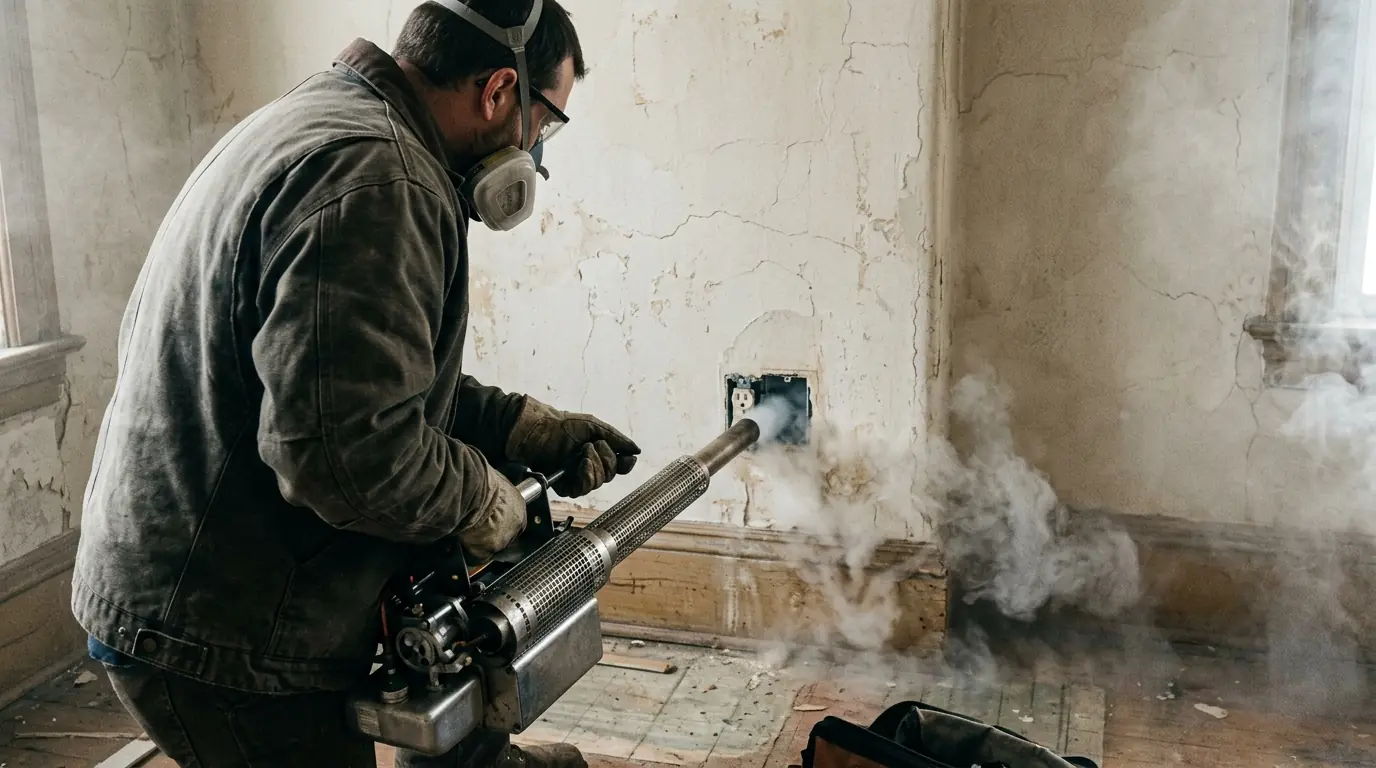
A thermal fogger mimics the smoke: it produces a warm, fine fog that spreads through the same openings and settles where smoke settled, neutralizing odor on contact. That is its advantage over treatments that work mainly on open surfaces.
It is not a substitute for cleaning. Visible soot and heavily saturated materials still have to be cleaned or removed first; fogging handles what remains.
What changes the cost of thermal fogging
Fogging is priced by the area treated and whether cavities are treated individually.
- Area treatedOne room or closet versus the whole house.
- Cavity workFogging through outlets and access points takes more time.
- Cleaning still neededSoot must be cleaned first; that is priced separately.
- Multiple unitsShared walls may mean treating both units.
- Repeat treatmentsHeavy odor may need a second pass.
National cost guides list thermal fogging at about $200 to $600 (Angi). These are planning figures, not a quote.
Thermal fogging compared with other odor treatments
| Thermal fogging | Hydroxyl | Ozone | |
|---|---|---|---|
| Reaches hidden cavities | Yes | Partly | Partly |
| People in the house | No | Yes | No |
| Speed | Hours | Days | Hours |
| Best after | Cleaning and demolition | Cleaning, in occupied homes | Cleaning, in empty homes |
Wall cavity fogging
Wall cavities near a fire often hold smoke residue behind otherwise clean drywall or plaster. We fog through outlet and switch boxes and small access points, with the power off at those circuits, so the fog travels through the cavity and reaches the framing and insulation inside.
Where odor is still strong after fogging, the cavity may need opening so insulation can be removed and framing cleaned and sealed. Fogging first often tells us which walls really need that and which do not.
Closets and cabinets
Closets and cabinets trap smoke because air in them barely moves. After they are emptied and cleaned, we fog them with the doors open so the deodorizer reaches corners, shelf undersides and the backs of drawer boxes.
Clothing and belongings stored there are cleaned separately. We fog the empty space before items go back, so clean clothes are not returned to a closet that still smells. Built-in cabinets in kitchens and bathrooms get the same treatment once their contents are out, with drawers pulled so the fog reaches the cabinet boxes behind them.
Fogging after demolition
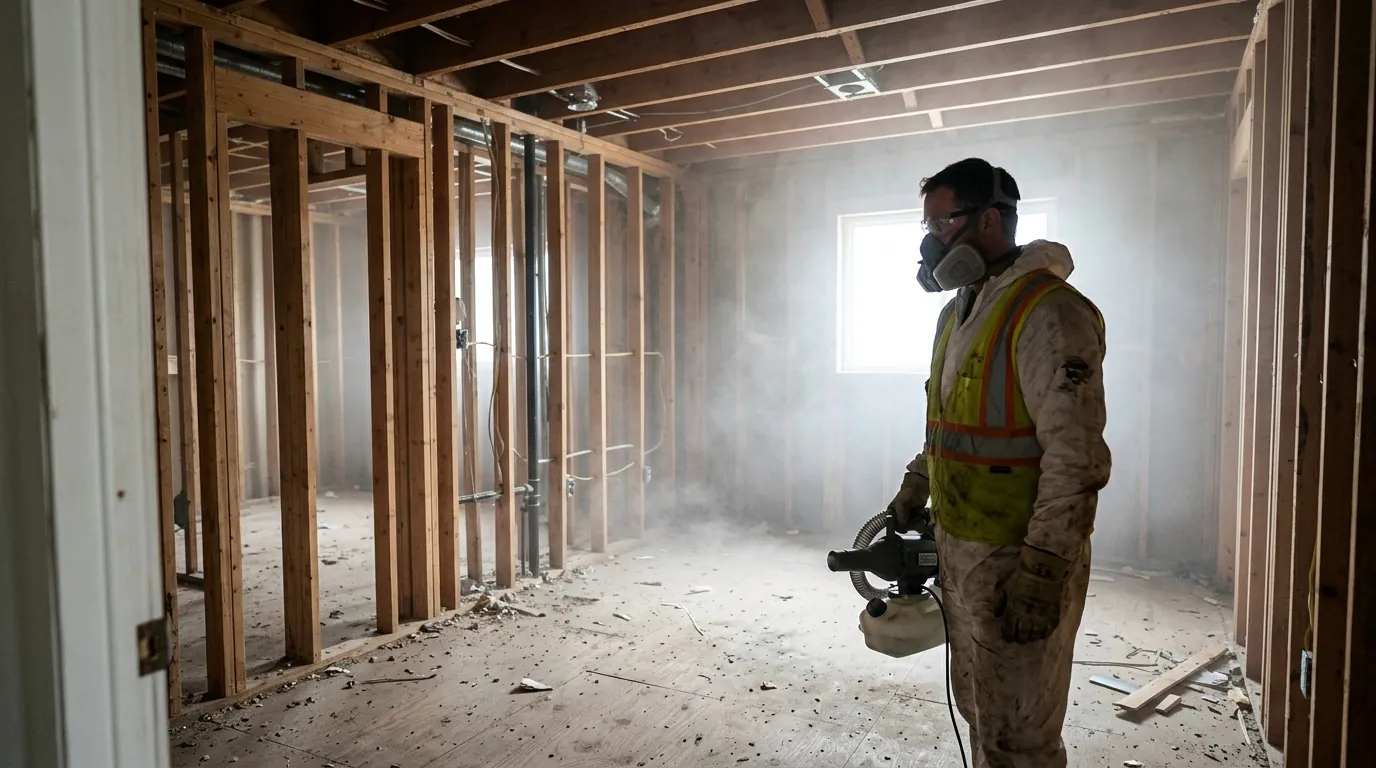
Once burned materials are removed and the framing is exposed and cleaned, fogging the open structure reaches the framing, subfloor and the backs of remaining finishes before they are sealed and closed.
This is the best time to treat the structure, because nothing is hidden. It is followed by an odor-blocking primer on the framing so the next layer of drywall does not trap any remaining odor. Fogging at this stage costs less than fogging a finished house, because there are no belongings to move and every surface is exposed, so it is worth scheduling before insulation goes in.
Smell hiding in walls and closets? Call and we will check whether fogging is the right fix.
Call (313) 391-5430How a thermal fogging treatment runs
- 01
Confirm cleaning is done
Visible soot is cleaned before fogging.
- 02
Prepare the house
People, pets and plants out; pilot lights and alarms handled safely.
- 03
Fog
Rooms, closets and cavities treated with a heated deodorizer fog.
- 04
Dwell and ventilate
The fog settles, then the house is aired out.
- 05
Wipe and recheck
Surfaces wiped where needed and odor checked room by room.
Fogging shared walls in Detroit's two-unit buildings
Streets like Cliff Street near our service office include two-unit duplex buildings, and many older Detroit houses were built as flats with shared walls, stairs and basements. Smoke from a fire in one unit travels through those shared cavities into the other. Fogging reaches the shared walls from both sides, but it means both units have to be empty during the treatment, so we schedule it with the owner and both households.
How long fogging takes
A whole-house fogging treatment usually takes a day, including preparation, the fogging itself, the dwell time and ventilation. Most households can return the same evening or the next day.
Individual rooms or closets take a few hours. Heavy odor may need a second treatment a few days later.
Thermal fogging questions
It is done with the house empty and ventilated afterward. People, pets and plants stay out until the air is cleared.
A light film can settle on hard surfaces, which we wipe where needed.
No. It treats residual odor after visible soot is cleaned.
Fog physically follows smoke paths into cavities; ozone is a gas that works mainly on air and surfaces.
The source may need removing, such as insulation inside a wall. See smoke odor removal.
Yes, for the treatment and ventilation, usually most of a day.
