Quick answer
Smoke smell comes back because the residue that causes it is still in porous materials, ducts, the attic or wall cavities, and heat or humidity releases it again. Air fresheners and paint only cover it. The lasting fix is to find and clean or remove the residue first, clean the ducts, then deodorize and seal what remains.
Where smoke odor actually lives
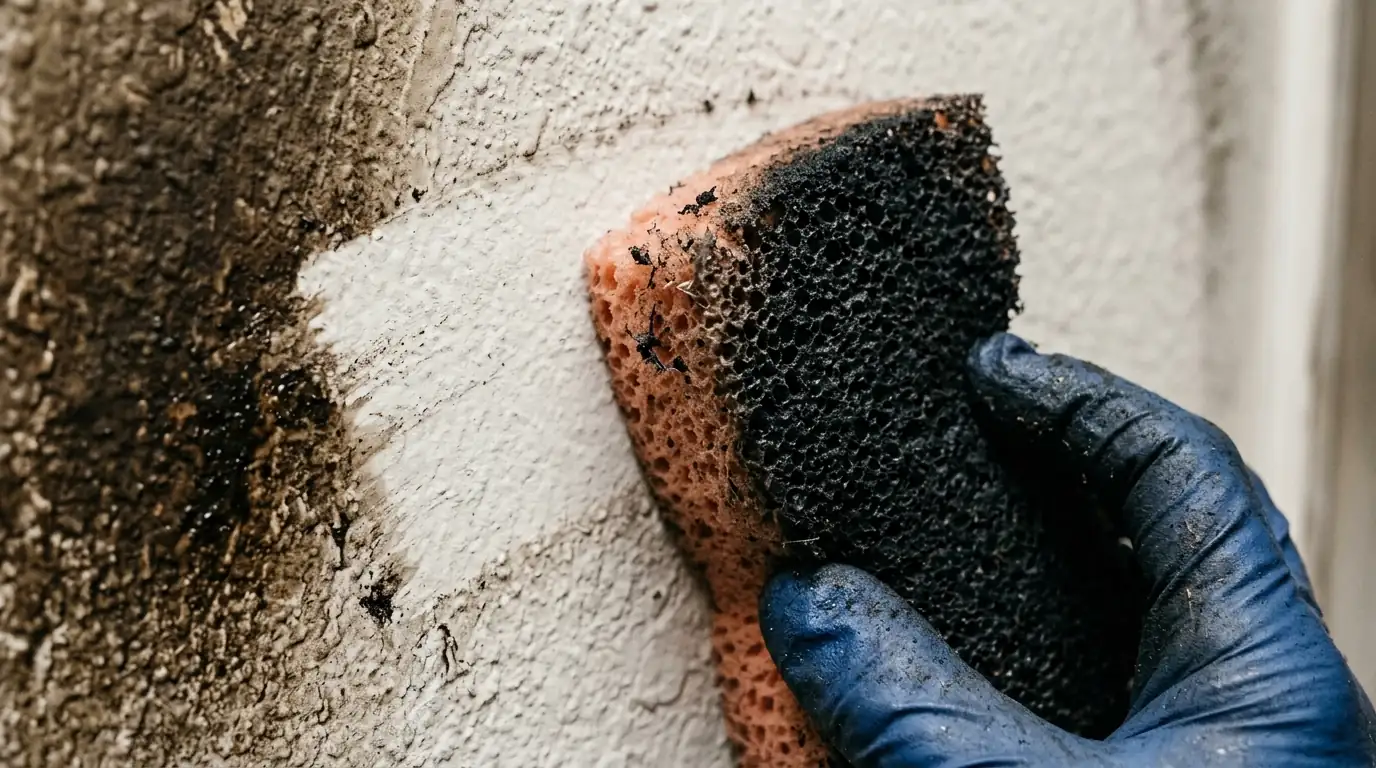
Smoke odor is not a smell floating in the air; it comes from residue sitting on and in materials. The air smells because those materials keep releasing it.
The residue settles in predictable places, and the ones people miss are the ones that keep the smell alive.
- Drywall, plaster and wood framing, especially near the fire
- Insulation in the attic and inside walls
- Carpet pad, upholstery, mattresses and clothing
- The inside of ducts, the furnace blower and the filter rack
- Closets, cabinets and drawers that held still air
Why it returns on warm and humid days
Odor-causing compounds release faster when they are warm and when the air is damp. That is why a house can seem fine on a cool, dry day and smell of smoke again in a humid spell or when the furnace runs for the first time in the fall.
In Detroit's heating season, that is a predictable pattern: the furnace pushes warm air through ducts that may still hold residue, and warms the walls that hold the rest. A cleanup done in September gets its real test in December.
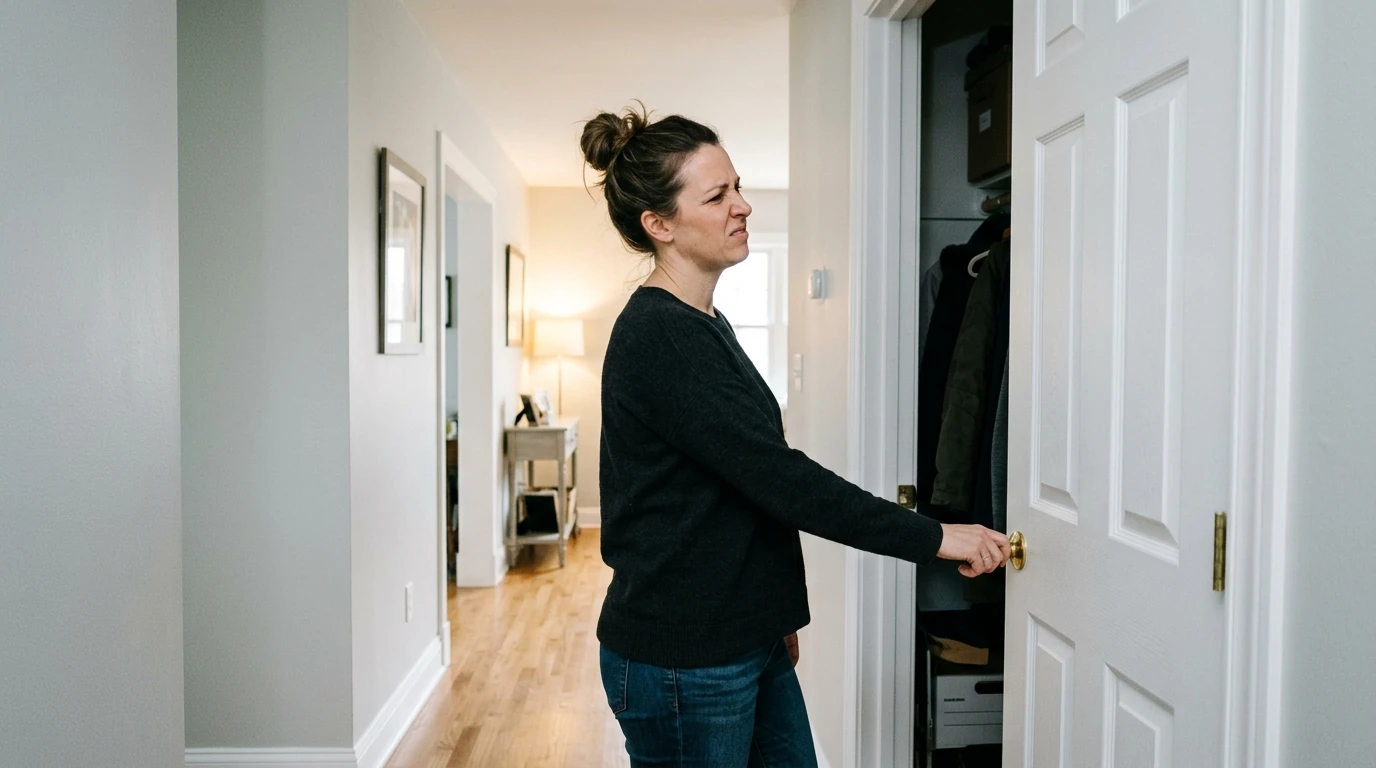
Smell came back after the cleanup? Call and we will find where the residue is hiding.
Call (313) 391-5430Why air fresheners and paint do not fix it
Air fresheners and plug-in scents mask the odor for hours. Ordinary latex paint seals nothing; smoke residue migrates through it and the smell, and often yellow stains, come back within weeks.
Ozone or fogging run in a house that has not been cleaned helps briefly, but the residue is still on every surface, so the smell returns. Deodorizing is the last step of the job, not a substitute for it.
How the smell is removed for good
Lasting odor removal follows a fixed order. Skipping a step is the usual reason a cleanup fails.
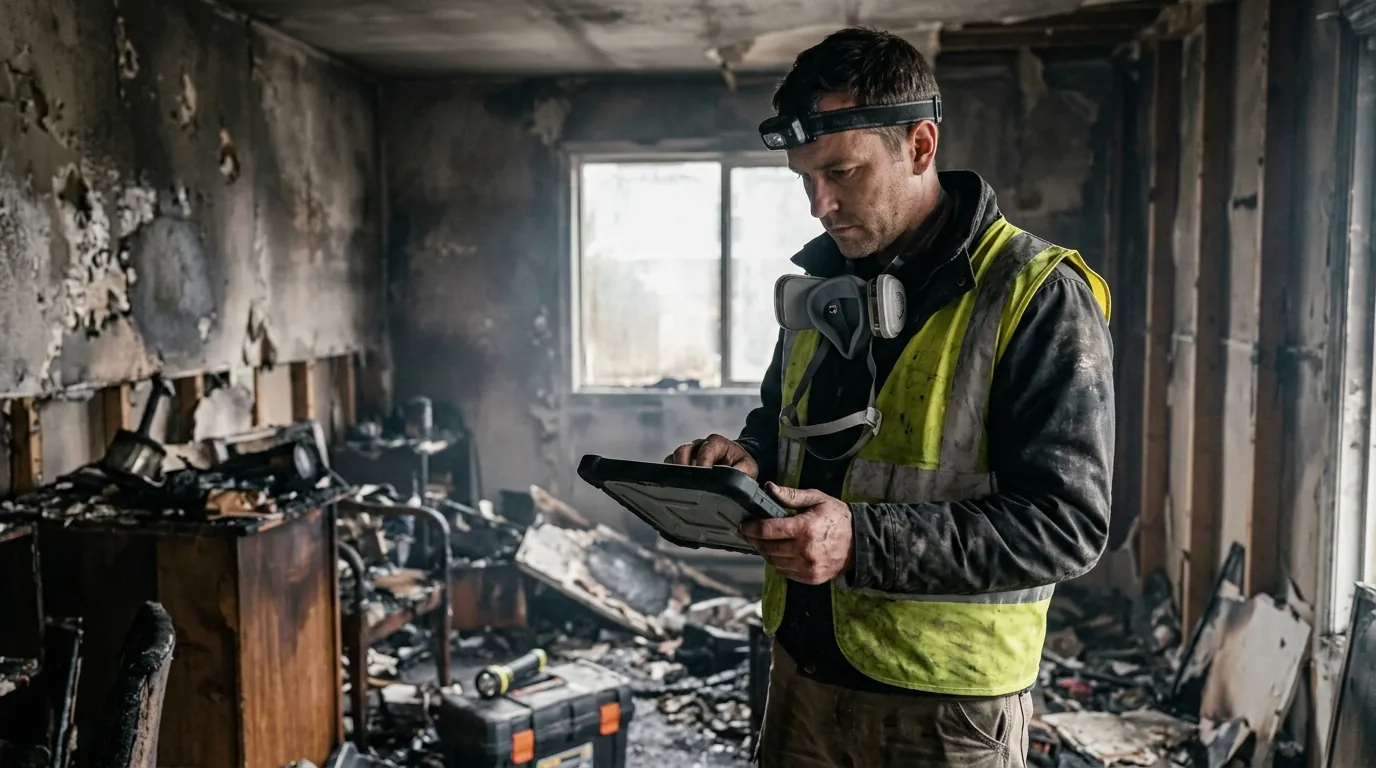
- Find the residue: test rooms, closets, the attic and the ducts
- Clean hard surfaces with methods matched to the residue type
- Remove materials that hold odor too deeply, like insulation and pad
- Clean the ducts, blower and coil so the system stops spreading it
- Deodorize with hydroxyl, thermal fogging or ozone, chosen for the house
- Seal stained framing and walls with an odor-blocking primer before paint
Choosing an odor treatment
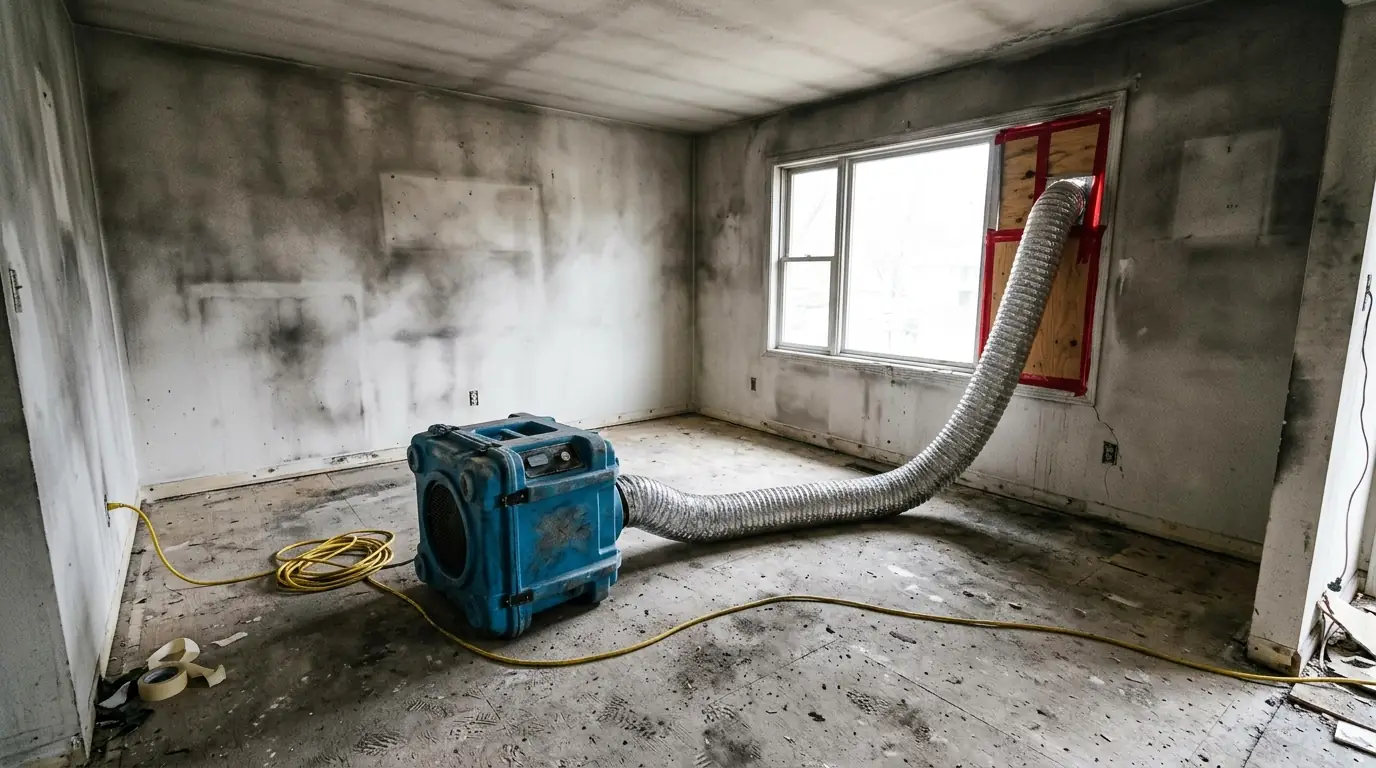
The three common treatments work differently. Hydroxyl can run with people at home and takes days. Thermal fogging reaches wall cavities and closets but needs an empty house for the treatment. Ozone works quickly in an empty house and on contents in a sealed room. Our guide comparing ozone, thermal fogging and hydroxyl goes into when each fits.
How to tell whether the source is really gone
A few simple checks tell you whether the residue was removed or just covered.
- Smell inside closets and cabinets, where air sits still
- Run the furnace and smell at the registers
- Check the house on a warm, humid day
- Kneel down and smell near the carpet
- Look at new paint near the fire for yellow bleed-through
Odor you bring back in with your belongings
Sometimes the house is clean and the smell returns anyway, because it came back in a box. Clothing, bedding, books, furniture and stored items that were not cleaned or deodorized carry residue back into clean rooms.
Contents should be cleaned by material and deodorized before they return, and closets and cabinets should be deodorized while they are empty. If the smell is strongest in one bedroom or one closet, start with what was put back there.
What to ask a restoration company about odor
A few questions before work starts tell you whether a cleanup will deal with the source or just the air.
- Will you test the attic, ducts and closets as well as the rooms?
- Which materials will you remove rather than clean?
- Are the ducts, blower and coil part of the scope?
- Which deodorizing method will you use, and why that one?
- Will stained framing be sealed before the walls are closed?
- How will contents be cleaned and deodorized before they come back?
Smoke smell in a house you just bought or moved into
Not every lingering smoke smell comes from a recent fire. Houses that were smoked in for years, houses with an old fire that was cleaned and painted over, and houses with a fireplace that backdrafted can all carry odor that only shows up after closing or move-in, often when the heat first comes on.
The approach is the same: find where the residue is, clean or remove it, clean the ducts, deodorize and seal. Tobacco residue in particular sits under fresh paint and bleeds back through, so walls usually need washing and a stain-blocking primer. Our page on cigarette smoke odor removal covers that case.
Smoke smell questions
Until the residue causing it is removed. Without that, it can linger for years and return with heat and humidity.
Airing helps with what is in the air, not with residue on surfaces, so the smell usually returns.
The ducts and walls hold residue, and warm air releases it. Duct cleaning is often the fix.
Not with ordinary paint. Surfaces need cleaning and an odor-blocking primer first.
Lingering odor means residue is present. People with breathing problems should avoid long exposure until the house is properly cleaned.
See smoke odor removal.