Quick answer
Smoke damage is the odor and the thin film that smoke leaves on surfaces throughout a house; soot damage is the visible black or brown residue of unburned carbon. Most fires cause both. Soot comes in three main types, dry, oily and protein, and each needs a different cleaning method, which is why identifying it comes before any cleaning.
What smoke damage is
Smoke is hot gas carrying tiny particles and chemical compounds. As it moves through a house and cools, it leaves a thin film on walls, ceilings, fabrics and the inside of cabinets and ducts, along with an odor that soaks into porous materials.
Smoke damage is often invisible at first. A room can look clean and still smell, still leave a gray mark on a white cloth, and still yellow over the following weeks as the residue oxidizes.
What soot damage is
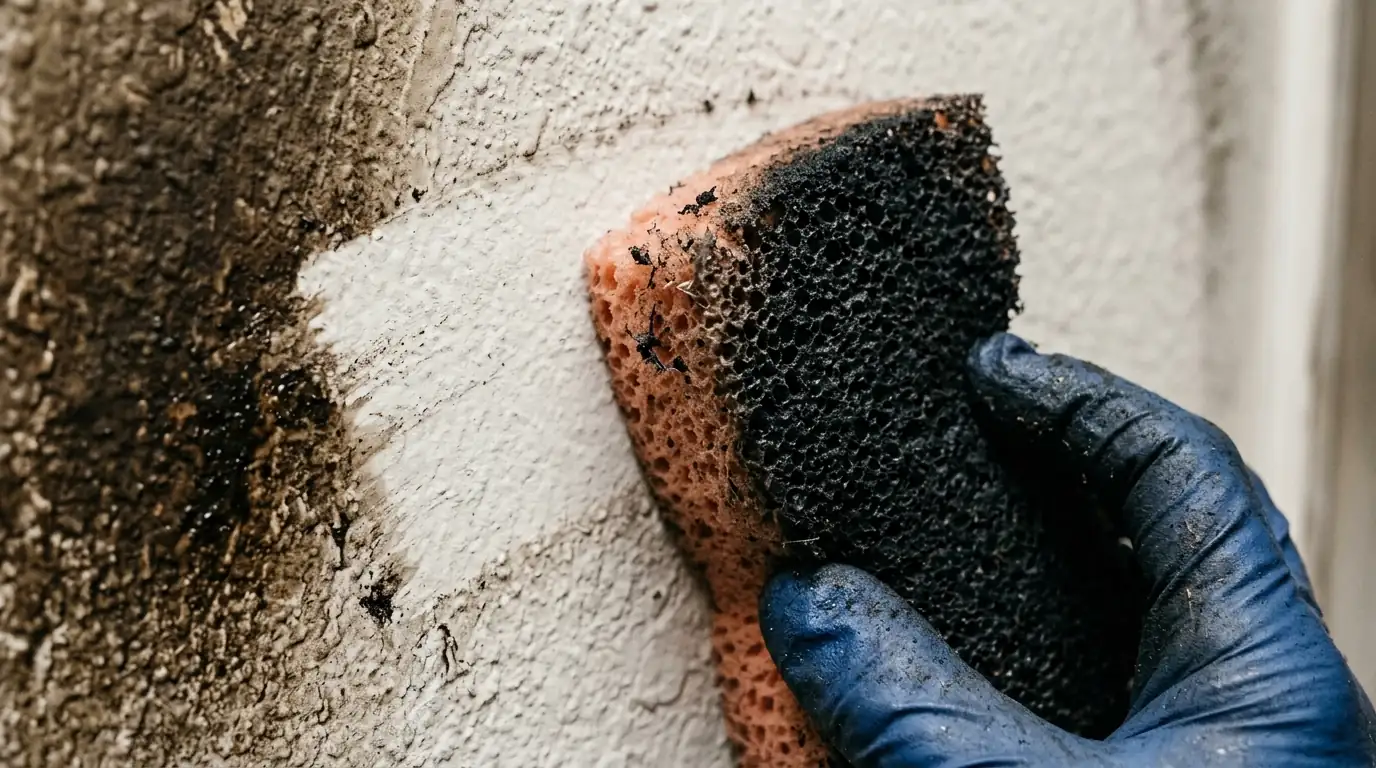
Soot is the visible part: unburned carbon and other residue that settles as a black, gray or brown deposit. It is heaviest near the fire and on cool surfaces, and it is acidic, which is why it etches glass, pits metal and discolors paint if it sits.
Because it is visible, soot gets the attention. But it is usually only part of the damage; the smoke film and odor extend much further than the soot does.
Dry, oily and protein soot: how to tell them apart
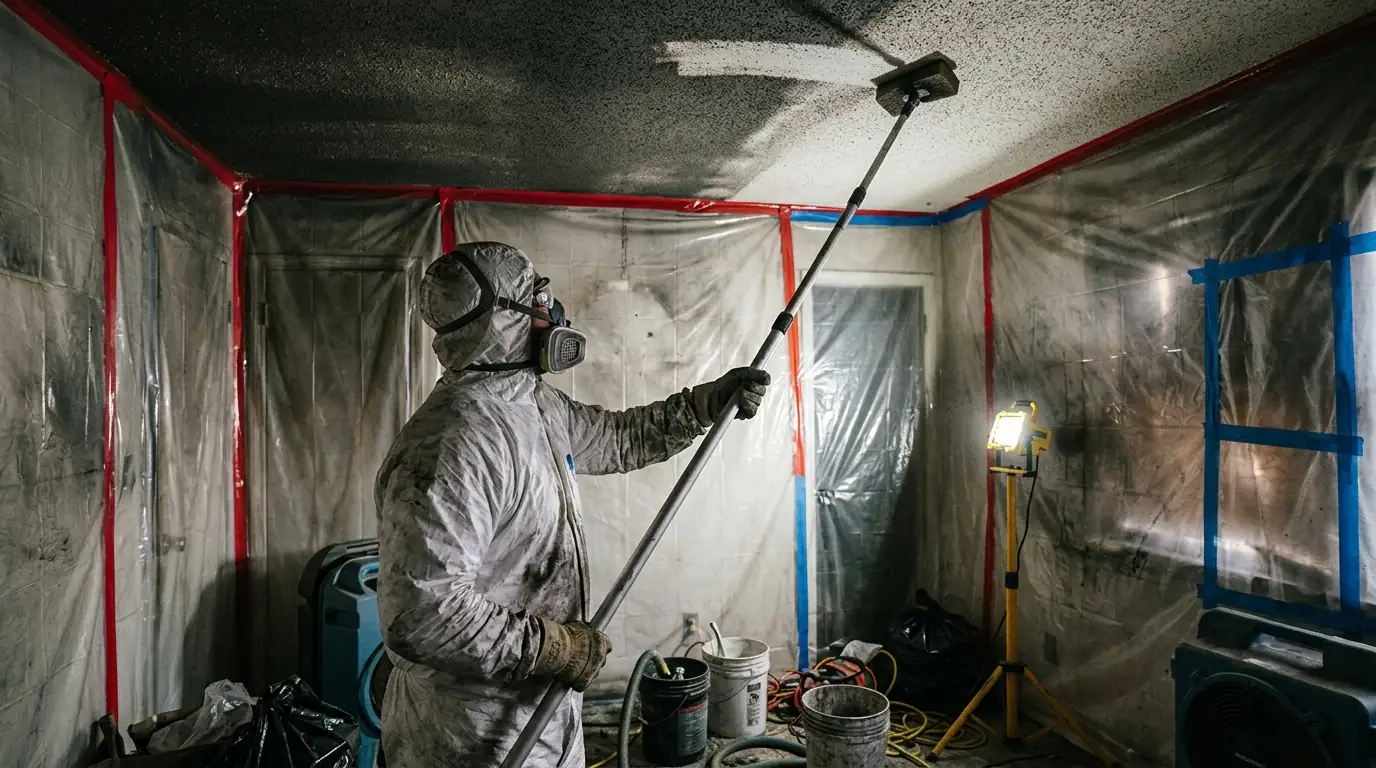
Restoration crews sort soot into types because each one reacts differently to cleaning. You can often tell them apart by look, feel and what burned.
| Type | Looks and feels | Usually from | First cleaning step |
|---|---|---|---|
| Dry soot | Powdery, black or gray, wipes off loose | Fast, hot fires in wood and paper | HEPA vacuum and dry chemical sponge |
| Oily soot | Sticky, smeary, brown-black, smells of plastic or fuel | Plastics, foam, rubber, oil furnace puff-backs | Degreasing cleaner after a test patch |
| Protein residue | Thin yellowish film, often hard to see, very strong odor | Burned food, usually a pot left on the stove | Specific protein cleaners, then deodorizing |
Not sure what kind of residue you have? Call and we will test it before anything gets cleaned.
Call (313) 391-5430Why the difference changes the cleanup
The wrong method makes residue harder to remove. Wiping dry soot with water drives it into paint and plaster. Dry sponging oily soot smears it across the wall. Cleaning protein residue with ordinary cleaners leaves the odor behind even when the surface looks fine.
Smoke film without visible soot needs a different approach again: thorough cleaning of every surface the smoke reached, duct cleaning so the system stops spreading it, and deodorizing once the residue is gone. That is why a good cleanup starts with testing each room, not with buckets and rags.
What you can clean yourself, and what you should not
Light smoke film on washable, glossy surfaces in a room far from the fire can sometimes be cleaned by a homeowner. Heavy soot, oily residue, protein odor and anything on flat paint, plaster or fabric is better left to people with the right tools.
- Fine to try: light film on glossy paint, glass and hard counters
- Leave alone: heavy or oily soot anywhere
- Leave alone: flat paint, plaster and acoustic ceilings
- Leave alone: upholstery, carpet and clothing with heavy odor
- Never: wiping soot with water before dry removal
When smoke damage needs more than cleaning
Some materials hold smoke too deeply to clean: insulation, carpet pad, some ceiling tiles, and drywall near the fire. Those are removed and replaced. Stained framing and walls that keep bleeding through after cleaning are sealed with a stain-blocking primer before paint.
If a house still smells after cleaning, the residue is somewhere it was missed: the ducts, the attic, the inside of a wall or the contents. Our guide on why smoke smell comes back covers how to find it.
What smoke and soot do to different surfaces
Residue does not affect every material the same way. Some surfaces show damage within days; others hide it until much later. Knowing which is which tells you what to protect first.
- Glass and mirrors: a gray film that can etch if left for weeks
- Chrome, brass and stainless: dulling and then pitting
- Painted walls: yellowing, especially flat paint
- Grout and unsealed stone: staining that sets in
- Plastics: yellowing, and warping near the heat
- Fabrics: odor deep in the fibers
- Electronics: corrosion on contacts, sometimes failing weeks later
Why soot shows up on some walls and not others
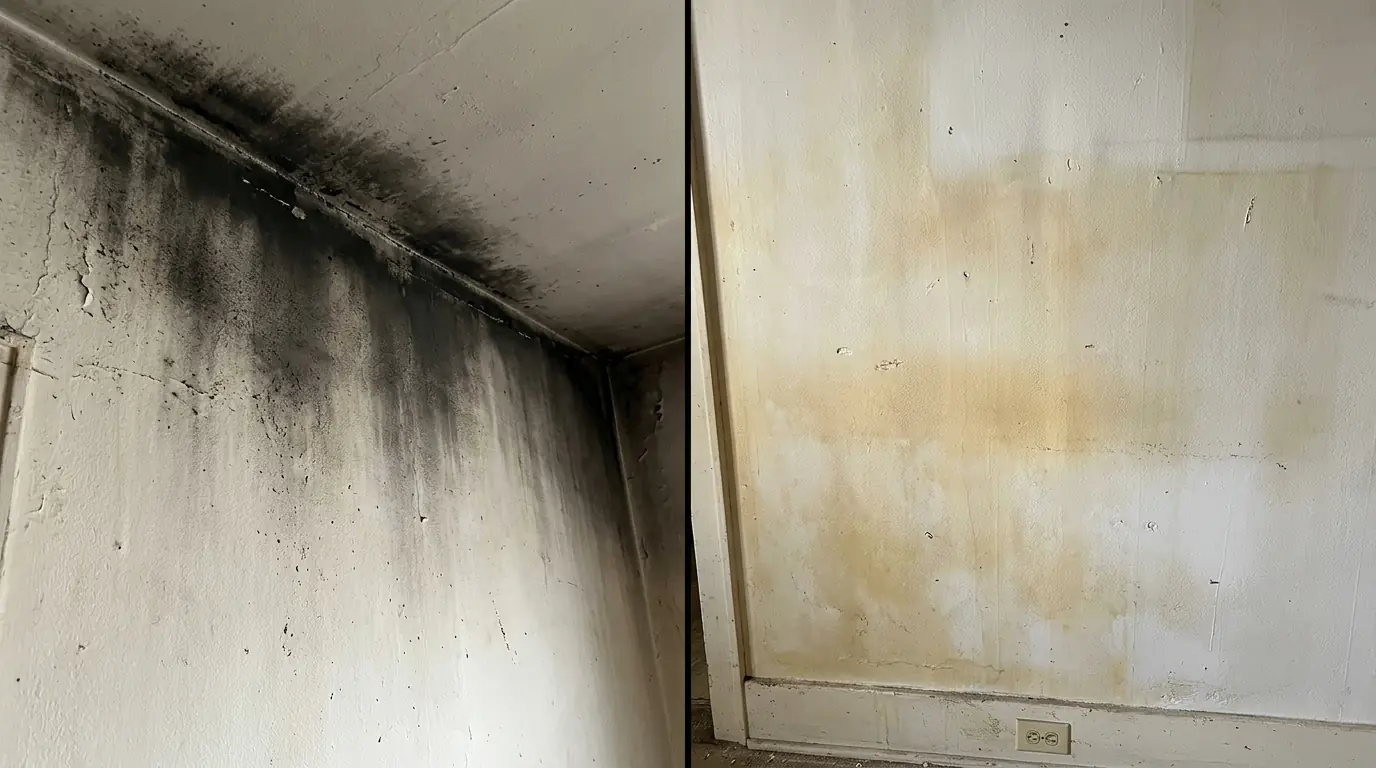
Soot does not settle evenly. It collects on cooler surfaces, which is why ceilings and exterior walls take more than interior ones, and why dark lines sometimes appear on ceilings exactly over the joists behind them. Restoration crews call that ghosting.
It also follows air. Dark lines along carpet edges and under doors, called filtration lines, show where air carrying smoke squeezed through gaps. Smudges around registers and light fixtures show where the heating system or the ceiling moved smoke between rooms.
Those patterns are useful: they show how far the smoke traveled, which rooms belong in the cleanup scope and where to look for residue nobody can see yet.
Smoke and soot in Detroit's older houses
Older houses handle smoke differently from newer ones. Plaster walls are harder and more porous than drywall, so they hold a smoke film in their surface and need careful cleaning and sealing rather than replacement. Wall and floor cavities in older construction are often open from floor to floor, so smoke reaches rooms well away from the fire.
Many older Detroit houses also have several layers of old paint, some of which can contain lead, and plaster or flooring that may contain asbestos. That matters if cleaning turns into tear-out, because older materials should be tested before they are disturbed.
None of this changes the basic rule: identify the residue, remove it dry first, then clean with the right chemistry. It just means the cleanup scope in an older house usually reaches further than people expect.
Smoke and soot questions
Neither is simply worse. Soot is more visible and corrosive; smoke film and odor spread further and are easier to miss.
Often. Powdery and dry is dry soot; sticky and smeary is oily; a thin yellow film with a strong smell is usually protein residue.
Water smears soot into paint and plaster. Dry removal should always come first.
Soot particles irritate the lungs. Keep people with breathing problems away from heavy soot and leave heavy cleaning to professionals.
See soot removal and smoke damage restoration.