Quick answer
Key fire restoration terms include dry and wet soot (the two main residue types), protein residue from kitchen fires, ghosting (soot lines along framing), puff-back (soot blown from a misfiring furnace), pack-out (moving belongings out for cleaning), thermal fogging and ozone (odor treatments), and ACV versus RCV (depreciated versus full replacement value) on an insurance claim.
Damage terms
These describe what the fire and smoke left behind.
| Term | What it means |
|---|---|
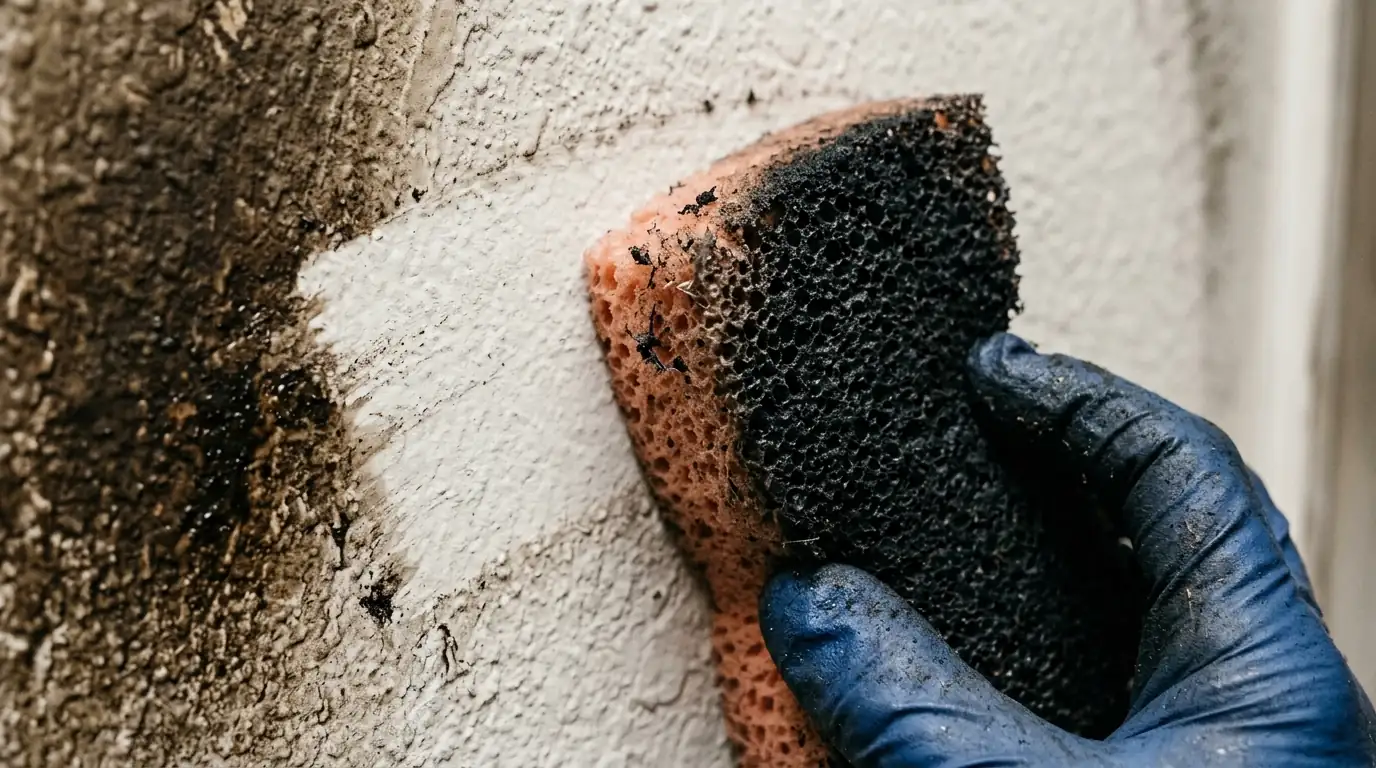
| Dry soot | Powdery residue from fast, hot fires burning wood and paper; easier to clean if not smeared. |
| Wet soot | Sticky, smeared residue from slow, smoldering fires and burning plastics; harder to clean. |
| Protein residue | Nearly invisible, strong-smelling film from burned food in kitchen fires. |
| Ghosting | Dark lines on walls and ceilings where soot collected along framing or cold spots. |
| Puff-back | Soot blown through a house when an oil or gas furnace misfires. |
| Char | Wood or material that burned; charred framing is usually cut out or sealed. |
| Smoke migration | Smoke traveling beyond the fire room through ducts, stairwells and wall cavities. |
Cleanup terms
These describe the work you will see on a restoration job.
| Term | What it means |
|---|---|
| Mitigation | The first steps that stop damage from getting worse: board-up, tarping, water removal. |
| Pack-out | Packing and moving belongings off site to clean, store and inventory them. |
| HEPA air scrubber | A machine that filters fine soot particles out of the air during cleanup. |
| Thermal fogging | An odor treatment that releases deodorizer as a fine fog into the same places smoke went. |
| Ozone treatment | An odor treatment for unoccupied spaces that breaks down odor molecules. |
| Soda or dry ice blasting | Abrasive cleaning that removes soot and char from framing and masonry. |
| Sealing | Priming smoke-stained surfaces with a stain- and odor-blocking primer before repainting. |
Hearing these terms on your own fire job? Call the line and we will walk you through them.
Call (313) 391-5430Insurance terms
These come up when you talk to your insurer or adjuster.
| Term | What it means |
|---|---|
| Adjuster | The person who assesses the claim for the insurance company. |
| Proof of loss | A formal statement of what you are claiming, often with a deadline. |
| ACV | Actual cash value: replacement cost minus depreciation. |
| RCV | Replacement cost value: the cost to replace without deducting depreciation. |
| Recoverable depreciation | The amount withheld from an RCV policy until repairs or replacements are done. |
| ALE | Additional living expenses: temporary housing and extra costs while you cannot live at home. |
| Scope of loss | The line-by-line list of repairs and cleaning the claim covers. |
Michigan-specific terms
Two Michigan terms are worth knowing. The Fire Insurance Withholding program lets participating cities hold back part of a large fire settlement until the property is repaired, secured or cleared. Michigan's claim-payment law also sets time limits for insurers to request proof of loss and to pay. Both are explained in our guide to filing a fire insurance claim in Michigan.
Glossary questions
Soot is the visible residue; smoke damage also includes odor and fine particles you cannot see.
RCV policies pay more for the same loss, though part may be held until replacement.
Steps that prevent further damage, such as board-up, tarping and drying.
Belongings are packed and taken out so the house can be cleaned and repaired.