Quick answer
Staying home after a small fire is reasonable only when the fire department has cleared the house, the power and gas are safe, the smoke stayed in one room and nobody in the household has asthma, heart or lung problems, or is very young, elderly or pregnant. If smoke reached the bedrooms or the heating system ran during the fire, stay elsewhere until it is cleaned.
Start with the fire department's answer
Even a small fire should be reported, and the fire department's check matters. They look for heat inside walls and ceilings, confirm the fire is fully out and can tell you whether the power or gas should stay off.
If they shut off a utility, it stays off until it is inspected and restored. A house without heat or power is not a safe place to stay for long, especially in a Michigan winter.
What to check before deciding to stay
Walk through the house with these questions. If any answer is no, it is safer to stay elsewhere for now.
- Has the fire department said the house is safe to occupy?
- Are the power and gas on and safe, with no burning smell from outlets?
- Did the smoke stay in one room rather than reaching bedrooms?
- Was the furnace or air conditioning off during the fire?
- Do your smoke and carbon monoxide alarms work?
- Is everyone in the household free of breathing and heart problems?
Not sure whether to stay? Call and we will help you decide and check how far the smoke went.
Call (313) 391-5430Why the smell is not the only issue
Smoke leaves fine particles and chemical residue that settle on surfaces and stay in the air for hours or days. Every time someone walks across a carpet, sits on a sofa or runs the heat, some of it goes back into the air.
Fires that burned plastics, foam or electrical insulation produce the harshest residue. Even a fire that was out in seconds can leave enough to irritate eyes, throats and lungs, particularly in a closed house in winter.
Who should stay somewhere else
Some people react to smoke residue far more than others. If anyone in the household is in one of these groups, it is worth staying with family or in a hotel until the house is cleaned, even after a small fire.
- Babies and young children
- Older adults
- Anyone with asthma, COPD or another lung condition
- Anyone with heart disease
- Pregnant women
- Pets, especially birds, which are very sensitive to smoke
Signs it is time to leave for a few days
Some signs mean the problem is bigger than one room, and that staying will keep exposing the household while the house is cleaned around you.
- A smoke smell in bedrooms or on the floor above the fire
- Gray film on windows or mirrors in other rooms
- Smoke smell when the furnace or air conditioning runs
- Headaches, coughing or sore throats after time at home
- Outlets or switches that are warm, scorched or not working
If you do stay: making the house safer
If the fire really was contained and nobody is in a sensitive group, a few steps reduce exposure while the cleanup is arranged.
- Keep the door to the fire room closed
- Leave the furnace and air conditioning off until the ducts are checked
- Run a household HEPA air purifier in the bedroom
- Do not vacuum soot with a regular vacuum
- Throw out food that was near the heat or smoke
- Do not use electronics that sat in heavy smoke until they are checked
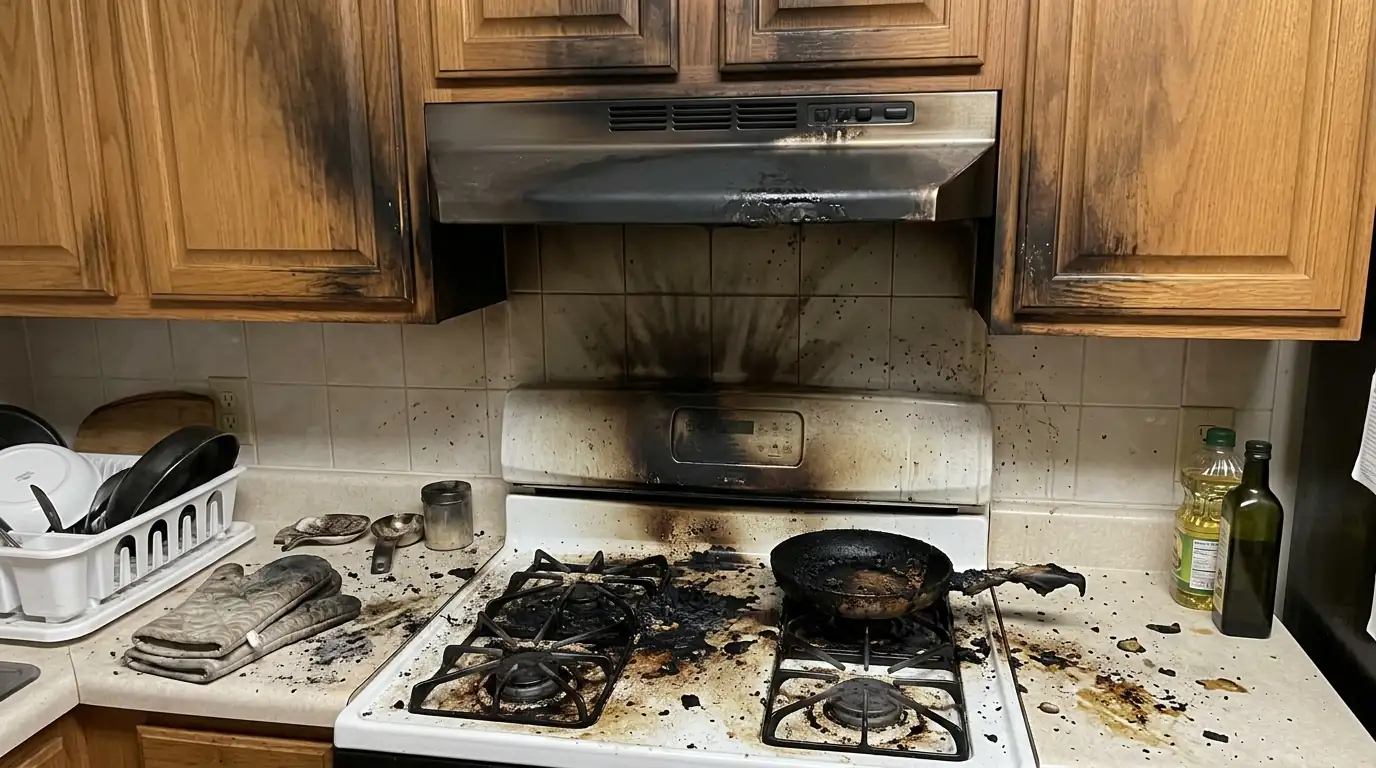
Small electrical and kitchen fires in older Detroit homes
In older houses, a small electrical fire is a reason for extra caution. Wiring that has been extended over decades may be damaged beyond the outlet that burned, and smoke can travel through plaster and open wall cavities into rooms above. Have an electrician check the circuit before anyone relies on it, and have the house checked for smoke spread before deciding it is livable.
Renters: who decides whether the unit is livable
In a rental, the decision is not only yours. The landlord is responsible for the building and its systems, including whether the power, gas and heat are safe after a fire, and local housing rules may require repairs before a unit is occupied again.
Tell the landlord about even a small fire, in writing, and ask them to have the electrical and heating systems checked. If you leave while the unit is cleaned, your renters policy may cover the extra living costs; ask your insurer and keep every receipt.
What the first two days look like if you stay
Staying after a small fire usually means living around a cleanup for a day or two. It goes more smoothly when the household knows what to expect.
- The fire room is closed off and cleaned first, often behind plastic
- Air scrubbers run in the work area and in bedrooms
- Hydroxyl units, which are safe with people home, may run for several days
- The furnace stays off until the ducts are checked and cleaned
- Clothing and bedding that smell of smoke are taken for cleaning
Staying home after a fire: questions
Possibly, if the fire department cleared it, the smoke stayed in the kitchen and nobody in the house is sensitive to smoke. If bedrooms smell of smoke, stay elsewhere.
Not until the ducts are checked. The system can pull residue in and spread it to every room.
Until the house is cleaned and the air is clear, which can be days for a small fire and longer for larger ones.
Many policies cover additional living expenses when the house is not livable. Ask your agent and keep receipts.
The smell comes from residue that can irritate lungs. It matters most for children, older adults and anyone with breathing or heart problems.