Quick answer
Electrical fire warning signs in older Detroit homes include outlets or switch plates that feel warm, scorch marks, a burning plastic smell, lights that flicker or dim when appliances start, breakers that trip or fuses that blow often, and buzzing from outlets or the panel. Any of these means turning off the circuit and calling an electrician before using it again.
Why older houses carry more electrical risk
Wayne County's median home was built in 1956, and about one in five dates from 1939 or earlier. Houses that age were wired for a few lights and a radio, not for space heaters, microwaves, window air conditioners and a dozen chargers.
Over the decades, many have had circuits extended, outlets added and panels replaced in pieces. Insulation on old wire becomes brittle, connections loosen, and circuits end up carrying more than they were built for. That is where most residential electrical fires start: at a loose or overloaded connection, an outlet or a cord.
Warning signs to take seriously
Electrical problems usually show themselves before they start a fire. Any of these is a reason to stop using the circuit and have it checked.
- Outlets, switches or cover plates that feel warm
- Brown or black scorch marks around an outlet or switch
- A burning plastic or fishy smell with no obvious source
- Lights that flicker or dim when an appliance starts
- Breakers that trip or fuses that blow repeatedly
- Buzzing or crackling from outlets, switches or the panel
- Outlets that spark when something is plugged in
- Plugs that fall out of loose outlets
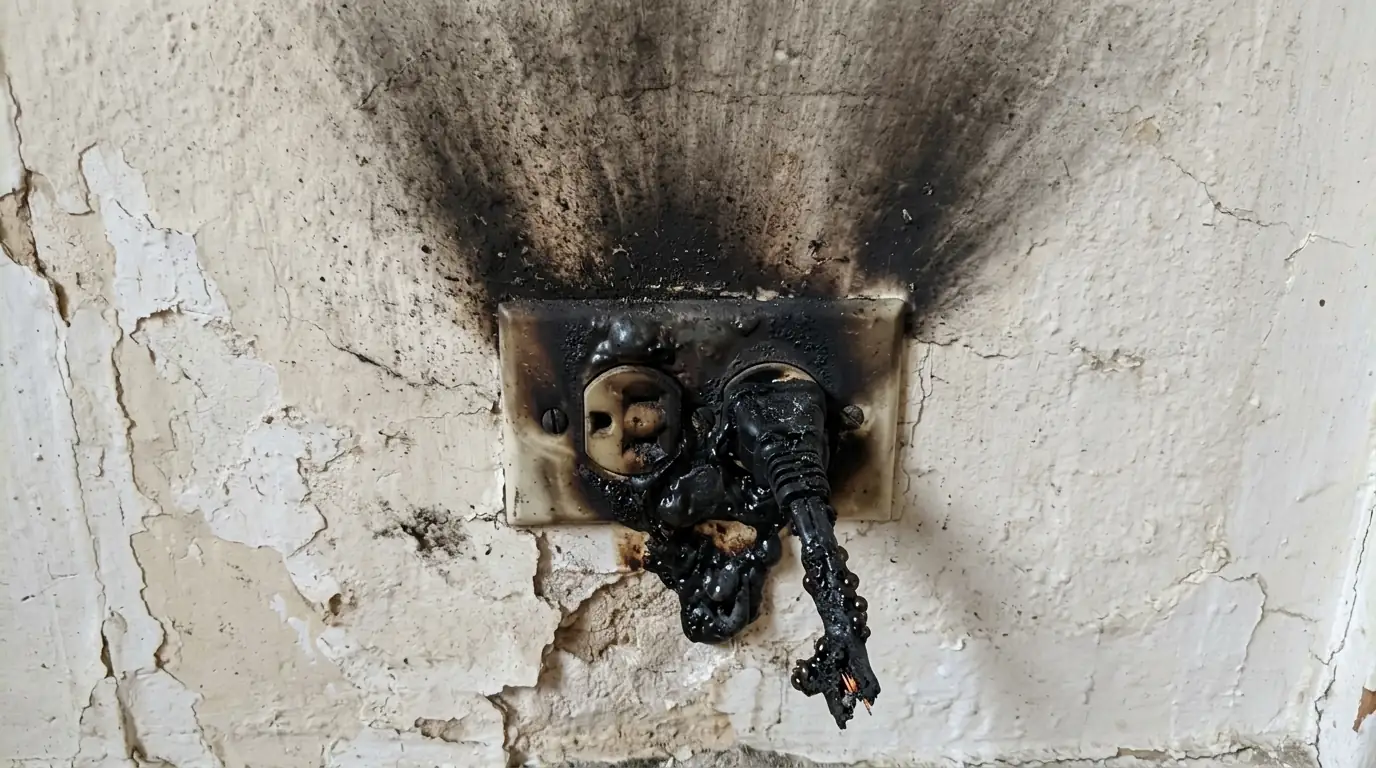
Had an outlet or panel fire? Keep the circuit off and call; we work around the electrician's repair.
Call (313) 391-5430Wiring types you may find in an older home
Knowing what is in the walls helps you understand the risk. An electrician can tell you for certain, but these are the common types in older Michigan houses.
| Wiring type | Common in | Why it matters |
|---|---|---|
| Knob and tube | Houses from before about the 1940s | No ground wire, brittle insulation, not made to be buried in insulation |
| Ungrounded two-wire | Mid-century houses | No ground; two-prong outlets often swapped for three-prong without one |
| Aluminum branch wiring | Some homes from the mid-1960s to 1970s | Connections can loosen and overheat if not made with the right devices |
| Fuse panels | Older houses not yet updated | Oversized fuses can let wires overheat without blowing |
Everyday habits that cause fires in old wiring
Many electrical fires are not caused by the wiring alone but by how it is used. A few habits account for a lot of them.
- Space heaters on extension cords or power strips
- Daisy-chained power strips
- Cords run under rugs or pinched behind furniture
- Too many high-draw appliances on one kitchen circuit
- Oversized bulbs in old light fixtures
What to do if you notice a warning sign
Turn off the breaker or remove the fuse for that circuit, unplug what was on it and call an electrician. If you smell burning or see smoke, get everyone out and call 911; electrical fires can smolder inside walls before they show.
Do not open the wall or the panel yourself, and do not reset a breaker that keeps tripping without finding out why. A breaker that trips is doing its job.
After an electrical fire: the cleanup is different
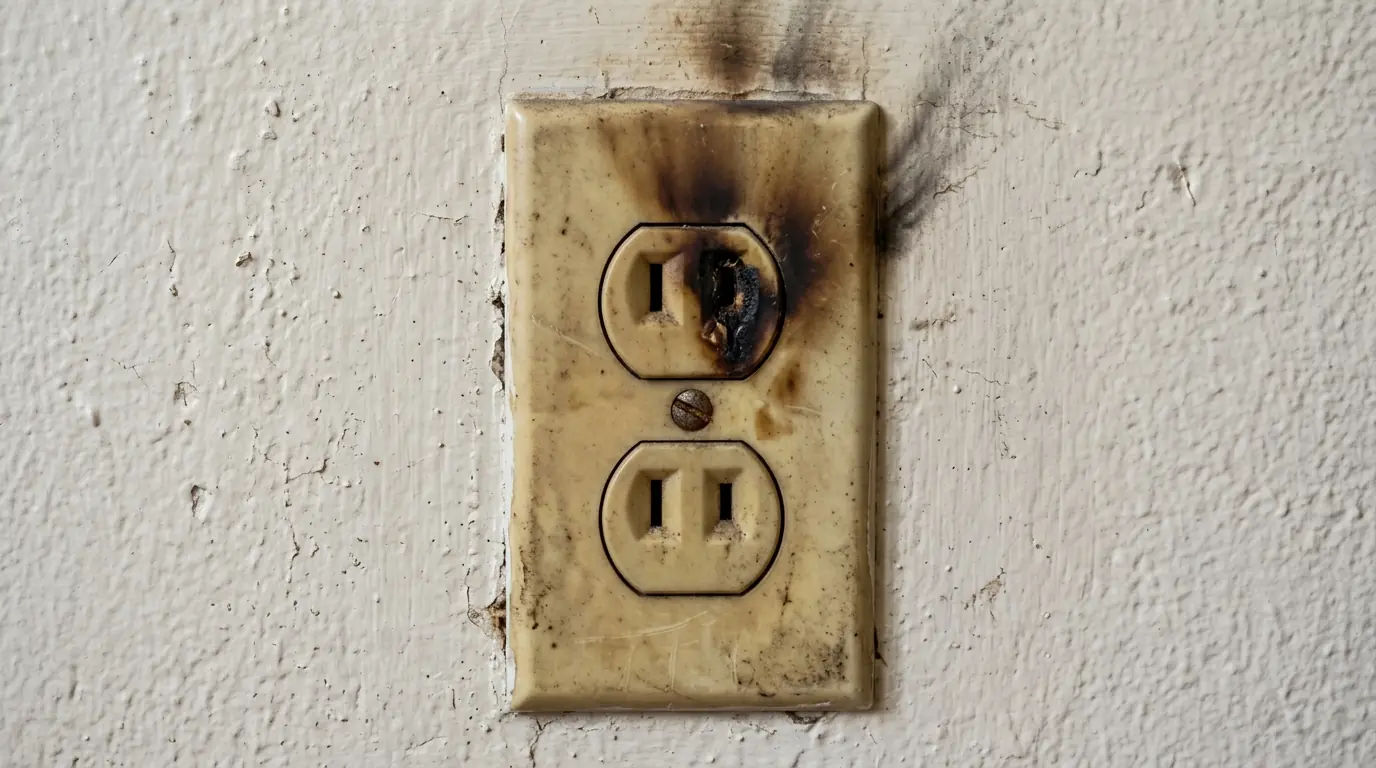
Electrical fires burn plastic insulation and devices, which leaves an acidic, chemical-smelling residue that corrodes metal and electronics. Cleanup starts after the electrician has made the circuit safe, with metal and electronics protected first, then walls and ceilings cleaned outward from the source.
The smoke often travels further than the scorch mark suggests, through plaster cavities into rooms above and beside. Our page on electrical fire cleanup explains how that cleanup runs.
Prevention that pays for itself
Most of the risk in an older house can be reduced without rewiring everything at once.
- Have an electrician inspect the panel and the oldest circuits
- Add dedicated circuits for space heaters and kitchen appliances
- Install arc-fault and ground-fault protection where it is missing
- Replace loose outlets and scorched devices right away
- Test smoke alarms monthly and replace them every ten years
Buying or renting an older house
If you are buying or renting an older Detroit home, ask about the wiring before you move in. A home inspector will note obvious problems like a fuse panel, two-prong outlets or visible knob and tube, but an electrician can tell you what is behind the walls and what it would take to update it.
Insurers often ask about old wiring and panels when writing a policy, and some will not cover certain types without an update. Knowing early avoids surprises at closing and after a loss.
For renters, report warm outlets, flickering lights and tripping breakers to the landlord in writing. Electrical systems are the landlord's responsibility, and a written report creates a record if the problem is not fixed.
Electrical fire questions
Yes. A warm outlet or cover plate usually means a loose or overloaded connection. Stop using it and have it checked.
It can work if undisturbed, but it has no ground, brittle insulation and should not be buried in insulation. Many insurers ask about it. Have an electrician evaluate it.
It is protecting a circuit that is overloaded or faulty. Find out why before resetting it again.
Plug them directly into a wall outlet on a circuit that is not shared with other big loads, never into an extension cord or power strip.
Keep the breaker off, call an electrician and do not use electronics that were in the smoke until they are checked.