Quick answer
After a fire in a Detroit rental, landlords should make sure tenants are safe and housed, notify their insurer, secure and winterize the property, and document the building separately from tenants' belongings. Michigan cities in the fire withholding program can escrow 25% of a large building settlement until repairs start, so a clear repair plan and permits speed up getting the money and the unit back.
The first day: tenants first
Make sure everyone is out and accounted for, and that tenants know where they will stay tonight. Depending on your lease and local rules, you may not owe tenants housing, but helping them find it keeps the relationship workable and the recovery faster.
Give tenants a single contact for questions and a clear message about what happens next: who will secure the unit, when they can retrieve belongings and how to reach their renters insurer if they have one.
- Confirm every tenant is safe and has somewhere to stay
- Give tenants one point of contact
- Remind tenants to call their renters insurer
- Write down the fire department report number
Two policies, two claims
Your landlord policy covers the building and, often, lost rental income while the unit cannot be rented. It does not cover tenants' belongings; those fall under the tenant's renters policy, if they have one.
Keep the records separate from the start. Your restoration company should document the building for your claim and inventory each tenant's belongings separately for theirs. Mixing the two causes delays and disputes.
Securing a vacant unit
A burned rental that sits empty attracts trespassers and scrappers, and in winter it can freeze. Board every ground-floor opening from the outside, secure the entries, tarp the roof and drain the plumbing or set safe temporary heat. Fencing and scheduled checks help on vacant lots.
Many landlord policies limit coverage on property that has been vacant for a long stretch. Ask your agent how vacancy rules apply after a fire, and keep photos of every security visit.
Fire at one of your rentals? Call any hour and we will secure it and document it for every party.
Call (313) 391-5430Michigan's fire claim escrow and what it means for you
Michigan lets participating cities, villages and townships have insurers hold 25% of a fire insurance settlement on the building in escrow until there is evidence the property is being repaired, replaced or removed, up to a capped amount set each year. The Michigan Department of Insurance and Financial Services publishes the current caps.
For landlords and investors, the practical point is that a clear repair plan, a signed scope and permits help release that money. Our guide to filing a fire insurance claim in Michigan covers the rule in more detail.
Duplexes and multi-unit buildings
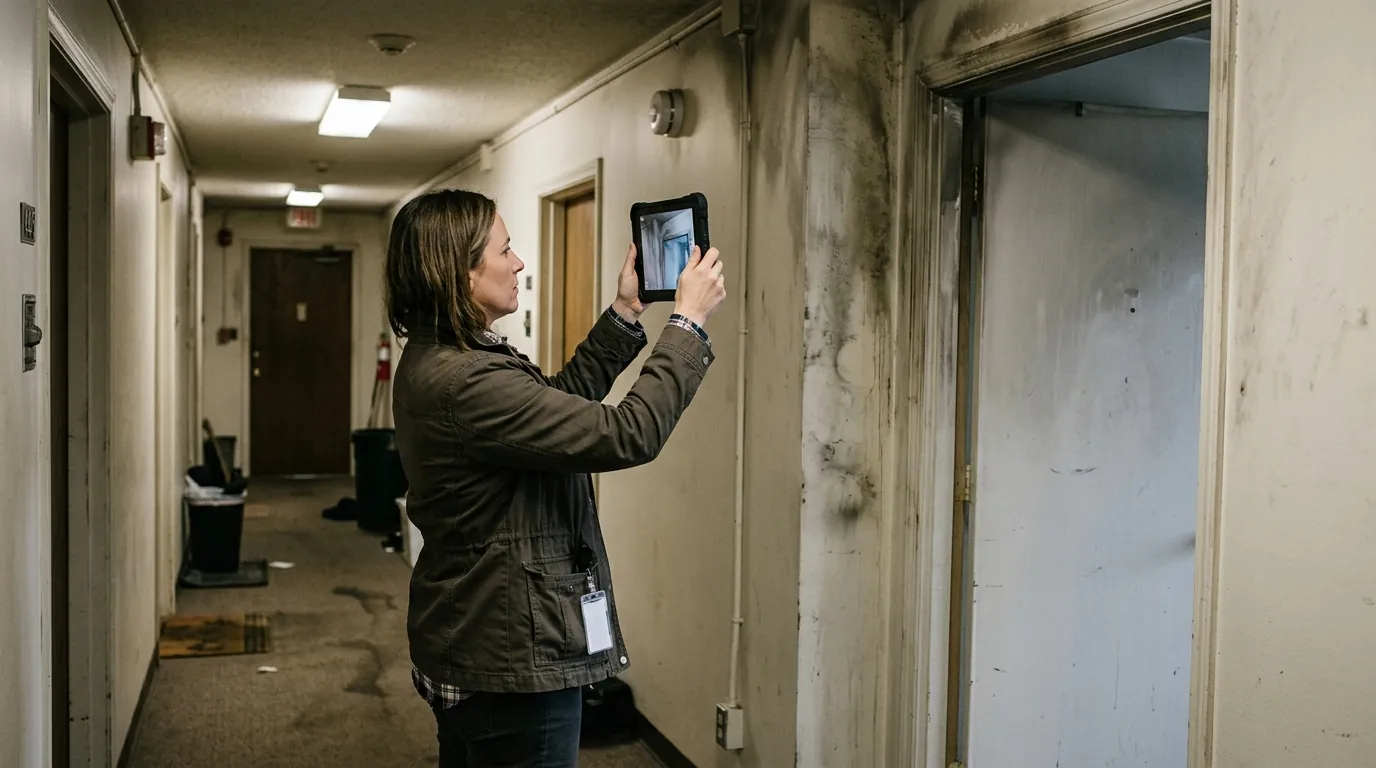
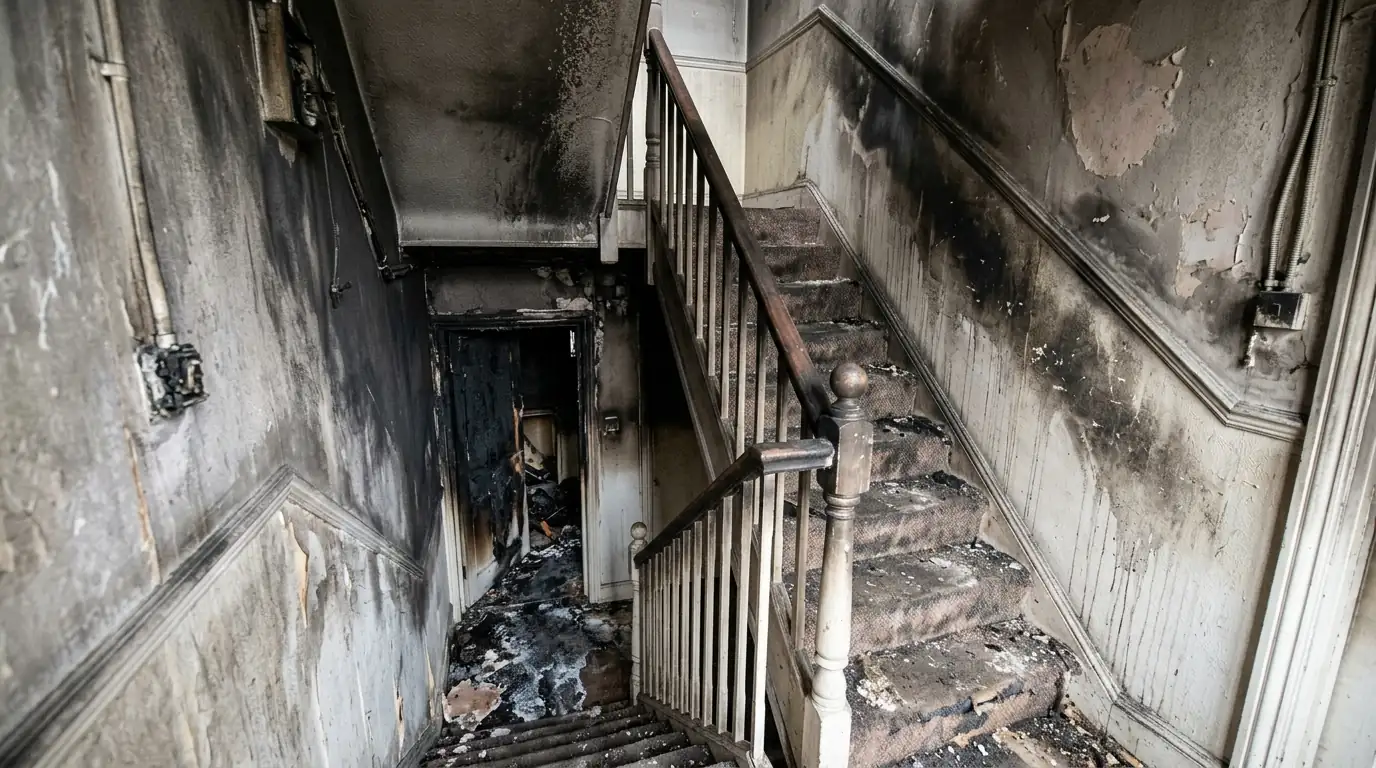
In a two-family flat or small apartment building, a fire in one unit usually reaches the others through shared walls, stairwells, basements and ceilings. Test every unit for soot and moisture, not only the one that burned, before telling anyone their unit is fine.
Undamaged or lightly affected units can often stay occupied once common areas are cleaned and utilities are confirmed safe. That keeps some rent coming in while the fire unit is repaired.
Repair, upgrade or sell
Every rental fire forces a decision: repair and re-rent, repair and sell, or clean up and hold. An itemized scope with photos lets you compare the repair cost with the property's value and rent before committing.
If you repair, the claim covers putting back what was there. Upgrades while the walls are open, like new kitchens, better insulation or rewiring, are usually your cost, so ask for them to be priced separately.
Getting back to rentable in Detroit
Detroit requires rental properties to be registered with the city, and a property that has been through a fire will usually need inspections before it is occupied again. Check with the city's Buildings, Safety Engineering and Environmental Department about what your property needs, and build inspection time into the schedule.
The steps that matter most for timing are the ones you control: deciding quickly on repair versus sale, approving the scope, ordering long-lead items and scheduling inspections as soon as each phase is ready.
- Approve the scope and any upgrades early
- Order cabinets, windows and doors as soon as sizes are known
- Schedule rough and final inspections ahead
- Keep tenants informed of the expected ready date
Records every landlord should keep after a rental fire
Good records shorten the claim, protect you in any dispute with tenants and help with inspections and a future sale. Keep them in one place from the first day.
- Fire department report number and date of loss
- Photos of every unit and common area before and after cleanup
- Written notices to tenants and their responses
- The restoration scope, supplements and invoices
- Permits, inspection results and final approvals
- Rent records showing income lost while the unit was closed
Landlord fire questions
It depends on your lease and local rules. Tenants' living costs are often covered by their renters insurance, if they have it.
Many landlord policies include loss of rental income while the unit cannot be rented. Check your coverage and limits.
The tenant's renters insurance, if they have it. The landlord policy usually does not.
Participating municipalities can have 25% of a large building settlement held, up to a yearly cap, until the property is repaired or removed.
Often, if their unit tests clean or lightly affected and utilities are safe.