Quick answer
A house fire in a Michigan winter creates a freeze risk because the gas is usually shut off, windows and roof openings let cold in, and nobody is living in the house. Pipes, traps, water heaters and boiler loops can freeze and burst. Closing the openings and either draining the plumbing or setting safe temporary heat on the first visit prevents a second loss.
Why winter fires are different
Winter is when more house fires happen. Nearly half of U.S. home heating equipment fires, 46 percent, occur between December and February, according to the National Fire Protection Association, as reported by this NFPA summary. Space heaters and heating stoves account for most of the deaths.
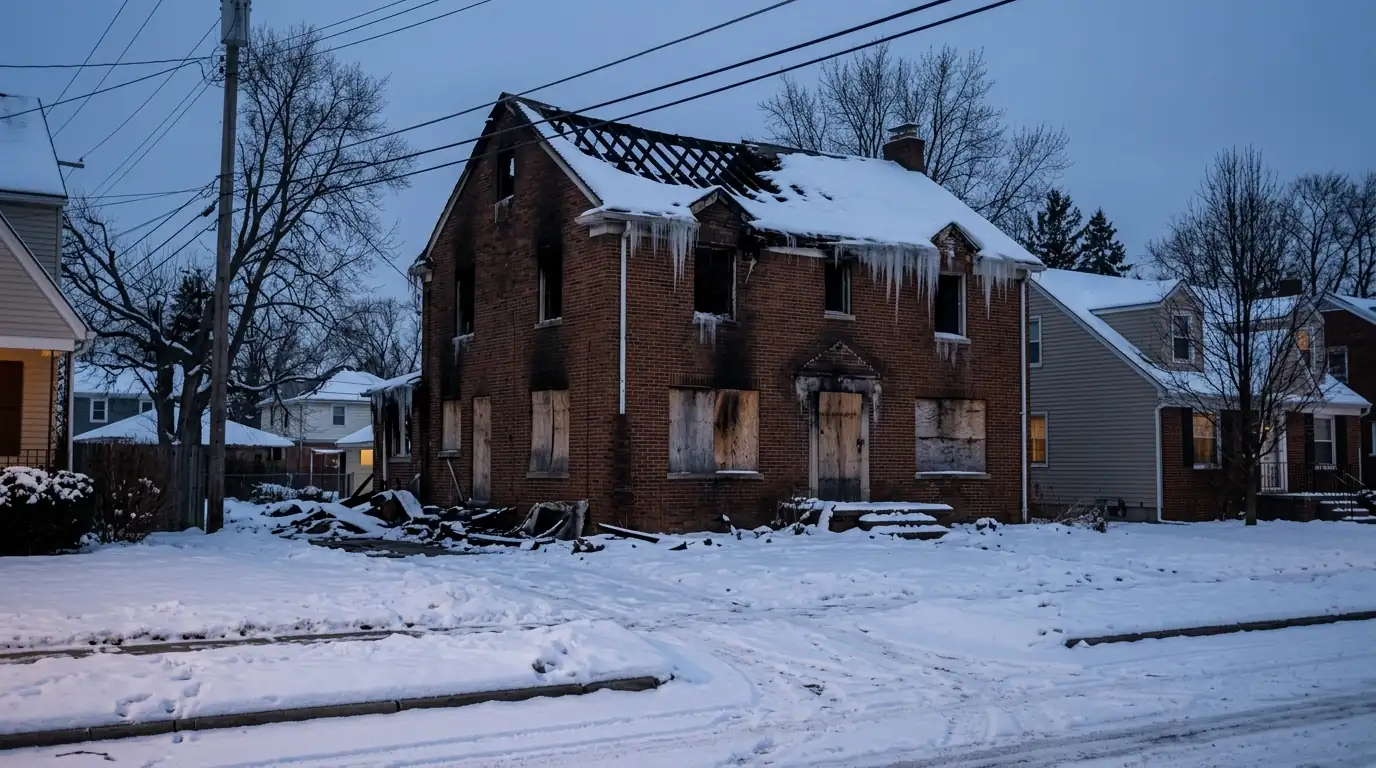
After the fire, the season works against the house. The fire department usually shuts off the gas, and often the power. Broken windows and ventilation cuts let outside air in. In a Michigan cold snap, an unheated house with water in its pipes is at risk within days.
What freezes first
Water freezes where it sits still and where cold reaches it first. In a fire-damaged house, that is usually along exterior walls, in the basement near broken windows and in anything holding water with no heat around it.
- Supply pipes along exterior walls and in crawlspaces
- Toilet tanks and bowls, and sink and tub traps
- The water heater
- Hot water and steam heating loops and radiators
- Hose bibs and outdoor faucets
- The water meter in an unheated basement
The first night: close the house up
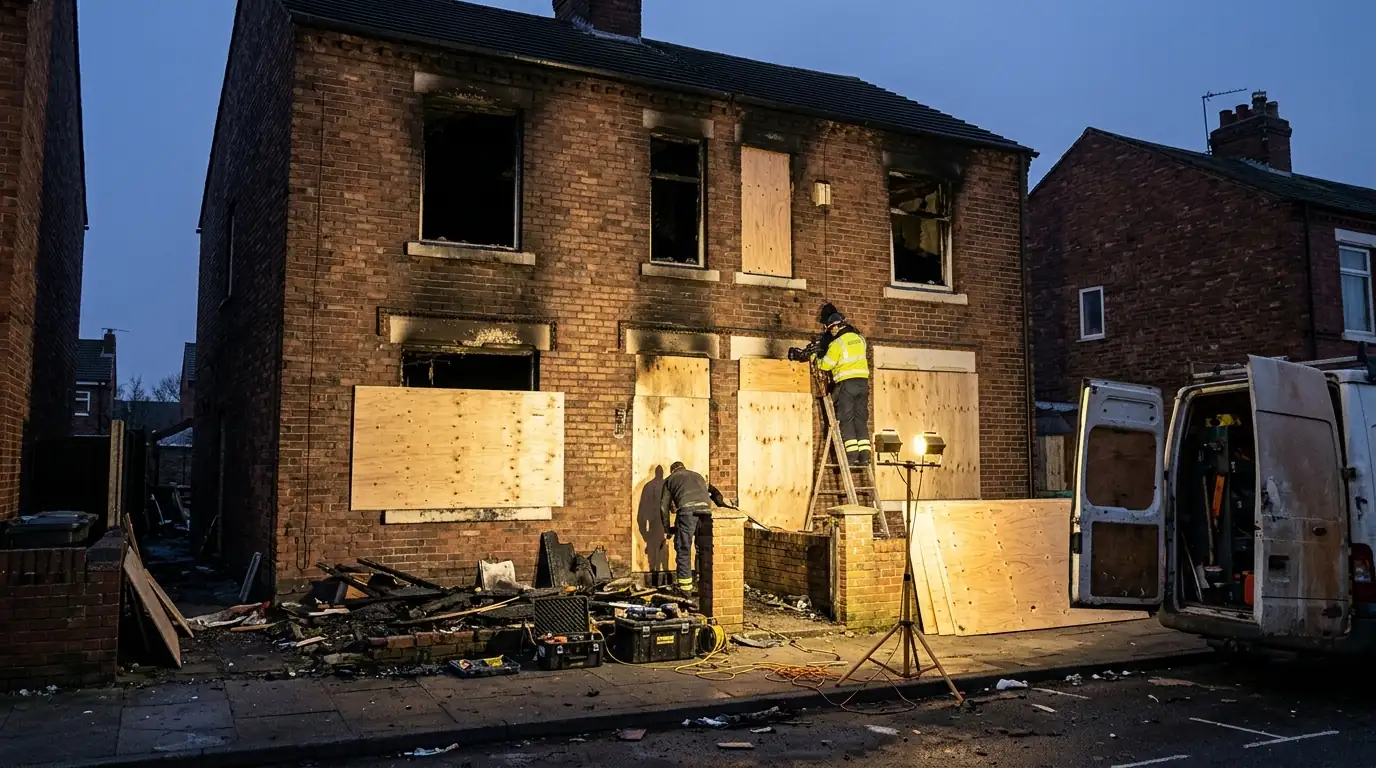
Heat does little good if the windows are open. Boarding broken windows and doors and tarping any roof opening keeps snow and wind out and makes temporary heat possible. It also keeps out trespassers, which matters more in winter when a burned house sits empty longer.
If the power is on and safe, keep the sump pump running. A basement that already took firefighting water cannot take snowmelt as well.
Heat off after a fire and a freeze coming? Call now; winterizing is part of the first visit.
Call (313) 391-5430Drain the plumbing or heat the house
There are two ways to protect the plumbing, and the right one depends on whether the house will sit empty or be worked in.
- Empty house for weeks: shut off the main, drain every fixture top to bottom, drain the water heater, blow out the lines and put antifreeze in traps
- Work going on inside: temporary heat, either electric heaters on safe circuits or indirect-fired heaters outside the house
- Hot water or steam heat: drain the loop, since a frozen boiler loop is expensive
- Either way: tag every valve and keep a written list for the plumber
Temporary heat safely
Never run fuel-burning heaters inside a damaged house. Open-flame and unvented heaters add carbon monoxide and fire risk to a building that may already have damaged wiring and gas lines.
Safe options are electric heaters on circuits an electrician has confirmed, or indirect-fired heaters placed outside with ducting into the house, so only warm air comes in. Temperatures are checked on every visit, especially in the basement.
Insurance and the duty to protect the house
Most homeowners policies expect you to protect the property from further damage after a loss. Freeze damage that happens because a fire-damaged house was left unheated and undrained can become a dispute with the insurer.
Photos of drained fixtures, tagged valves, temperature checks and board-up show that the house was protected. Keep them with the rest of your claim records.
Older Detroit houses in the cold
Many older Detroit homes have hot water or steam heat, plumbing along exterior walls and basements with windows near grade. Those details make them more vulnerable after a fire: a broken basement window puts freezing air right on the pipes, and a boiler loop holds a lot of water. On older houses we check the basement, the boiler and every exterior wall on the first winter visit.
Getting the heat back on
Restoring gas service after a fire usually takes an inspection of the gas lines and appliances and a utility visit to turn the meter back on. That can take days or weeks, depending on the damage and the schedule, which is why the house has to be protected in the meantime.
When service is restored, a plumber re-commissions the drained system using the tagged list, and the furnace or boiler is checked by an HVAC technician before it runs.
Preventing a winter fire in the first place
Since nearly half of home heating fires happen in the coldest months, the best winter fire is the one that never starts. Most of the prevention is simple, and the same habits protect a house that has already had one fire from having another.
- Keep anything that can burn at least three feet from space heaters, furnaces and fireplaces
- Plug space heaters directly into a wall outlet, never an extension cord
- Have the furnace or boiler serviced before the heating season
- Have the chimney swept and inspected before the first fire of the year
- Test smoke and carbon monoxide alarms every month
- Never heat the house with an oven or a grill
Winter fire questions
In a hard Michigan cold snap, within days or even overnight in exposed spots like exterior walls and basements near broken windows.
Drain the plumbing if the house will sit empty. If work is going on inside, safe temporary heat is an option, but never fuel-burning heaters inside a damaged house.
It depends on your policy and whether the house was protected. Draining or heating it, and documenting that, is the safest approach.
The utility, after the gas lines and appliances pass inspection.
Yes, once the fire department releases it. See winterizing a fire-damaged home.
Heavy snow loads a weakened roof. See roof tarping after a fire.